

Loading blog content…
Loading page…
Loading blog content…
Prefer a quick answer?Ask AI:
Small-group lessons for precise answers, connected ideas, and Paper 4 practical skills.
Weekly small-group lessons for theory, exam writing, and Paper 4 practical skills.
JC1 students build clear explanations from the foundations. JC2 students practise combining topics and completing timed answers. See monthly fees and lesson details.
Write clearer answers
Practise DBQ phrasing, definitions, and Paper 3 essay planning.
Connect topics
Work through genetics, evolution, and molecular Biology questions that combine ideas.
Prepare for Paper 4
Build microscopy, planning, data presentation, drawing, and evaluation skills.
This programme is for Singapore-Cambridge H2 Biology (SEAB 9477), not Cambridge International A-Level or Pearson Edexcel. To compare other levels, start with the Biology Tuition Singapore hub. For practical-only training, use the H2 Biology practicals hub.
SEAB H2 9477, 2027 examination syllabus. Topic groups describe content; JC1 and JC2 lesson order is adjusted to the student's school.
Early JC1 gives students time to improve definitions, data-based questions, and essays before promos and the heavier JC2 content.
Classes have up to 8 students. The tutor checks students' working and gives feedback during class.
In-person theory lessons run at Jurong East Centre (Vision Exchange) (2 Venture Dr, #16-07 Vision Exchange). Our one-north office is for talks and presentations only, not regular lessons. See the Centre section above for the full address and map link.
Share the school, level, and latest grade. We will recommend a suitable class and explain what happens next.
Choose the question closest to the decision you are making.

See what to expect at different schools, then compare tuition formats, fees, and support.

See when to start and what steady progress can look like.
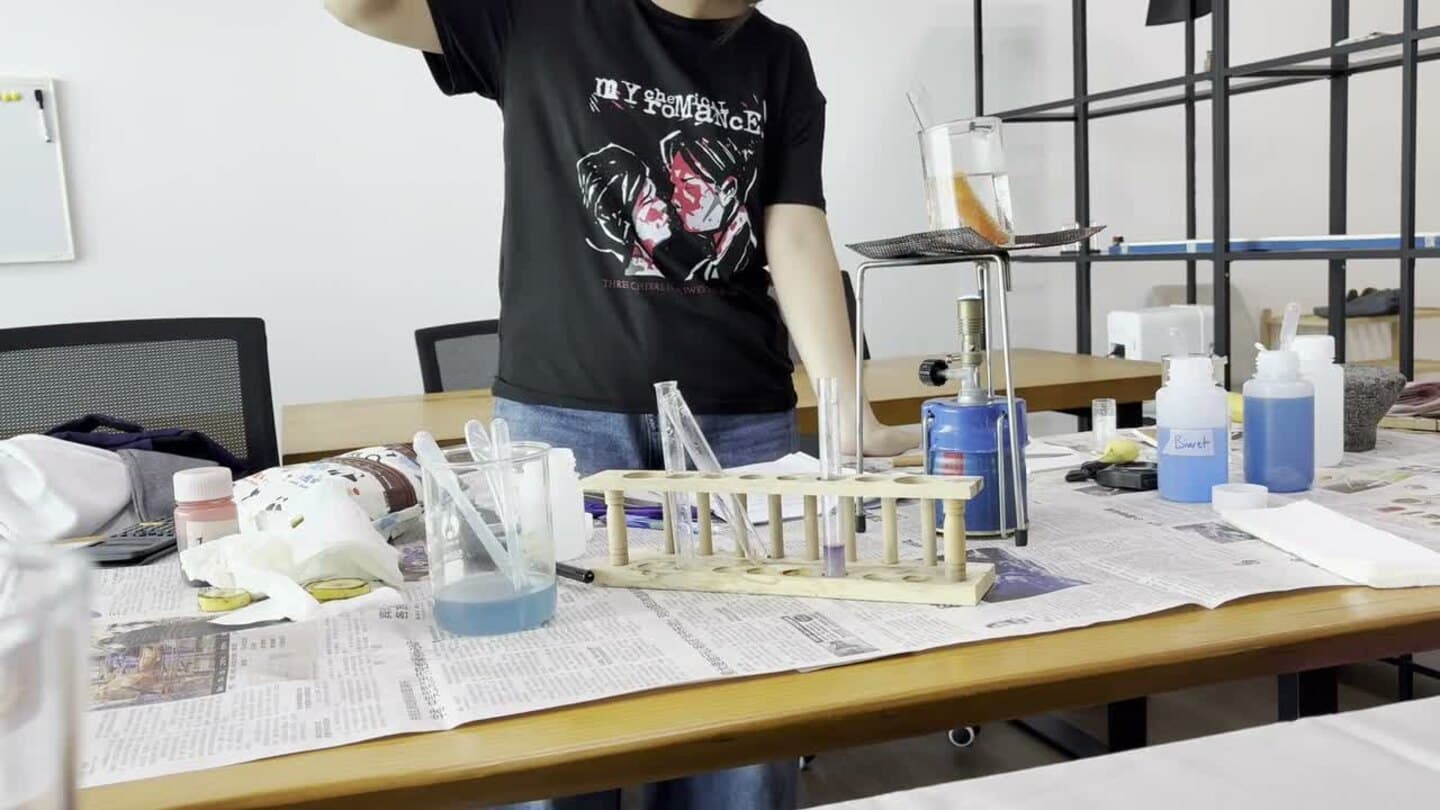
Use this H2 Biology Paper 4 prep plan to rehearse planning, microscope workflow, PDO data presentation, and ACE evaluation before the 9477 practical exam.
Connect explanations to experimental data, microscopy, enzyme investigations and practical planning. All four Core Ideas and both Extension topics belong to the syllabus.
The lesson outline is a teaching plan, not an official year-by-year sequence. We adjust it to the student's school and examination year.
The current SEAB 9477 H2 Biology syllabus is built around four Core Ideas and two Extension topics. Written questions may integrate knowledge from different areas, while Paper 4 assesses practical skills underpinned by the teaching and learning of the syllabus.
Cell ultrastructure, biological molecules, enzyme kinetics and inhibition, membrane transport, the cell cycle, mitosis, and meiosis. These ideas appear in short answers and data-based questions.
DNA structure and replication, transcription and translation, Mendelian crosses, epistasis, sex-linked traits, gene regulation, and genetic technologies. Students need accurate calculations and clear explanations.
Photosynthesis, cellular respiration, homeostasis, the nervous system, and the endocrine system. Essay questions often combine these ideas with Core 1.
Hardy-Weinberg equilibrium, allele frequency, natural selection, genetic drift, gene flow, mutation, speciation, and molecular phylogenetics. Questions often require both calculation and interpretation of unfamiliar data.
Pathogens, disease mechanisms, innate and adaptive immunity, vaccination, herd immunity, and disease transmission. Answers need the correct immunology terms in a clear order.
Human contributions to climate change, environmental stress, biodiversity and food supply, and the spread of mosquito-borne disease. Questions may combine unfamiliar data with the Core Ideas.
If you first need the official topic map, start with our H2 Biology syllabus 2026-27 overview. For chapter-level notes and downloadable PDFs, see our H2 Biology notes hub.
A good answer explains what happens and why. See how a few precise changes improve an enzyme answer.
Question. A reversible competitive inhibitor binds at an enzyme's active site. Explain why increasing substrate concentration reduces its effect when enzyme and inhibitor concentrations remain constant.
A first attempt
“More substrate makes the enzyme work faster and stops the inhibitor.”
This says the reaction gets faster without explaining why. The inhibitor is still present and can still bind to the enzyme.
A clearer answer
The substrate and inhibitor compete for the enzyme's active site. At a higher substrate concentration, substrate molecules are more likely to occupy available active sites, so more enzyme-substrate complexes form per unit time. The reaction rate increases towards the same maximum rate as without the inhibitor, provided sufficient substrate is available.
Now change the question: would the same explanation work for an irreversible inhibitor that permanently inactivates some enzyme molecules? More substrate cannot restore those molecules. Your answer must change with the mechanism.
Original practice example, not a past-paper question or official mark scheme.
Senior Science Tutor (Biochemistry)
Senior science tutor at Eclat Institute. His biochemistry training supports lessons in molecular Biology, data-based questions, essays, and Paper 4 practical skills.
Mr Azmi holds a Bachelor of Science in Chemistry / Biochemistry from the National University of Singapore and a Master of Science in Chemistry from the University of Canterbury, with a Postgraduate Diploma in Education from NIE. His biochemistry training underpins the molecular, cellular, and metabolic core of H2 Biology (9477). A Victoria Junior College alumnus, he has taught in MOE schools for 18 years and tutored Integrated Programme students for six years.
View full profile
4 lessons each month, 1.5 hours each.
SGD 360-400
per subject, per month
Continuing students pay SGD 360 per month next year, regardless of their original start month.
Pricing reflects four weekly 1.5-hour lessons. Paper 4 intensives and holiday classes are quoted separately.
Open the sections below for fees, class formats, syllabus details, and checklists.
Three changes make H2 Biology more demanding than O-Level Biology for most students entering JC1:
Students who struggle with O-Level Biology or who do not have O-Level Biology at all can still succeed in H2 - but the foundation-building work needs to start in JC1 Term 1, not after the first class test.
Parents often ask whether their child should take H1 or H2 Biology, or whether switching from H2 to H1 after struggling is the right move. The answer depends on the student's learning needs and the current prerequisites for the courses being considered.
| Factor | H1 Biology | H2 Biology (9477) |
|---|---|---|
| Content breadth | Narrower - selected topics only | Full syllabus: 4 Cores + 2 Extensions |
| Practical exam (Paper 4) | Not included | 20% of total grade |
| University entry | Check the current prerequisites for each course and university | Check the current prerequisites for each course and university |
| Essay writing demand | Shorter written responses | One 20-mark free-response choice in Paper 3, plus long structured responses |
| Lesson pace | Less intensive content cycle | Dedicated JC1 + JC2 exam cycles |
Before changing subject level, check the latest course prerequisites and seek guidance from the student's school. If the difficulty is concentrated in answer technique or a small number of topics, diagnose those gaps before deciding that the subject level itself is the problem.
Each week starts by checking whether marks are being lost through weak recall, command words, data interpretation, or Paper 4 planning.
Students do short timed DBQ, essay-planning, or practical-writing blocks so improvement is tied to exam behaviour, not passive note-taking.
Corrections focus on missing keywords, sequencing logic, and evaluation depth so students learn how a stronger answer sounds on the page.
Each lesson ends with specific work: corrections, one chapter to revise, and the next timed question set before school tests or promos.
Knowing the content does not always mean a student can explain it in an answer. We review their wording, planning, and evaluation to identify what needs more practice.
Paper 4 is not left to the final month. Students use practical language throughout the year so they can connect theory, experimental design, data handling, and evaluation before exam windows.
| Paper 4 focus | What gets rehearsed |
|---|---|
| Planning | Variables, controls, valid method design, risk points, and how to make a plan answer specific enough for Paper 4. |
| PDO | Table layout, graph construction, units, biological drawing, and data handling under timed practical conditions. |
| ACE | Analysis, conclusions, evaluation language, sources of error, improvements, and statistics checkpoints where the syllabus requires them. |
| Microscopy | Graticule use, calibration, biological drawing conventions, and careful observations for specimen-based tasks. |
For the practical-only route, use the H2 Biology practicals hub. For a study schedule, use the H2 Biology Paper 4 practical prep plan.
| Paper | Student need | Work in class | Study guide |
|---|---|---|---|
| Paper 1 Multiple Choice15 percent | Fast recall, definition precision, and trap avoidance across the full content range. | High-frequency MCQ practice, common-misconception drills, and timed accuracy checks. | — |
| Paper 2 Structured30 percent | Turn syllabus knowledge into complete structured answers, data-response explanations, and precise biological wording. | Short timed responses, DBQ correction, command-word checks, and explicit rewrites when the answer is too vague. | Paper 2 structured strategy |
| Paper 3 Long Structured and Free-response35 percent | Plan longer answers that integrate unfamiliar data, biological mechanisms, and one 20-mark free-response choice. | Essay outlines, paragraph order, links between evidence and biological mechanisms, and comments on whether the answer addresses the question. |
If you are still comparing different Biology levels, make that decision separately, then return here when deciding your JC1-JC2 H2 plan.
Lesson hours are only part of the picture. Students also need time to act on corrections between classes.
To review the revision materials, see our H2 Biology notes hub and the H2 Biology Paper 2 strategy guide. Students can use these materials between lessons. Class details remain on this page.
Worried about promotional exam results? What to do if your child fails JC promos explains what to do next, when to consider H1, and when to seek more help.
Fees are charged monthly for each subject. The Early Intake from October to February is SGD 360 per month. The Regular Intake from March to June is SGD 380 per month. The Catch-up Intake from July to September is SGD 400 per month. Students who continue into the next year return to the Early Intake rate of SGD 360 per month. The monthly fee covers 4 weekly 1.5-hour lessons. Holiday intensives and practical clinics are scheduled separately. Use the WhatsApp button to ask about current class times.
Paper 4 is 50 marks and contributes 20% of the H2 grade. Microscopy, planning, and data write-ups need regular practice, not last-minute cramming.
Our main programme is small-group H2 Biology tuition. Students discuss timed papers with classmates, while consultations focus on each student's repeated mistakes and study plan.
Fees depend on class format and lesson frequency. This page lists the price for four weekly 1.5-hour lessons. Paper 4 intensives and holiday classes are quoted separately.
Yes. JC1 classes focus on secure content and clear answers. JC2 classes spend more time combining topics, completing timed papers, and preparing for practical exams.
We teach the precise biological terms, definition checks, and answer structures needed for common command words so students stop losing marks to vague language.
After each lesson, students should know which corrections to make, which timed questions to complete, and how to ask about new school work.
Check whether the tutor can explain how Papers 2, 3, and 4 are marked, whether notes follow the current syllabus, and whether worked examples show the wording needed for marks.
NUS Yong Loo Lin and NTU LKCMedicine require H2 Chemistry, while Biology may be H1 or H2. H2 Biology can provide useful preparation for biological reasoning and first-year content, but families should check the current university admissions pages before choosing subjects.
The answer depends on the student's scripts. Common problem areas include genetics, molecular biology, data interpretation, and vague essay wording. Review several marked papers before deciding which topic deserves the most revision time.
Yes, although the student will need to learn unfamiliar vocabulary, genetics notation, and biological drawing conventions. Reading the JC1 materials before lessons begin can make the transition easier. The amount of preparation needed depends on the student's prior Science background.
H2 Biology answers need precise biological terms linked in a clear cause-and-effect explanation. A student may understand the idea but still lose marks if the wording is vague or the steps are out of order. Marked rewrites show exactly which terms or links are missing.
Not for every student. Self-study may be enough when the student understands why marks were lost, corrects work independently, and practises Paper 4 regularly. Tuition may help when the same mistakes continue despite completed tutorials or when essays and practical work are repeatedly avoided.
SEAB 9477 has four Core Ideas: The Cell and Biomolecules of Life, Genetics and Inheritance, Energy and Equilibrium, and Biological Evolution. It also has two Extension topics: Infectious Diseases, and the Impact of Climate Change on Animals and Plants. Lessons cover all six areas, data-based questions, essays, and Paper 4 skills.
H2 Biology 9477 covers all four Core Ideas, both Extension topics, and Paper 4 practical. H1 Biology covers fewer topics and has no Paper 4. Check current university subject requirements before switching, because some courses require H2 Biology or another H2 science.
Yes. Paper 4 contributes 20% of the H2 grade and includes microscopy, Planning, and ACE evaluation. Each skill needs regular practice. Ask whether a class includes Paper 4 throughout the year or only shortly before the exam.
H2 Biology introduces unfamiliar topics such as gene regulation, enzyme kinetics, photosynthesis biochemistry, and evolutionary genetics. Questions require precise cause-and-effect explanations, not only recall. Paper 4 also adds practical planning and evaluation. Students should begin building these skills in JC1 rather than waiting until prelims.
| Paper 3 essay guide |
| Paper 4 Practical20 percent | Build Planning, MMO, PDO, and ACE skills before prelims instead of leaving practical work to the final month. | Microscopy, table and graph checks, experiment planning, and corrected evaluations linked to Biology concepts. | Paper 4 practical prep plan |
If you are still checking the official paper structure, use the H2 Biology 9477 syllabus overview before choosing the paper route above.