

Loading blog content…
Loading page…
Loading blog content…
Prefer a quick answer?Ask AI:
Small-group O-Level Biology tuition for Sec 3 and Sec 4 students who need clearer 6093 theory answers, precise biological terms, and regular Paper 3 practice.
O-Level Biology is becoming SEC G3 from 2027. From 2027, today's O-Level subjects continue as SEC G3 subjects with the same overall standard. This page keeps the 2026 exam name for current candidates.
Small-group O-Level Biology tuition for Sec 3 and Sec 4 students on the 6093 syllabus.
See how lessons work, who teaches the class, what the fees include, and where to find 6093 theory and practical guides.
| Sec 3 foundation | Definitions, diagrams, food tests, microscopy, command words, and precise biological terms. |
| Sec 4 exam preparation | Genetics, ecology data, Paper 3 planning, ACE evaluation, and timed structured answers. |
| Class format | Weekly 1.5-hour small-group lessons capped at 8 students. Holiday intensives are scheduled separately. |
Early Sec 3 gives students time to improve definitions, diagrams, and Paper 3 skills before Sec 4. A student who starts in Sec 4 should work on precise exam wording alongside timed practice.
Classes have up to 8 students. The tutor checks students' working and gives feedback during class.
In-person theory lessons run at Jurong East Centre (Vision Exchange) (2 Venture Dr, #16-07 Vision Exchange). Our one-north office is for talks and presentations only, not regular lessons. See the Centre section above for the full address and map link.
Share the school, level, and latest grade. We will recommend a suitable class and explain what happens next.
Choose the question closest to the decision you are making.

Sec 3 to Sec 4 O-Level Biology study plan for 2026: Paper 2 writing, Paper 3 practical routines, and term-by-term revision checkpoints.
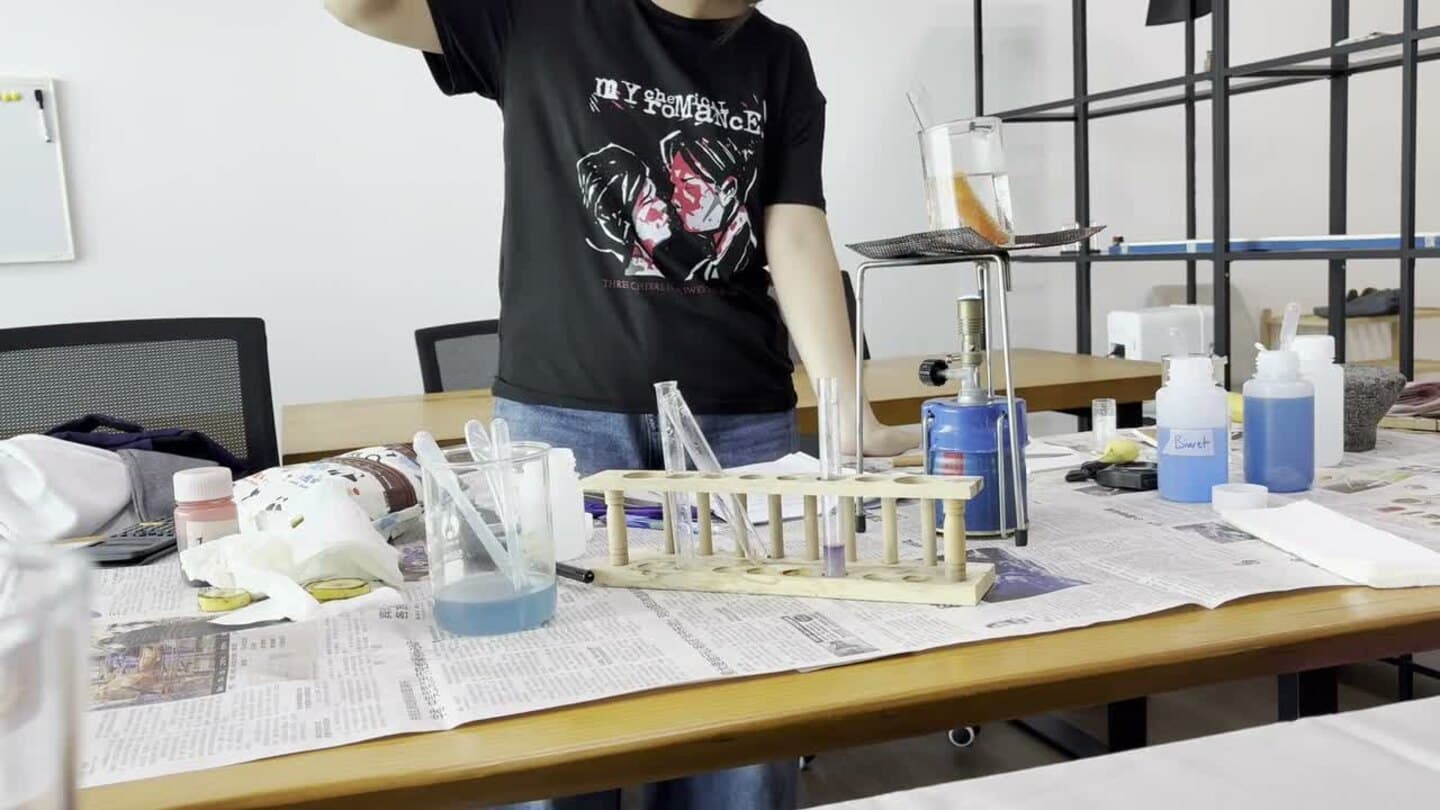
Build the laboratory and exam skills needed for practical papers.
| Practical training |
| Regular Paper 3 practice, microscopy, data handling, planning, and ACE evaluation language. |
These are 2026 O-Level 6093 topic groups. For the 2027 SEC G3 course, use K325 and the student's exam-year syllabus. Do not treat the two editions as interchangeable.
Practise clear biological explanations, diagrams and practical data analysis.
The lesson outline is a teaching plan, not an official year-by-year sequence. We adjust it to the student's school and examination year.

Academic Advisor (Biology)
Academic Advisor at Eclat Institute. Brings cross-disciplinary and tech-informed clarity to Biology and study strategy.
Ezekiel Tan graduated from Raffles Institution (IP) and holds a Bachelor of Engineering (Electrical) from the National University of Singapore, as well as a Bachelor of Information Technology (Computer Science and Cybersecurity) from Murdoch University. He is a Vertical Institute Certified Data Scientist and Generative AI Expert (Singapore SkillsFuture Certified). With expertise in technology, cybersecurity, and data science, Ezekiel currently serves at the Ministry of Finance, bringing a strategic and analytical approach to problem-solving. He currently is an academic advisor at Eclat Institute as well as part of the curriculum research team, lending his expertise on AI and data analysis
View full profile
4 lessons each month, 1.5 hours each.
SGD 360-400
per subject, per month
Continuing students pay SGD 360 per month next year, regardless of their original start month.
Pricing reflects four weekly 1.5-hour lessons. Paper 3 practical intensives and holiday classes are quoted separately.
Open the sections below for fees, class formats, syllabus details, and checklists.
| Paper | Focus | Tuition emphasis |
|---|---|---|
| Paper 1 MCQ | Recall speed and trap avoidance | Definition drills and concept checkpoints |
| Paper 2 Structured | Command words and precise biological terms | Answer structure and accurate diagrams |
| Paper 3 Practical | Planning, microscopy, data, ACE | Laboratory practice and evaluation language |
Parents often search for the best O-Level Biology tuition after a weak weighted assessment, end-of-year result, or Sec 4 prelim. No class is best for every student. Check whether the teaching style, class size, and Paper 3 lessons address the student's main problem before booking a trial lesson.
| Main problem | What it looks like | Tuition format that helps |
|---|---|---|
| Concept gap | The student cannot explain how a biological process works | Clear reteaching followed by questions that check understanding |
| Answer phrasing gap | The student understands the idea but loses command-word marks | Rewriting answers, model wording, and marked corrections |
| Diagram gap | Labels, proportions, or unclear lines cost repeated marks | Worked corrections for biological drawings |
| Paper 3 gap | Planning, data presentation, microscopy, or ACE answers are inconsistent | Practical work throughout the year |
| Runs out of time | The student knows isolated topics but slows down in mixed papers | Timed Paper 1 and Paper 2 questions followed by corrections |
Ask specific questions. Who teaches the class? How many students are in it? How are weak answers corrected? What happens when the same definition, diagram, or command-word mistake returns? Check whether Paper 3 is taught throughout the year and whether Sec 3 and Sec 4 students receive different work. Claims about being “top” or “proven” are not enough.
Score each area from 1 to 5 during a trial lesson or consultation call.
The tutor explains command words clearly (define, explain, compare, evaluate) and shows how to convert understanding into precise biological terms. Students are taught to plan answers before writing structured questions.
Each lesson has a clear order: check understanding, practise under time pressure, review, then rewrite. The pace differs for Sec 3 and Sec 4 and follows school assessment dates.
Students practise planning questions until the steps become familiar. Microscopy and observations are rehearsed under time pressure, and PDO and ACE write-ups are practised throughout the year, not left to a last-minute add-on.
Corrections are specific, tied to real school or test mistakes, and arrive before the next school assessment rather than too late to act on.
Shortlist classes that explain concepts clearly, correct written work, and suit the student's schedule. If Paper 3 is the main concern, compare the class with the O-Level Biology practicals hub.
O-Level Biology tuition fees only make sense when compared against class format, Paper 3 training, and feedback quality. Do not compare Biology tuition by price alone.
| Class-format signal | What to ask | Why it matters |
|---|---|---|
| Weekly lesson structure | How is each lesson split between content, timed writing, and correction? | Students need regular practice, not a single explanation. |
| Paper 3 practical training | How do you train planning, microscopy, PDO, and ACE every term? | Paper 3 marks are often lost through weak laboratory skills. |
| Marking time | How quickly are scripts reviewed and corrected? | Quick marking lets students fix errors before the next school test. |
| Sec 3 versus Sec 4 lesson pace | Does the lesson plan change with the student's level and exam dates? | Sec 3 and Sec 4 students need different lesson plans. |
When comparing any O-Level Biology tuition quote, compare five items side by side: total monthly commitment including practical blocks, actual learning hours delivered each month, the type of feedback included, coverage across Paper 1, Paper 2, and Paper 3, and extra lessons during busy periods such as weighted assessments and prelims. A higher monthly fee can still be better value if it helps the student work more consistently. Pricing tiers are set out earlier on this page; Paper 3 practical intensives and holiday classes are quoted separately.
Use our O-Level Biology practicals hub for Paper 3 notes, microscope practice, planning questions, and ACE evaluation examples.
SEAB Paper 3 and Paper 5 format, food tests, planning habits, and a practical-day checklist.
Fees are charged monthly for each subject. The Early Intake from October to February is SGD 360 per month. The Regular Intake from March to June is SGD 380 per month. The Catch-up Intake from July to September is SGD 400 per month. Students who continue into the next year return to the Early Intake rate of SGD 360 per month. The monthly fee covers 4 weekly 1.5-hour lessons. Holiday intensives and practical clinics are scheduled separately. Use the WhatsApp button to ask about current class times.
Paper 3 is 20% of the O-Level Biology grade. Microscopy, planning, and data write-ups need regular practice, not last-minute cramming.
We teach the exact biological terms, definition checks, and answer structures needed for common command words so students stop losing marks to vague language.
Compare fees only after you know what is included. Check the total monthly cost, teaching hours, materials, marked work, Paper 3 lessons, make-up lessons, and what happens after an absence.
After a trial lesson, ask what the student actually did. Did the tutor explain both the biological idea and the marking point? Was there timed work? Were mistakes corrected? Was Paper 3 included? Shortlist classes that answer those questions clearly and suit the student's current level.