P
Planning
Hypothesis, controls, and method - written before any handling.
Name your control and explain what it controls for in one sentence.
Loading page…


Loading blog content…
Prepare for O-Level Biology Paper 3 with guided food-test and microscopy practice, timed lab sessions, and focused notes for drawings, Planning, data, and evaluation.
Last updated: 2026-08-06
Source: 2026 SEAB 6093 syllabus (PDF)
Hypothesis, controls, and method - written before any handling.
Name your control and explain what it controls for in one sentence.
Microscope focusing, food tests, biological drawing technique.
Draw with single sharp lines and label without arrows crossing.
Drawings with magnification, tables with units, observation phrasing.
Always state magnification using the formula image size / actual size.
Conclusions linked to data, biological reasoning, refinements.
Reference a specific reading from your data when stating each conclusion.
Paper 3 is weighted 20% of the O-Level grade.
The biology programme is organised by skill progression rather than by calendar month, so students build confidence before the harder mixed-practical sets appear.
Biological drawings and specimen labelling · Leaf starch and food-test routines · Basic graph plotting from practical observations
Students can present observations clearly and carry out the standard biology practical routines without being handheld.
Osmosis and plasmolysis · Diffusion comparisons · Action of enzymes with controlled variables
Students can explain what changed, choose sensible controls, and connect the practical result to the underlying biology.
Photosynthesis and starch testing · Respiration and transport investigations · Planning questions with sources of error
Henderson Road
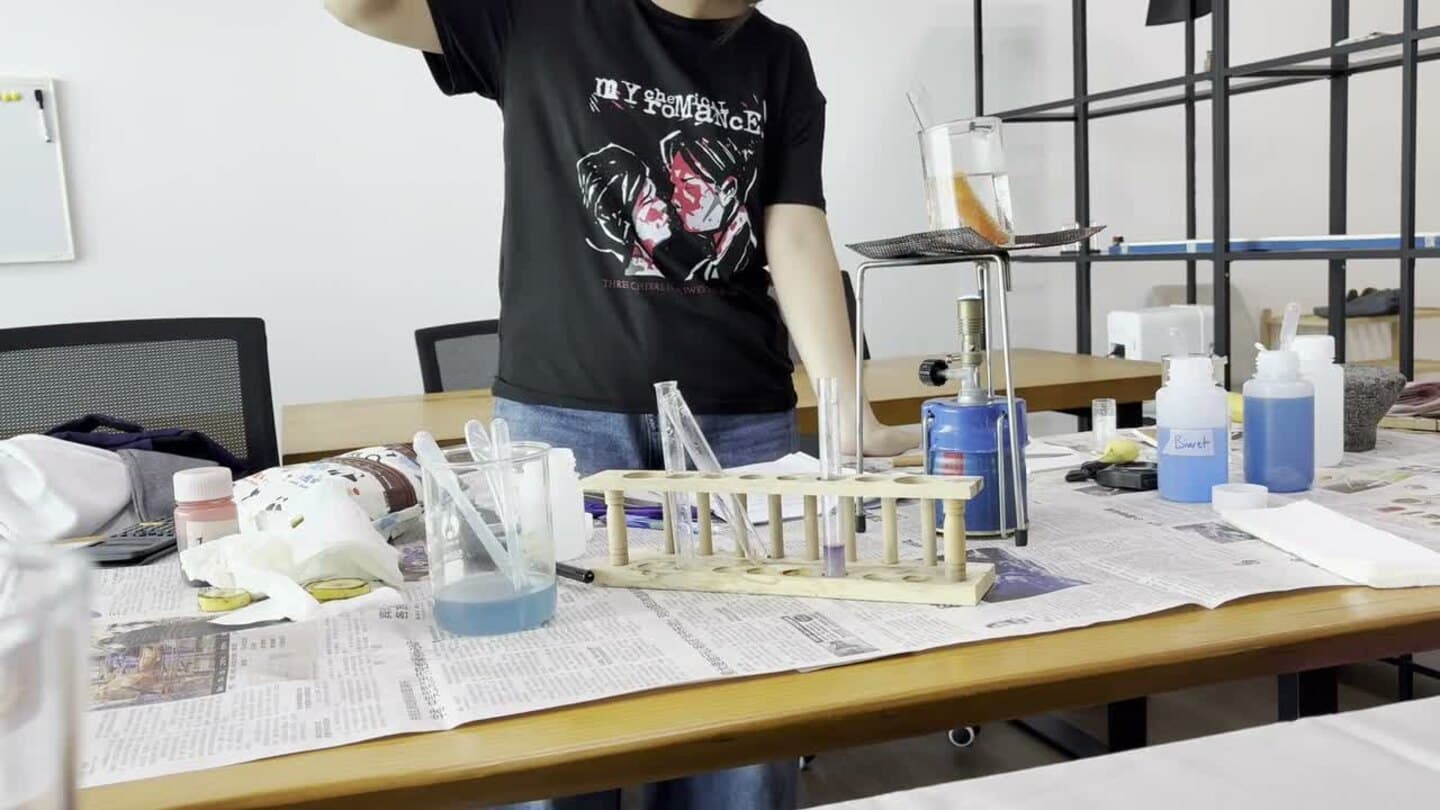
Our Henderson Practical Lab is a full laboratory for Chemistry, Physics, and Biology practical work, not an ordinary classroom.
General timings only, not a list of available classes. Dates, topics, venue and places must be confirmed before booking.
Open only the route that matches your next decision.
SEAB states that private candidates for science subjects with laboratory-based components must either have sat the same subject before, or attend a course of instruction in science practical and complete it before the practical paper.
Eclat’s practical sessions provide supervised lab training plus centre-held attendance records. Where relevant, we may also issue an internal attendance or completion document, but the SEAB-facing requirement is the declaration supported by the centre’s records.
O-Level Biology is becoming SEC G3 from 2027. From 2027, today's O-Level subjects continue as SEC G3 subjects with the same overall standard. This page keeps the 2026 exam name for current candidates.
Paper 3 lasts 1 h 50 min, carries 40 marks, and contributes 20% of the Biology grade. The paper comprises two to three compulsory practical questions that test Planning, MMO, PDO, and ACE skill strands.
Yes. Expect MMO checkpoints on focusing, magnification, and annotated biological drawings that follow exam rules on proportions and labels.
Planning contributes 15% of the Paper 3 marks. You will frame hypotheses, controls, and data treatment before running the investigation.
This hub covers Paper 3 practical skills. For the full 6093 papers, topic list, and assessment weighting, use the O-Level Biology 6093 syllabus guide instead.
For practical, lab, and experiment courses, Eclat Institute keeps centre-held attendance records and may also issue an internal attendance or completion document based on participation and internal assessment.
Official references: MOE private-school certificate guidance · SEAB practical requirement for private candidates · SEAB registration declaration note.
Students can move between observation, graphing, and explanation without needing the experiment type to be predictable.
Mixed enzyme and food-test practicals · Drawing plus graph combinations · Timed O-Level biology practical runs
Students can complete a full biology practical with better pacing, fewer presentation errors, and clearer evaluation language.
Apparatus on the bench, units checked, stopwatches zeroed.
Short investigations marked against the SEAB rubric in real time.
Full graph or analysis with units, gradients, and uncertainty.
Why your improvement lost the mark and what the markscheme wanted.
Timings last updated: 17 July 2026. Confirm the venue and exact session before travelling.
O-Level: SGD $120 - $200 per lesson
Contact us to learn more about our tailored packages and available pricing options.
Tell us the student's school, level, next practical assessment, and whether microscopy, food tests, Planning, or ACE is the main concern. We will check the suitable group, venue, and apparatus plan.
WhatsApp opens a private enquiry with our team; it does not mean the lesson itself is one-to-one.
“Common topic patterns”
Biology practical predictions
Use our observation templates, virtual microscope assets, and past-data exercises to rehearse PDO and ACE responses between school lab sessions.
Expect microscope work, food and enzyme tests, osmosis investigations, photosynthesis or transpiration tasks, and ecology fieldwork such as quadrat or transect sampling.
Use the archive when you want a specific 6093 Paper 3 guide for microscopy, osmosis, fieldwork, planning, or ACE.