P
Planning
Method justification, hazards, data treatment for kinetics or thermochemistry.
State concentration ranges and at least three data points you'll collect.
Loading page…


Loading blog content…
Paper 4 experiments, technique, and timed practice in guided laboratory sessions.
Source: 2026 SEAB 9476 syllabus (PDF)
Updated 2026-10-03
Method justification, hazards, data treatment for kinetics or thermochemistry.
State concentration ranges and at least three data points you'll collect.
Volumetric technique, qualitative analysis, instrumental observation.
Rinse the burette with titrant, not water - one tick mark every time.
Concordant titres, observation tables, calculation layout.
Show working in mole units - never jump straight to grams.
Percentage uncertainty, systematic error spotting, realistic improvements.
Quote percentage uncertainty alongside your final answer in every calculation.
Paper 4 runs for 2 h 30 min, carries 50 marks, and is weighted at 20% of the H2 grade. Candidates rotate through linked tasks that span Planning, MMO, PDO, and ACE skill strands.
Yes. The question paper supplies the latest qualitative analysis notes, but you must decide which reagents, confirmatory tests, and washes to deploy under time pressure.
Expect titrations, thermochemistry, kinetics, gravimetric work, and instrumental observations alongside data-handling questions that check plotting and analysis fluency.
For practical, lab, and experiment courses, Eclat Institute keeps centre-held attendance records and may also issue an internal attendance or completion document based on participation and internal assessment.
Official references: MOE private-school certificate guidance · SEAB practical requirement for private candidates · SEAB registration declaration note.
Use the archive when you want a specific titration, QA, planning, PDO, uncertainty, or ACE guide.
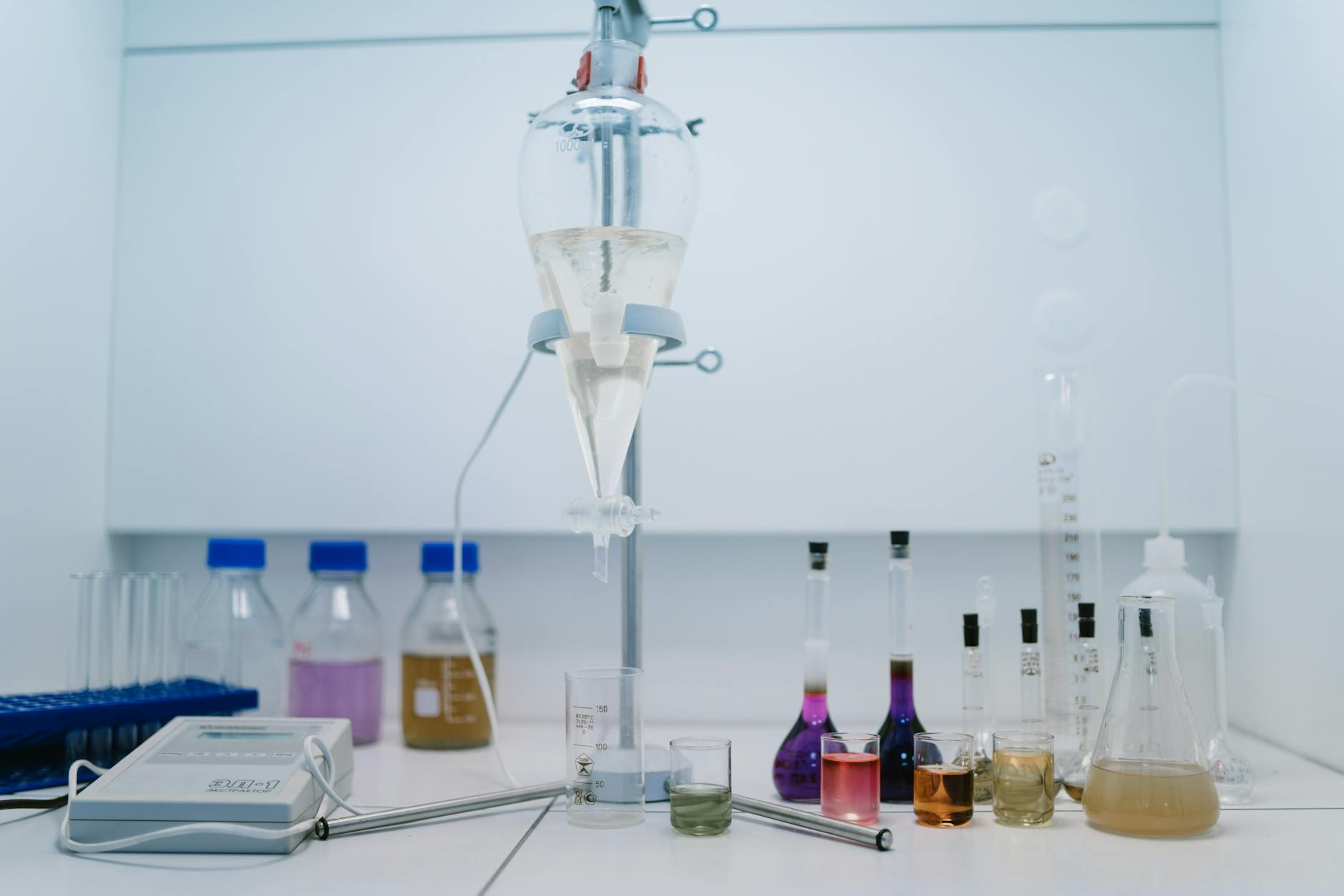
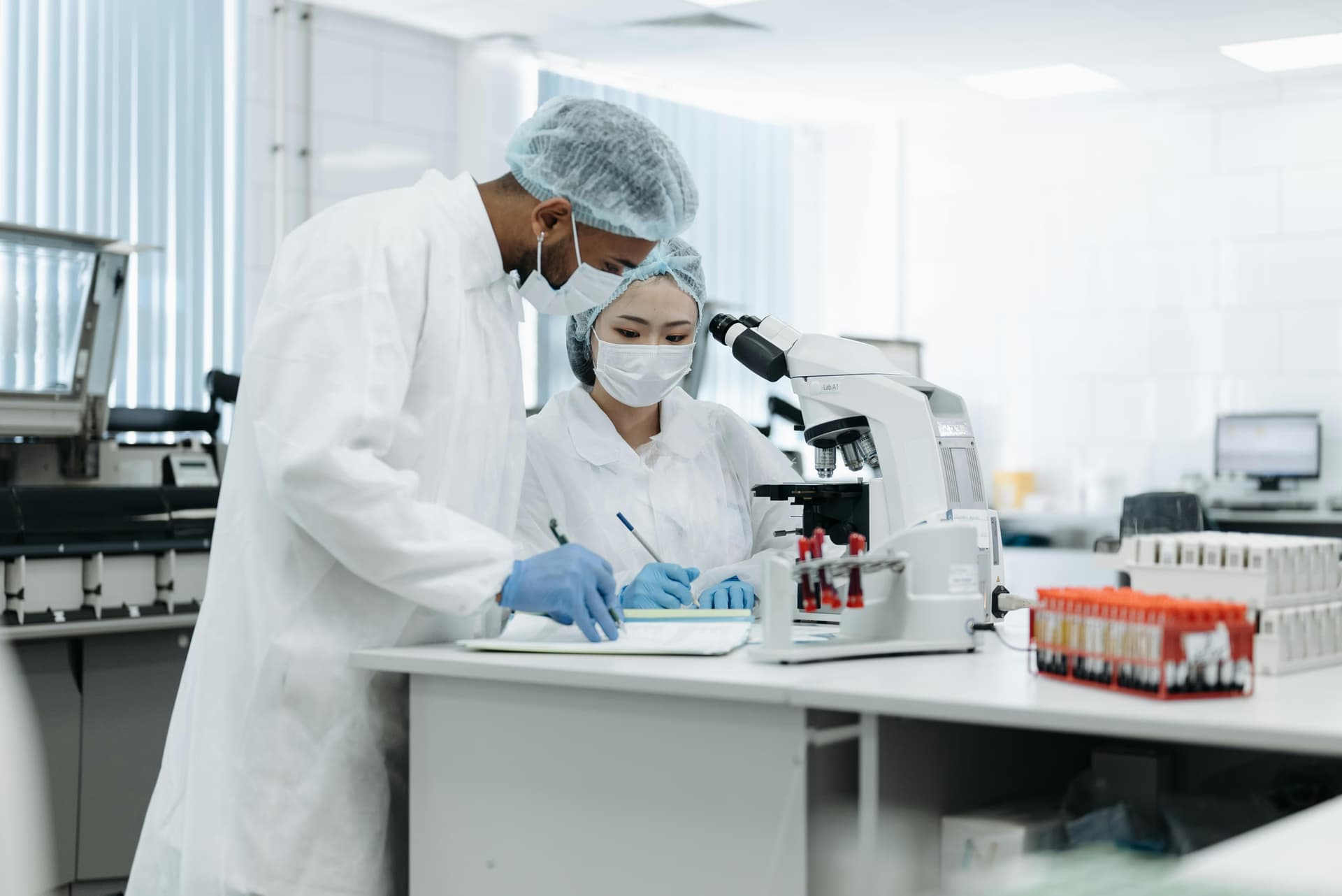



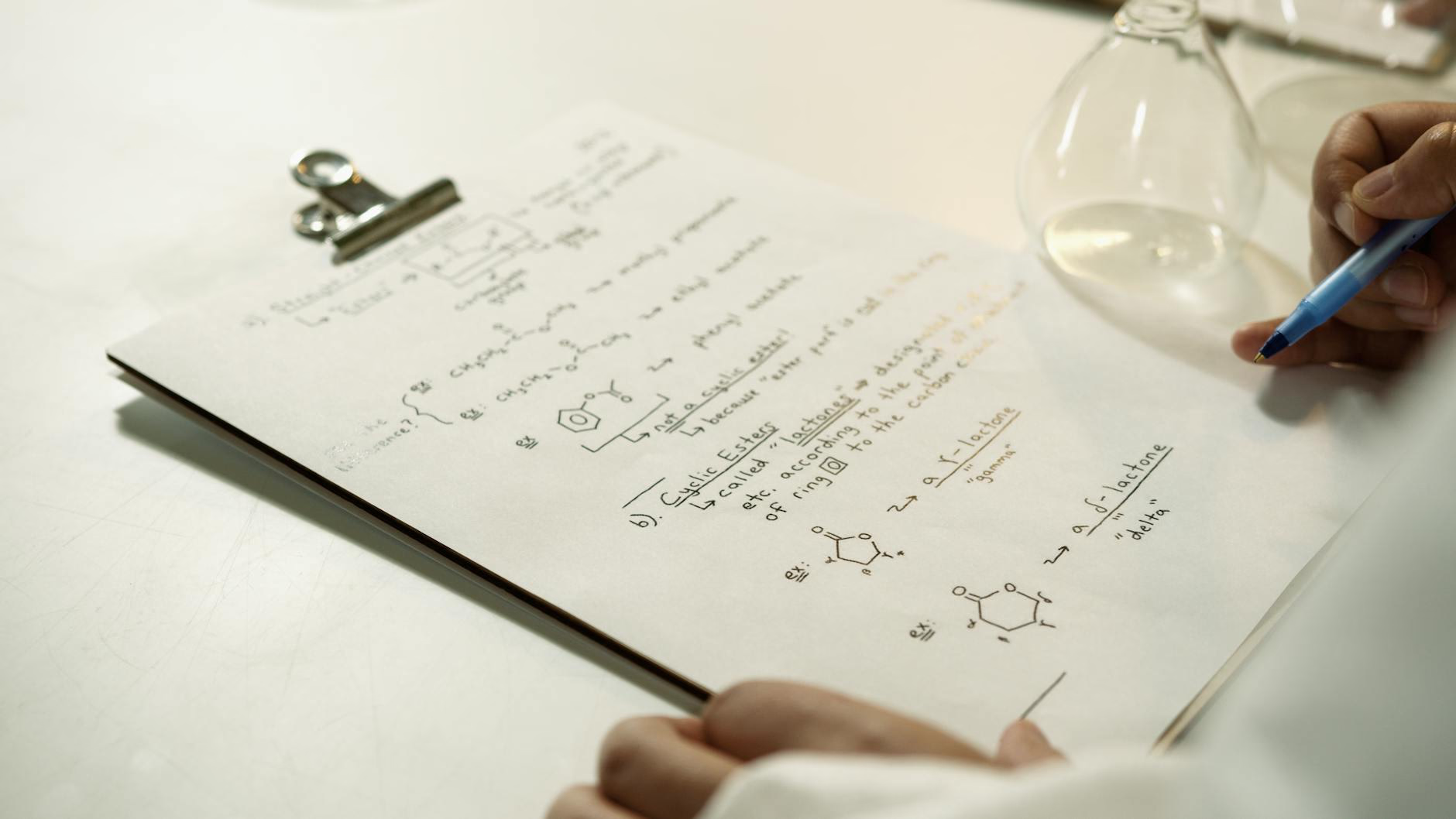

Paper 4 is weighted 20% of the A-Level grade.
The H2 Chemistry practical programme progresses from stable quantitative routines into analysis, kinetics, planning, and full-paper integration.
Acid-base titration · Mole calculations from practical data · Percentage-mass planning questions
Students can build the calculation chain correctly from the apparatus work instead of treating the maths as a separate problem.
Testing of gases and anions · Testing of cations and unknown salts · QA linked to transition-metal reasoning
Students can interpret chemical observations cleanly and defend what they think the unknown species are.
Gravimetric analysis · Kinetics measurements · Thermometric titration and solubility-product work
Students can handle longer practical sequences that mix observation, calculation, and explanation in one question.
Redox and iodimetric titrations · Planning with unfamiliar apparatus choices · Timed H2 Chemistry practical sets
Students can finish H2 Chemistry practicals with stronger sequencing, cleaner calculations, and more credible planning answers.
Justify procedure choices and quantify risks before any apparatus is touched.
Zero-error checks, repeat readings, and timing discipline under Paper 4 pacing.
Live graphing with gradient units, intercepts, and uncertainty bands.
Reconcile anomalies, argue limitations, and recommend defendable improvements.
Henderson Road
Our Henderson Practical Lab is a full laboratory for Chemistry, Physics, and Biology practical work, not an ordinary classroom.
General timings only, not a list of available classes. Dates, topics, venue and places must be confirmed before booking.
Timings last updated: 17 July 2026. Confirm the venue and exact session before travelling.
A-Level: SGD $210 - $290 per lesson
Contact us to learn more about our tailored packages and available pricing options.
Lab teaching uses scheduled group formats. Tell us the school, level, subject, and next practical paper or WA so we can check the right group, venue, and apparatus plan.
WhatsApp opens a private enquiry with our team; it does not mean the lesson itself is one-to-one.
SEAB states that private candidates for science subjects with laboratory-based components must either have sat the same subject before, or attend a course of instruction in science practical and complete it before the practical paper.
Eclat's practical sessions provide supervised lab training plus centre-held attendance records. Where relevant, we may also issue an internal attendance or completion document, but the SEAB-facing requirement is the declaration supported by the centre's records.
Under the 9476 syllabus, Planning contributes 4% to the overall H2 Chemistry grade. MMO, PDO, and ACE contribute a further 16%, together making up the 20% weighting for Paper 4.
We simulate Paper 4 workflows with micro-scale setups, video walkthroughs, and structured uncertainty write-ups so you can practise MMO and ACE responses even when equipment is limited.
Start with the titration, qualitative analysis, and planning guides first. Those three skill clusters cover the most common Paper 4 routines and give you the fastest improvement in PDO and ACE.