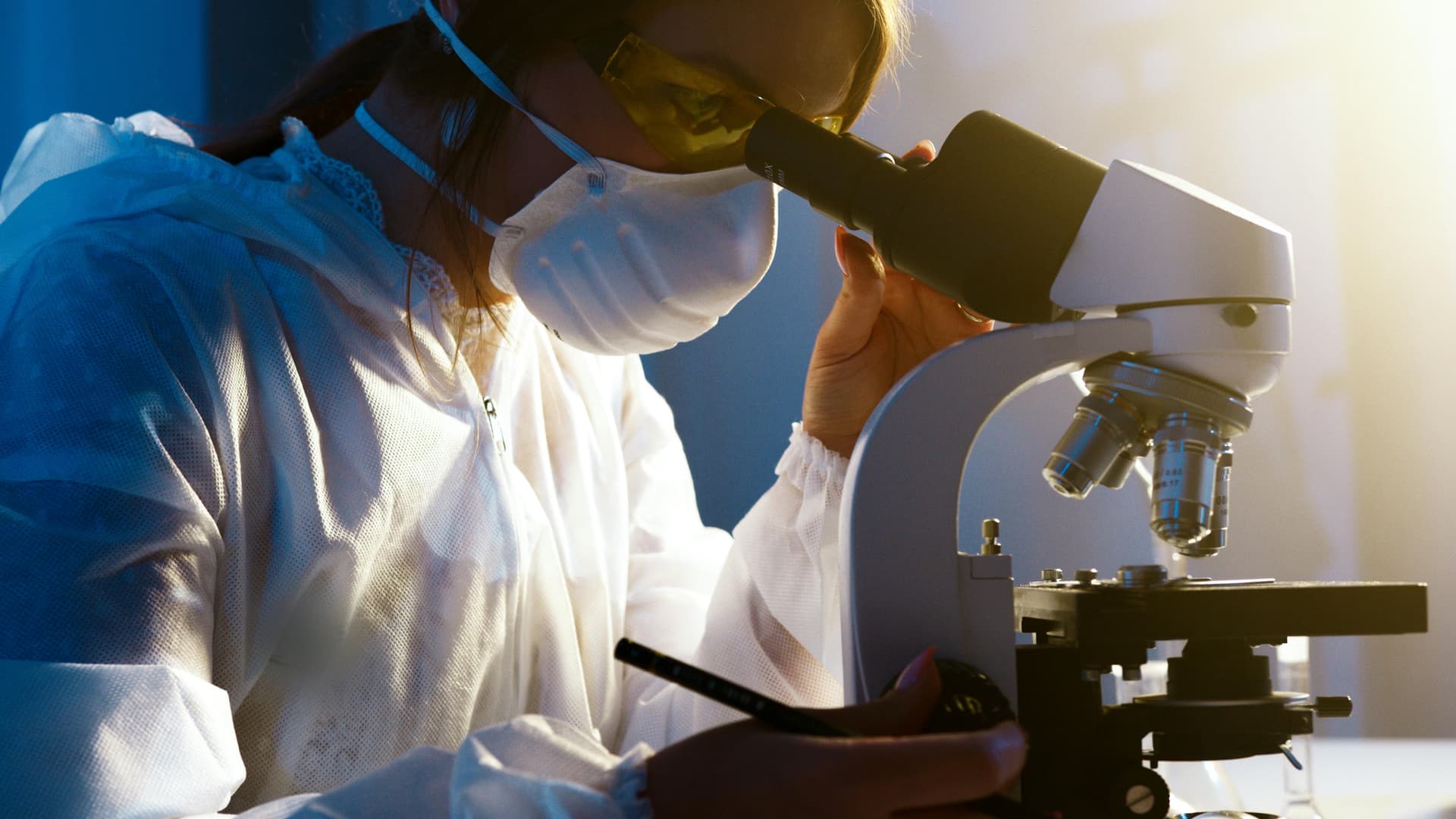
For practical, lab, and experiment courses, Eclat Institute may issue an internal Certificate of Completion/Attendance based on participation and internal assessment.
This is an internal centre-issued certificate, not an MOE/SEAB qualification or accreditation.
Recognition (if any) is determined by the receiving school, institution, or employer.
For SEAB private candidates taking science practical papers, SEAB states you should either have taken the subject before or complete a practical course before the practical exam date.
Planning a revision session? Use our study places near me map to find libraries, community study rooms, and late-night spots.
Q: What does H2 Biology Notes (9477, 2026): Core Idea 3 - Energy & Equilibrium cover? A: Connect photosynthesis, respiration, and cell signalling into a coherent energy story for 2026 H2 Biology so you can explain molecular workflows, analyse data, and model regulation in the examinations.
TL;DR Use this guide to connect photosynthesis, respiration, chemiosmosis, and cell signalling into one “energy story”
you can deploy in essays, data-handling, and practical planning across Papers 2–4.
Status: Updated for SEAB H2 Biology (9477, first exam 2026); syllabus last checked 2026-01-12. [1]
Why energy and equilibrium dominates every paper
Paper 1 (1 h, 15%): MCQs on pigments, organelle structure, and respiration/signalling checkpoints.
Paper 2 (2 h, 30%) and Paper 3 (2 h, 35%): Structured and essay prompts routinely pair photosynthesis with respiration or ask how signalling modulates metabolism.
Paper 4 (2 h 30 min, 20% split across Planning/MMO/PDO/ACE): Limiting factor photosynthesis experiments and respirometry rate investigations sit squarely in Core Idea 3 learning outcomes.
Integrated scope: Core Idea 3 of SEAB 9477 (first exam 2026) covers energy capture, energy release, anaerobic routes, chemiosmosis, and cell signalling (insulin/glucagon). [1]
Syllabus overview
Need for energy in living organisms; chloroplast and mitochondrion structures
Limiting factors of photosynthesis (temperature, light intensity, COX2
concentration)
Glycolysis, link reaction, Krebs cycle, oxidative phosphorylation; chemiosmosis in photosynthesis and respiration
Anaerobic respiration in yeast and mammalian muscle; NAD regeneration and low ATP yield
Cell signalling overview: ligand reception, phosphorylation cascades, second messengers, kinases/phosphatases, insulin and glucagon pathways
Concept 1: Organelles and pigments
Structural recall: Be able to identify chloroplast components (grana, intergranal lamellae, stroma, DNA, ribosomes) and mitochondrion features (outer/inner membrane, cristae, matrix, circular DNA, ribosomes) in diagrams and electron micrographs.
Absorption vs action spectra: Show how chlorophyll a, chlorophyll b, and accessory pigments absorb across wavelengths, then connect this to action spectra demonstrating overall photosynthetic rate. Explain why accessory pigments broaden usable light. [2]
Concept 2: Photosynthetic energy capture
Light-dependent reactions (thylakoid membranes): Photons excite chlorophyll; water photolysis releases electrons and OX2. Electrons pass through an electron transport chain that pumps protons into the lumen; ATP synthase uses the gradient to form ATP. Re-excitation in photosystem I allows reduction of NADP+ to reduced NADP. [2]
Calvin cycle (stroma): Outline the three phases and the role of ATP and reduced NADP:
Fixation: Rubisco adds COX2 to RuBP, forming 3-PGA.\
Reduction: 3-PGA is reduced to G3P using ATP and reduced NADP.\
Regeneration: G3P regenerates RuBP to continue the cycle.
Limiting factors: Investigate and explain how temperature, light intensity, and COX2 concentration limit photosynthesis. In Paper 4 tasks, control leaf age and light wavelength, and identify rate plateaus or optima.
Concept 3: Respiration as an energy-releasing process
Glycolysis (cytosol): Outline the conversion of glucose to pyruvate, noting the small ATP gain and production of reduced coenzymes.
Link reaction and Krebs cycle (mitochondrial matrix): Summarise pyruvate oxidation to acetyl-CoA (decarboxylation and dehydrogenation), then the cyclic dehydrogenations and decarboxylations that release COX2, produce reduced coenzymes, and yield a small amount of ATP via substrate-level phosphorylation.
Oxidative phosphorylation (inner mitochondrial membrane): Electrons from reduced coenzymes travel along the electron transport chain, oxygen acts as the terminal electron acceptor forming water, and the resulting proton gradient drives ATP synthesis. Names of specific complexes are not required.
Chemiosmosis across contexts: Link proton gradients and ATP synthase function in mitochondria and chloroplasts to show why chemiosmosis is the unifying mechanism for ATP generation.
Concept 4: Anaerobic pathways
Yeast: Pyruvate is converted to ethanol, regenerating NAD+ so glycolysis can continue when oxygen is absent. [2]
Mammalian muscle: Pyruvate reduces to lactate to regenerate NAD+ and allow limited ATP production during intense exercise. [2]
Explain why anaerobic routes yield far less ATP than aerobic respiration.
Concept 5: Respiration investigations and data handling
Design Paper 4 investigations that vary substrate concentration, substrate type, or temperature to see how they affect respiration rate. Use respirometers with controls to correct for temperature or volume changes, and report rates per unit time and mass for PDO/ACE credit.
Concept 6: Cell signalling and metabolic regulation
Core stages: Outline ligand-receptor interaction, phosphorylation cascades with amplification, and gene-expression changes as the cellular response.
Second messengers and enzymes: Explain how cAMP and other second messengers relay signals, and how kinases and phosphatases turn pathways on or off.
Glucose homeostasis examples: Describe how insulin (receptor tyrosine kinase) and glucagon (G-protein-coupled receptor) binding causes receptor conformational change, triggers downstream signalling, and adjusts blood glucose via uptake/glycogenesis or glycogen breakdown/gluconeogenesis. Keep to the outline level-specific messengers or kinase names are not required. [1]
Exam strategy reminders
Paper 2: Expect short answers on pigment spectra, Calvin cycle phases, and contrasts between aerobic and anaerobic respiration.
Paper 3: Prepare essays that bridge photosynthesis and respiration or outline how signalling modulates glucose levels.
Paper 4: Practise planning and evaluating limiting-factor and respirometry investigations with clear controlled variables and rate calculations.
Mixing up where ATP and reduced NADP are produced in photosynthesis, then placing Calvin cycle steps in the thylakoid instead of the stroma.
Describing aerobic respiration as a single undifferentiated process without separating glycolysis, the link reaction, the Krebs cycle, and oxidative phosphorylation.
Saying anaerobic respiration is “the same but with less oxygen” instead of explaining how NAD regeneration allows glycolysis to continue when oxygen is absent.
Treating insulin and glucagon as opposites in name only, without explaining the receptor signalling and metabolic effect that distinguishes them.
Describing limiting factors by memorised graphs without stating why rate plateaus appear at high light intensity, carbon dioxide concentration, or temperature.
How this topic appears in Papers 2, 3, and 4
Paper 2: Expect structured questions on photosynthesis graphs, respiration pathways, chemiosmosis, and cell-signalling comparisons.
Paper 3: Core Idea 3 is a high-yield essay topic because it supports long answers on metabolism, regulation, and cross-topic “compare and explain” prompts.
Paper 4: Limiting-factor investigations, respirometry, rate calculations, and evaluation language all pull directly from this topic.
Quick retrieval check
Why does ATP synthesis in chloroplasts and mitochondria both depend on a proton gradient?
State one reason why photosynthetic rate plateaus at high light intensity and one reason why respiration rate can still change with temperature.
How does insulin signalling lower blood glucose differently from glucagon signalling?
Where can I find the full H2 Biology Notes series? Start at the H2 Biology Notes hub and follow the Core Idea sequence from 1 → 4.
Where can I download a PDF of these Core Idea 3 notes? Use the “Download PDF” button on this page, or open the direct PDF link:
H2 Biology Core Idea 3 notes PDF.