
Loading blog content…
Loading page…
Loading blog content…
Prefer a quick answer?Ask AI:
Small-group O-Level Chemistry tuition for Sec 3 to 4 students who need clearer 6092 theory answers, precise qualitative analysis observations, and regular Paper 3 practice.
O-Level Chemistry is becoming SEC G3 from 2027. From 2027, today's O-Level subjects continue as SEC G3 subjects with the same overall standard. This page keeps the 2026 exam name for current candidates.
Small-group O-Level Chemistry tuition for Sec 3-4 students on the 6092 syllabus.
This page covers 6092 theory lessons, fees, and class format. For practical training, pure Chemistry students can use the O-Level Chemistry Paper 3 practical hub. Combined Science students taking Chemistry in 5086 or 5088 can use the Combined Science Chemistry Paper 5 page.
| Sec 3 foundation | Mole concept, formula writing, bonding, acids, bases, salts, and early QA language. |
Term 1 of Sec 3 gives students time to understand mole calculations and practise Paper 3 skills before Sec 4. A student who starts in Sec 4 should first work on the topics and practical skills causing the most lost marks.
Classes have up to 8 students. The tutor checks students' working and gives feedback during class.
In-person theory lessons run at Jurong East Centre (Vision Exchange) (2 Venture Dr, #16-07 Vision Exchange). Our one-north office is for talks and presentations only, not regular lessons. See the Centre section above for the full address and map link.
Share the school, level, and latest grade. We will recommend a suitable class and explain what happens next.
Choose the question closest to the decision you are making.
| Sec 4 exam preparation | Organic recall, QA phrasing, titration, Paper 3 planning, and Paper 2 calculation and explanation practice. |
| Class format | Weekly 1.5-hour small-group lessons capped at 8 students. Holiday intensives are scheduled separately. |
| Practical training | Regular Paper 3 practice, titration, QA observations, data handling, planning, and ACE evaluation language. |
These are 2026 O-Level 6092 topic groups. For the 2027 SEC G3 course, use K324 and the student's exam-year syllabus. Do not treat the two editions as interchangeable.
Practise interpreting observations, calculating quantities and explaining experimental methods.
The lesson outline is a teaching plan, not an official year-by-year sequence. We adjust it to the student's school and examination year.
4 lessons each month, 1.5 hours each.
SGD 360-400
per subject, per month
Continuing students pay SGD 360 per month next year, regardless of their original start month.
Pricing reflects four weekly 1.5-hour lessons. Paper 3 practical intensives and holiday classes are quoted separately.
Open the sections below for fees, class formats, syllabus details, and checklists.
| Paper | Focus | Tuition emphasis |
|---|---|---|
| Paper 1 MCQ | Recall speed and trap avoidance | Concept checkpoints and speed drills |
| Paper 2 Structured | Method marks and explanation clarity | Answer structure and complete working |
| Paper 3 Practical | Planning, titration, QA, ACE | Laboratory practice and evaluation language |
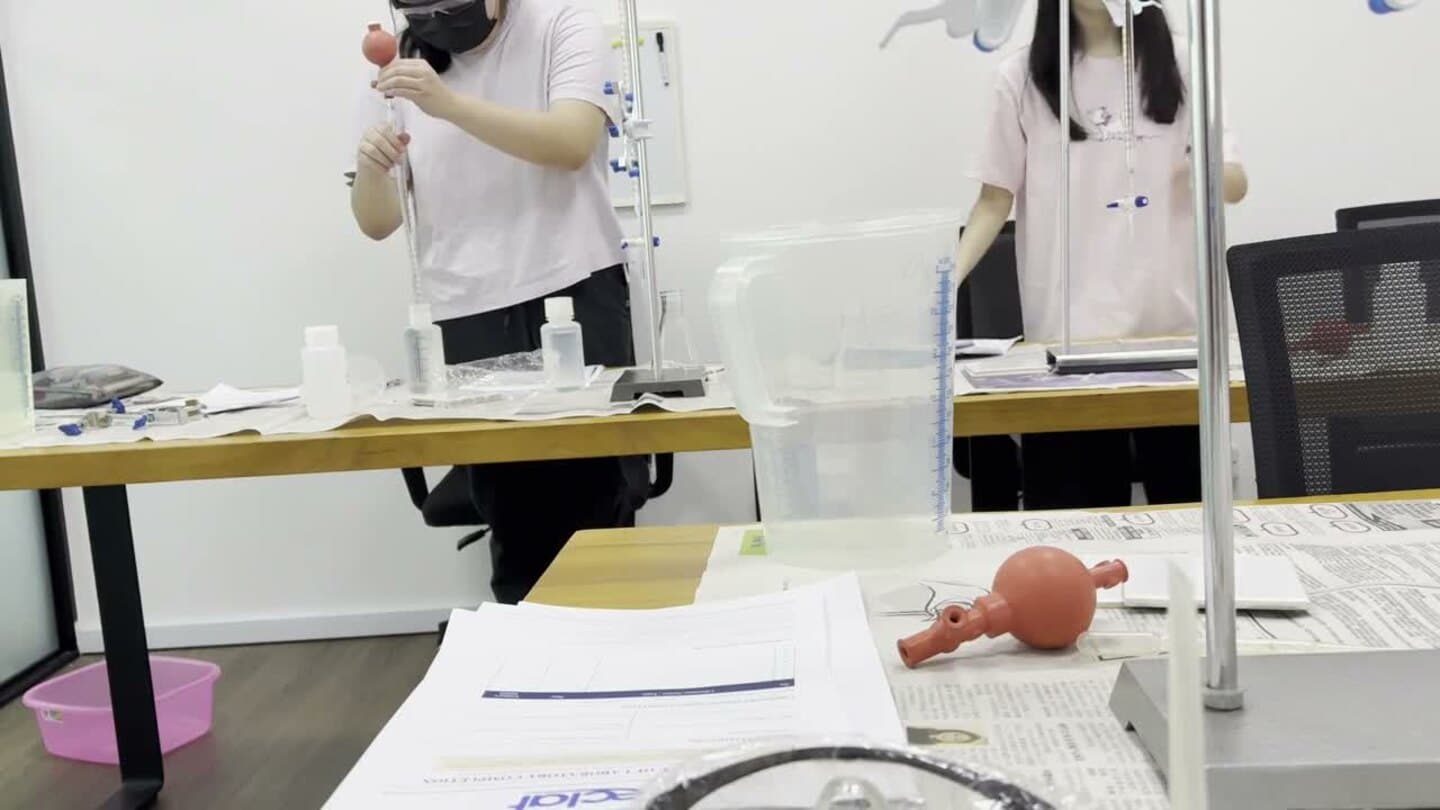
Use our O-Level Chemistry practicals hub for Paper 3 notes, titration steps, qualitative analysis observation practice, and ACE evaluation examples.
Keep this page for class details and fees. Use the practical hub when the question is academic: Paper 3 format, titration table, burette reading, QA table, observation wording, Planning, measurement accuracy, or ACE.
Worked examples for mole ratios, reacting masses, concentration, empirical formulae, yield, purity, and limiting reactants.
Fees are charged monthly for each subject. The Early Intake from October to February is SGD 360 per month. The Regular Intake from March to June is SGD 380 per month. The Catch-up Intake from July to September is SGD 400 per month. Students who continue into the next year return to the Early Intake rate of SGD 360 per month. The monthly fee covers 4 weekly 1.5-hour lessons. Holiday intensives and practical clinics are scheduled separately. Use the WhatsApp button to ask about current class times.
Paper 3 is 20% of the O-Level Chemistry grade. Practical skills (planning, titration technique, QA observation language, and ACE evaluation) need consistent rehearsal across the year.
Common pain points are mole concept consistency, organic chemistry recall under time pressure, and writing precise QA observations and explanations.