P
Planning
Hypothesis, controls, and data treatment - written before you touch apparatus.
Name your controlled variables explicitly and quote the equation you'll use.
Loading page…


Loading blog content…
Use this hub for guided apparatus practice, current schedules, venues, and specific experiment drills. Start with the pinned 2026 guide when you need Paper 3 format, notes, and tips.
Last updated: 2026-07-21
Source: 2026 SEAB 6091 syllabus (PDF)
Hypothesis, controls, and data treatment - written before you touch apparatus.
Name your controlled variables explicitly and quote the equation you'll use.
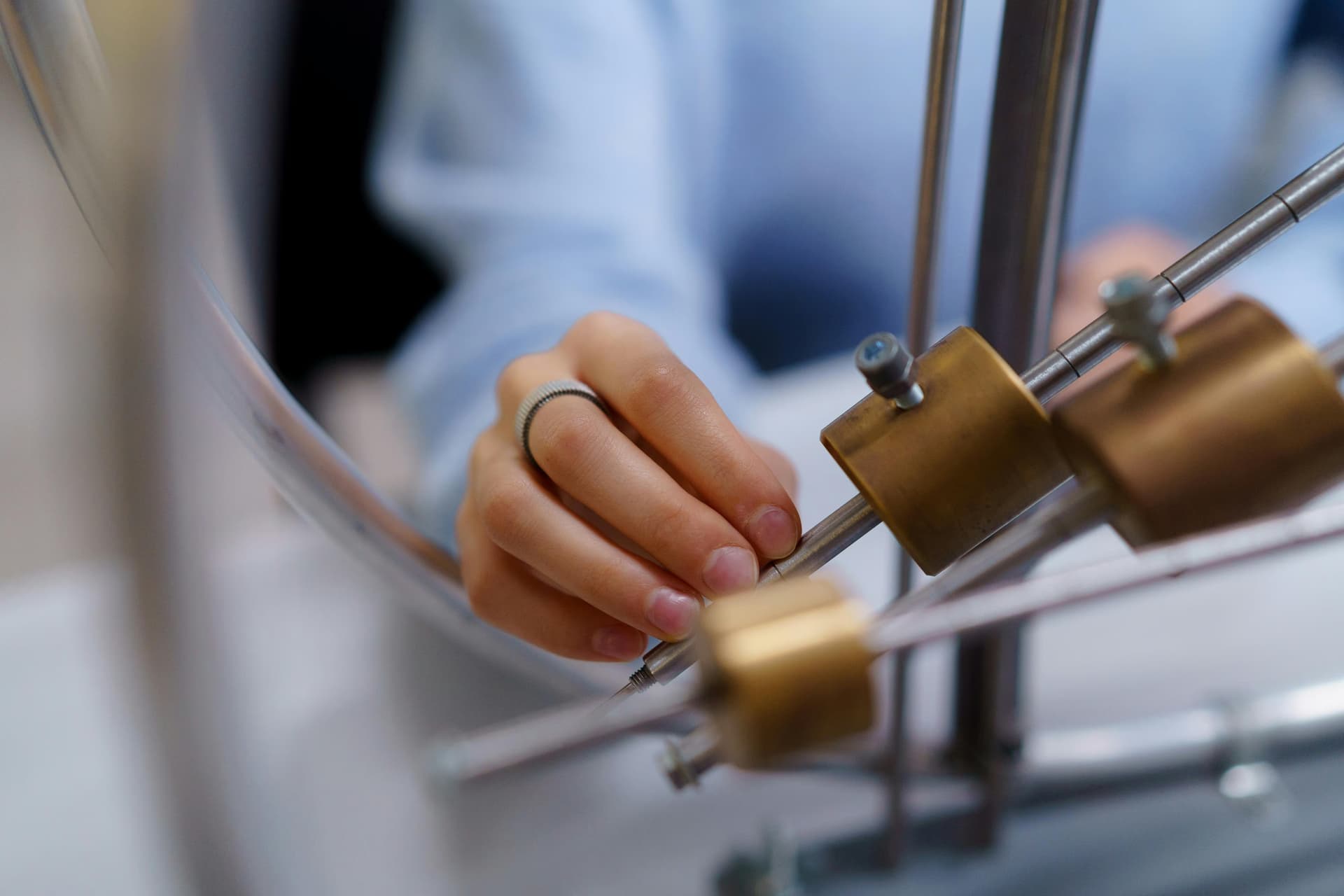
Apparatus setup, readings to the correct precision, technique under timing.
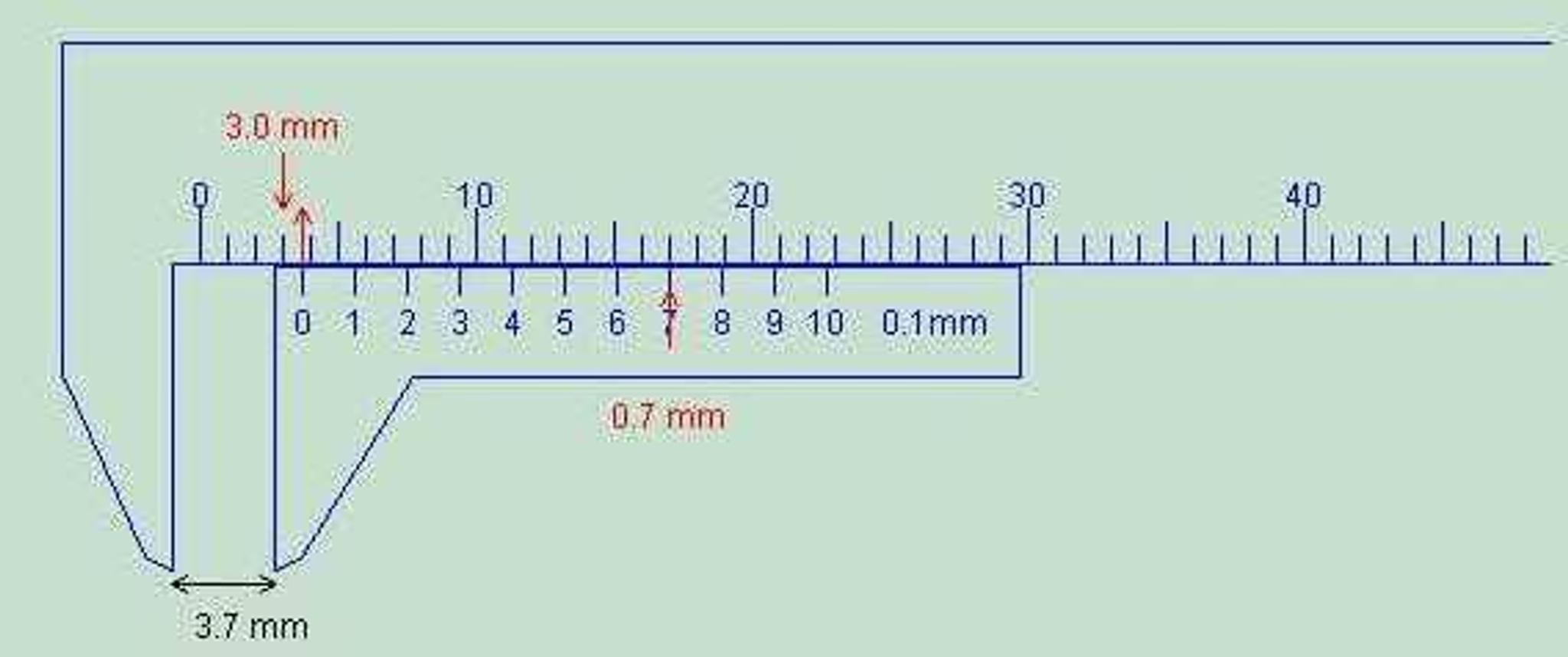
Rehearse vernier and micrometer reads to muscle memory before exam day.
Tables, graphs, units, significant figures, gradient lines.
Label every axis with quantity and unit in full - no abbreviations.
Conclusions tied to data, justified improvements, error sources.
Quote a number from your table in every conclusion sentence.
Paper 3 is weighted 20% of the O-Level grade.
The physics practical programme moves from clean measurement and graphing into multi-topic setups, planning, and timed full-paper work.
Period of a pendulum · Cooling curves of water · Glass block refraction and refractive index
Students can set up apparatus neatly, record dependable readings, and plot graphs that support the conclusion.
Resistor and rheostat circuits · Focal length and water-wave tasks · Centre of gravity and resistivity
Students can adapt to unfamiliar apparatus faster and describe variable changes with more confidence.
D.C. circuits and optics comparisons · Moments and acceleration due to gravity · Heat-transfer analysis with planning prompts
Students can propose sensible controls, interpret the pattern in the data, and suggest realistic apparatus improvements.
Henderson Road
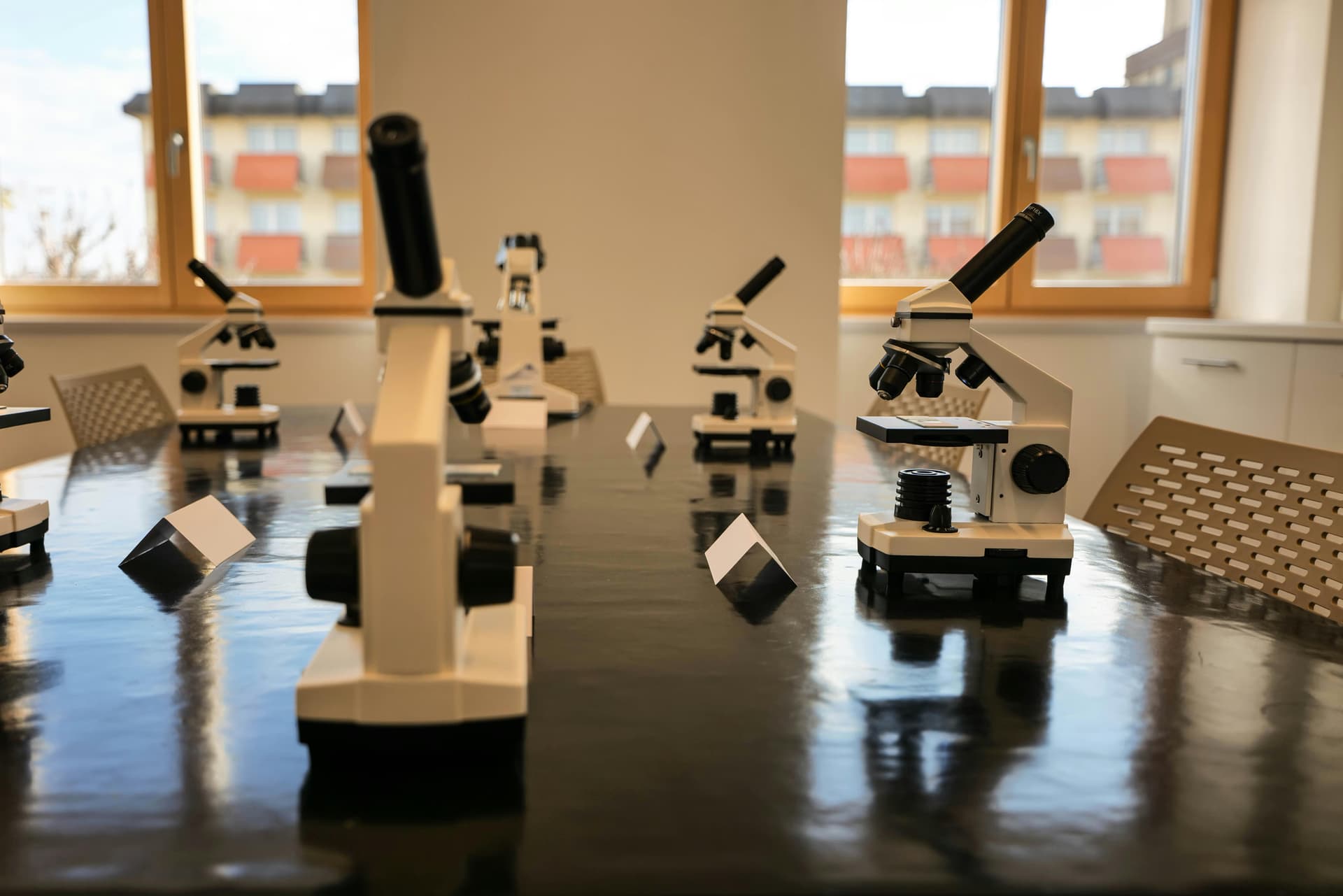
Our Henderson Practical Lab is a full laboratory for Chemistry, Physics, and Biology practical work, not an ordinary classroom.
General timings only, not a list of available classes. Dates, topics, venue and places must be confirmed before booking.
Open only the route that matches your next decision.
SEAB states that private candidates for science subjects with laboratory-based components must either have sat the same subject before, or attend a course of instruction in science practical and complete it before the practical paper.
Eclat’s practical sessions provide supervised lab training plus centre-held attendance records. Where relevant, we may also issue an internal attendance or completion document, but the SEAB-facing requirement is the declaration supported by the centre’s records.
O-Level Physics is becoming SEC G3 from 2027. From 2027, today's O-Level subjects continue as SEC G3 subjects with the same overall standard. This page keeps the 2026 exam name for current candidates.
Paper 3 lasts 1 h 50 min, carries 40 marks, and makes up 20% of the overall Physics grade. Section A carries 20 marks across 1 to 2 compulsory practical experiment questions for 55 minutes; Section B carries 20 marks as one compulsory 55-minute practical experiment question.
Planning tasks account for 15% of the Paper 3 marks. You must outline hypotheses, controls, and data treatment steps before running the experiment.
Centres typically rotate candidates with 55-minute slots per section, so practise setting up circuits and optics quickly when apparatus is shared.
For practical, lab, and experiment courses, Eclat Institute keeps centre-held attendance records and may also issue an internal attendance or completion document based on participation and internal assessment.
Official references: MOE private-school certificate guidance · SEAB practical requirement for private candidates · SEAB registration declaration note.
Magnification and specific heat capacity · Spring extension and refractive index · Timed O-Level physics practical sets
Students can complete the practical with better pacing and fewer avoidable graphing or presentation mistakes.
Apparatus on the bench, units checked, stopwatches zeroed.
Short investigations marked against the SEAB rubric in real time.
Full graph or analysis with units, gradients, and uncertainty.
Why your improvement lost the mark and what the markscheme wanted.
Timings last updated: 17 July 2026. Confirm the venue and exact session before travelling.
O-Level: SGD $120 - $200 per lesson
Contact us to learn more about our tailored packages and available pricing options.
Lab teaching uses scheduled group formats. Tell us the school, level, subject, and next practical paper or WA so we can check the right group, venue, and apparatus plan.
WhatsApp opens a private enquiry with our team; it does not mean the lesson itself is one-to-one.
“498 comments comparing answers and exam difficulty”
6091/03 Megathread 2025
Use simulations, smartphone sensors, and our worksheet prompts to rehearse measurements, uncertainty handling, and ACE commentary before school lab sessions.
Start with the 6091 Paper 3 guide for the exam structure, then use the hub routes for graphing, Planning, ACE, and named experiments such as pendulum, circuits, optics, thermal practicals, and measurement drills.
Use the SEAB 6091 practical technique list as the boundary: density and mechanics, measuring g, moments, thermal energy, optics, waves, resistance, magnetic effect of current, and electromagnetic induction. Do not treat any predicted experiment list as official.
Use the archive when you want a specific Paper 3 experiment, graphing drill, Planning exercise, ACE example, or apparatus routine.