01
5086
Physics + Chemistry
Paper 5 has Physics + Chemistry questions. Most popular combination at top secondary schools.
Physics componentChemistry componentLoading page…


Loading blog content…
Choose your 5086, 5087, or 5088 components, learn the Paper 5 format, and practise both sciences in guided and timed lab sessions.
Last updated: 2026-07-21
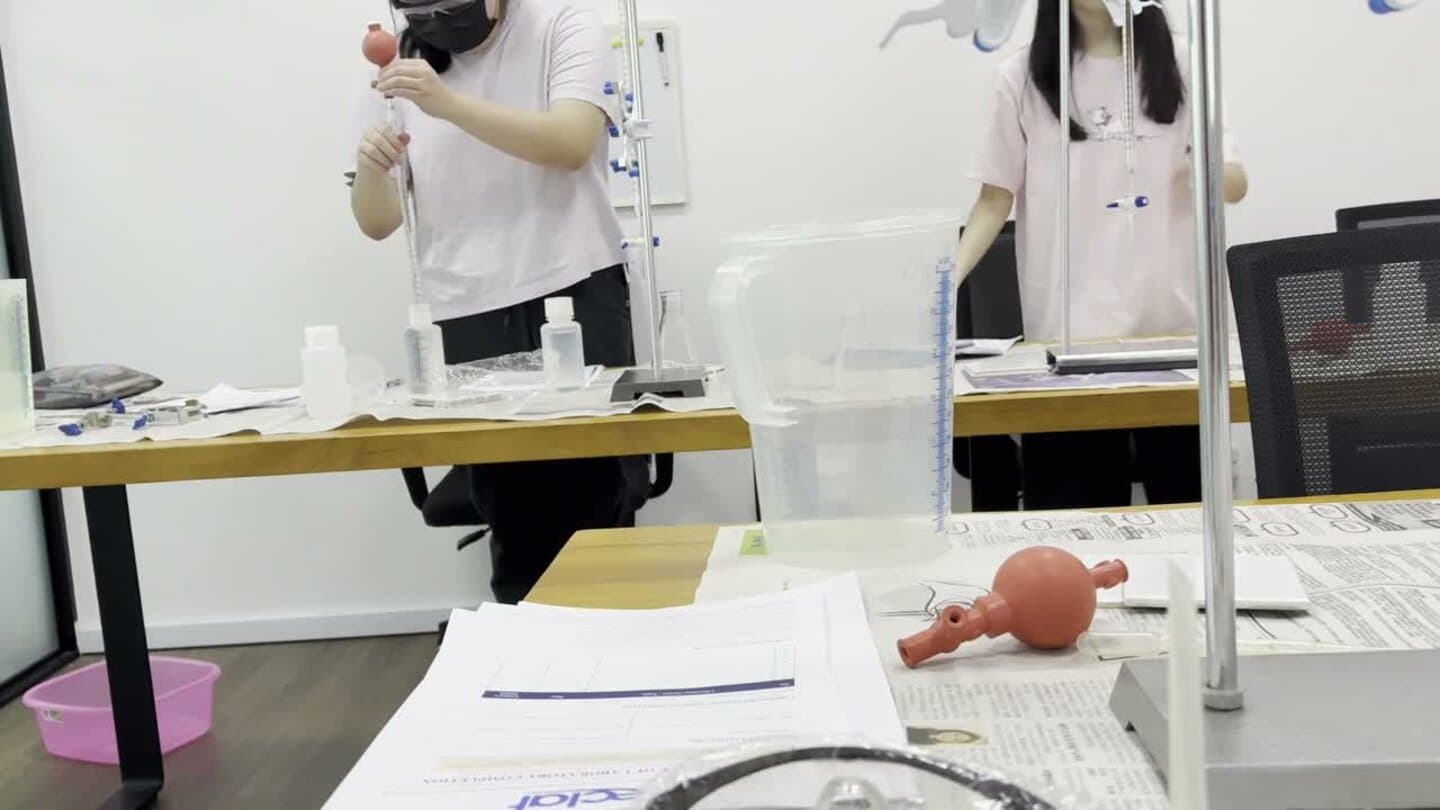
Taking Combined Science? Choose the pair on your school's syllabus, then practise both Paper 5 components in guided lab sessions.
Each Combined Science syllabus pairs two science components.
Paper 5 has Physics + Chemistry questions. Most popular combination at top secondary schools.
Physics componentChemistry componentPaper 5 has Physics + Biology questions. The Physics question is identical to the one in 5086.
Physics componentBiology componentPaper 5 has Chemistry + Biology questions. Both questions are reused from 5086 and 5087.
Chemistry componentBiology componentPaper 5 has one or two compulsory questions on each of your two sciences. There are no optional questions.
3-6 marks (10-20% of the paper) come from a modification or extension question. You plan it on paper - you do not have to execute it.
Cambridge reuses questions across combinations: Physics in 5086 = Physics in 5087, Chemistry in 5086 = Chemistry in 5088, Biology in 5087 = Biology in 5088.
| Combined Science Paper 5 | Pure Science Paper 3 | |
|---|---|---|
| Duration | 1h 30 min | 1h 50 min |
| Marks | 30 | 40 |
| Weighting | 15% of final grade | 20% of final grade |
| Scope | Tests both your science components | Tests one subject only |
| Planning | Modification/extension element (10-20% of marks) | 15% of marks on a Planning question |
Source: SEAB 2026 syllabuses for 5086/5087/5088 and 6091/6092/6093.
Read instruments to the correct decimal place - ruler to 0.1 cm, thermometer to 0.5 °C, burette to 0.05 cm³.
Column headings with units, consistent decimal places, and clear labels.
Appropriate scale, labelled axes, best-fit line or curve, and gradient with units.
Quote a number from your table in every conclusion sentence.
Name a specific change to procedure or apparatus, never just 'be more careful'.
Eye protection, hot apparatus handling, and spill clean-up routines.
Physics, Chemistry, or Biology task at full Paper 5 pace.
Switch sciences without losing tempo.
Markscheme language for both components, with specific mark-loss audits.
Henderson Road
Our Henderson Practical Lab is a full laboratory for Chemistry, Physics, and Biology practical work, not an ordinary classroom.
General timings only, not a list of available classes. Dates, topics, venue and places must be confirmed before booking.
Timings last updated: 17 July 2026. Confirm the venue and exact session before travelling.
O-Level: SGD $120 - $200 per lesson
Contact us to learn more about our tailored packages and available pricing options.
Lab teaching uses scheduled group formats. Tell us the school, level, subject, and next practical paper or WA so we can check the right group, venue, and apparatus plan.
WhatsApp opens a private enquiry with our team; it does not mean the lesson itself is one-to-one.
Open only the route that matches your next decision.
SEAB states that private candidates for science subjects with laboratory-based components must either have sat the same subject before, or attend a course of instruction in science practical and complete it before the practical paper.
Eclat’s practical sessions provide supervised lab training plus centre-held attendance records. Where relevant, we may also issue an internal attendance or completion document, but the SEAB-facing requirement is the declaration supported by the centre’s records.
O-Level and N-Level science routes move under SEC from 2027. From 2027, students take SEC subjects at G1, G2, or G3. The 2026 Combined Science codes remain 5086, 5087, and 5088. This page keeps the 2026 exam name for current candidates.
5086 combines Physics and Chemistry, 5087 combines Physics and Biology, and 5088 combines Chemistry and Biology. Each has its own Paper 5 practical exam, and the Cambridge questions are reused across combinations that share a science.
Paper 5 is 1 hour 30 minutes, 30 marks, and 15% of your final Combined Science grade. It tests Assessment Objective C (Experimental Skills and Investigations), with 10-20% of marks reserved for a modification or extension question.
Yes. Most JCs accept a pass in Combined Science for H2 entry, but some competitive courses may prefer pure science. Check the specific JC's admission criteria.
Pure science (6091 Physics, 6092 Chemistry, 6093 Biology) is a standalone subject with its own 1 h 50 min Paper 3 practical worth 20% of the grade. Combined Science pairs two sciences into one subject with a shared 1 h 30 min Paper 5 practical worth 15%.
For practical, lab, and experiment courses, Eclat Institute keeps centre-held attendance records and may also issue an internal attendance or completion document based on participation and internal assessment.
Official references: MOE private-school certificate guidance · SEAB practical requirement for private candidates · SEAB registration declaration note.