Physics
Optics · Electricity · Mechanics · Thermal physics
Loading page…


Loading blog content…
Guided experiments and timed practical mocks for Years 1 to 4, matched to your school’s topics.
Henderson · Jurong East · Orchard for Physics
MOE describes every IP programme as unique. Public curriculum pages from four IP schools show different approaches to science and practical work.
Send us the school, year, subject, and instructions for the next task. We will check which experiments and equipment fit it.
Read the public curriculum descriptions from MOE, Raffles Institution, National Junior College, Hwa Chong Institution, and Temasek Junior College.
Start with Years 1 to 2 Combined Science. For Years 3 to 4, choose the subject named in the next weighted assessment (WA) or school task.
Years 1 to 2: Combined Science practical foundationsBuild the core habits before the sciences become more specialised: safe set-ups, careful observations, and clear results.The examples below show how students can build independence. They are not a year-by-year syllabus for every IP school; topics and expectations vary.
Use equipment safely, spot the important change, take a careful reading, and record it in a simple table. Filtration and chromatography are examples; schools may teach them at different times.
Keep a test fair, draw a clear graph, and use results from reactions or gas tests to answer the question.
Physics focuses on measurements and patterns. Chemistry focuses on changes and quantities. Biology focuses on careful observations, drawings, and comparisons.
Set up more quickly, handle an unexpected result, explain what went wrong, and suggest a better method. The exact task depends on the school and subject.
A practical tests what the student does and what the student writes afterwards. A strong answer has four parts.
Use the equipment safely and keep the test fair.
Record what was seen or measured. Include the right units.
Use a table or graph that makes the pattern easy to see.
Explain the result, what may have gone wrong, and how the method could be better.
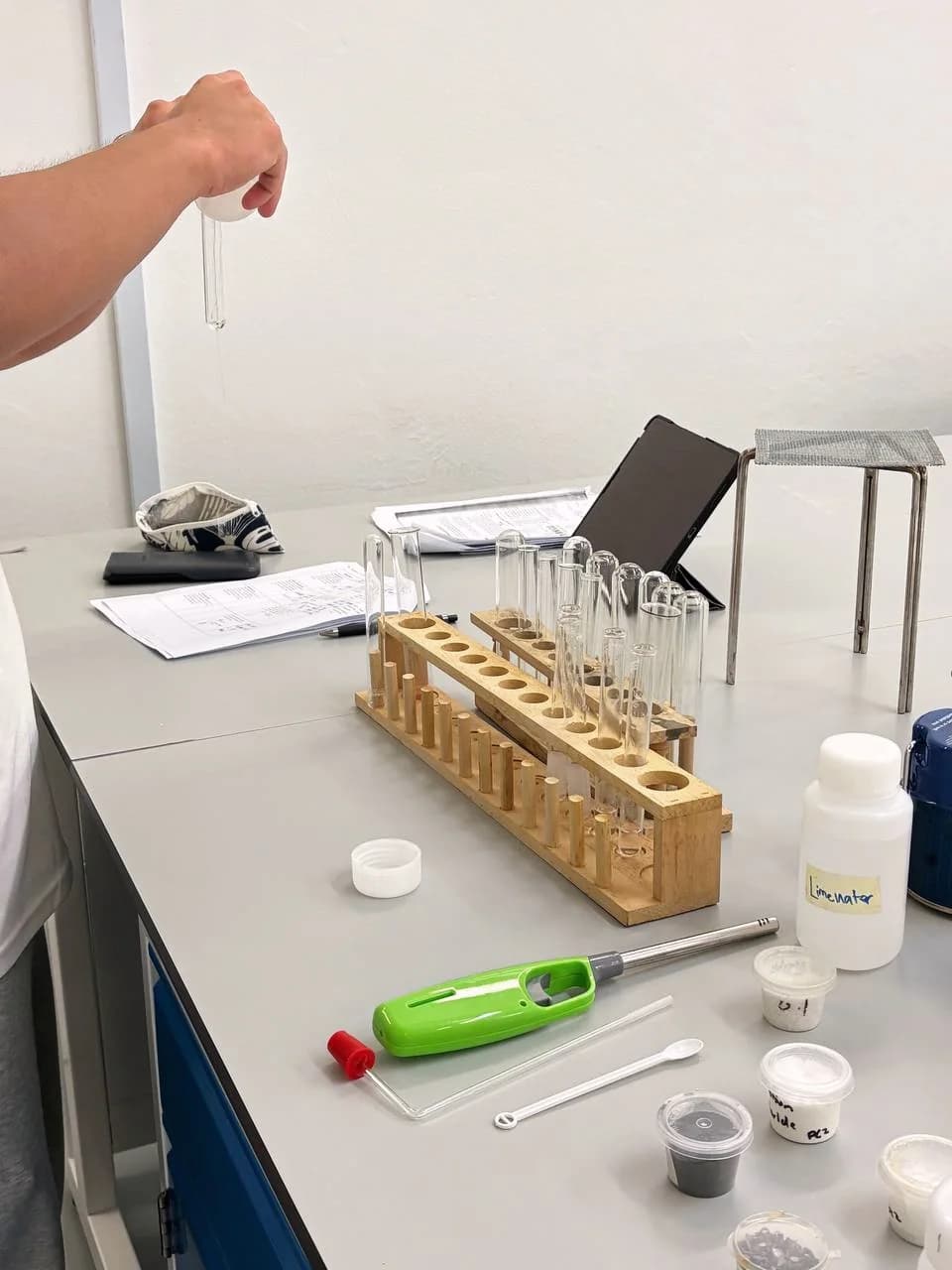
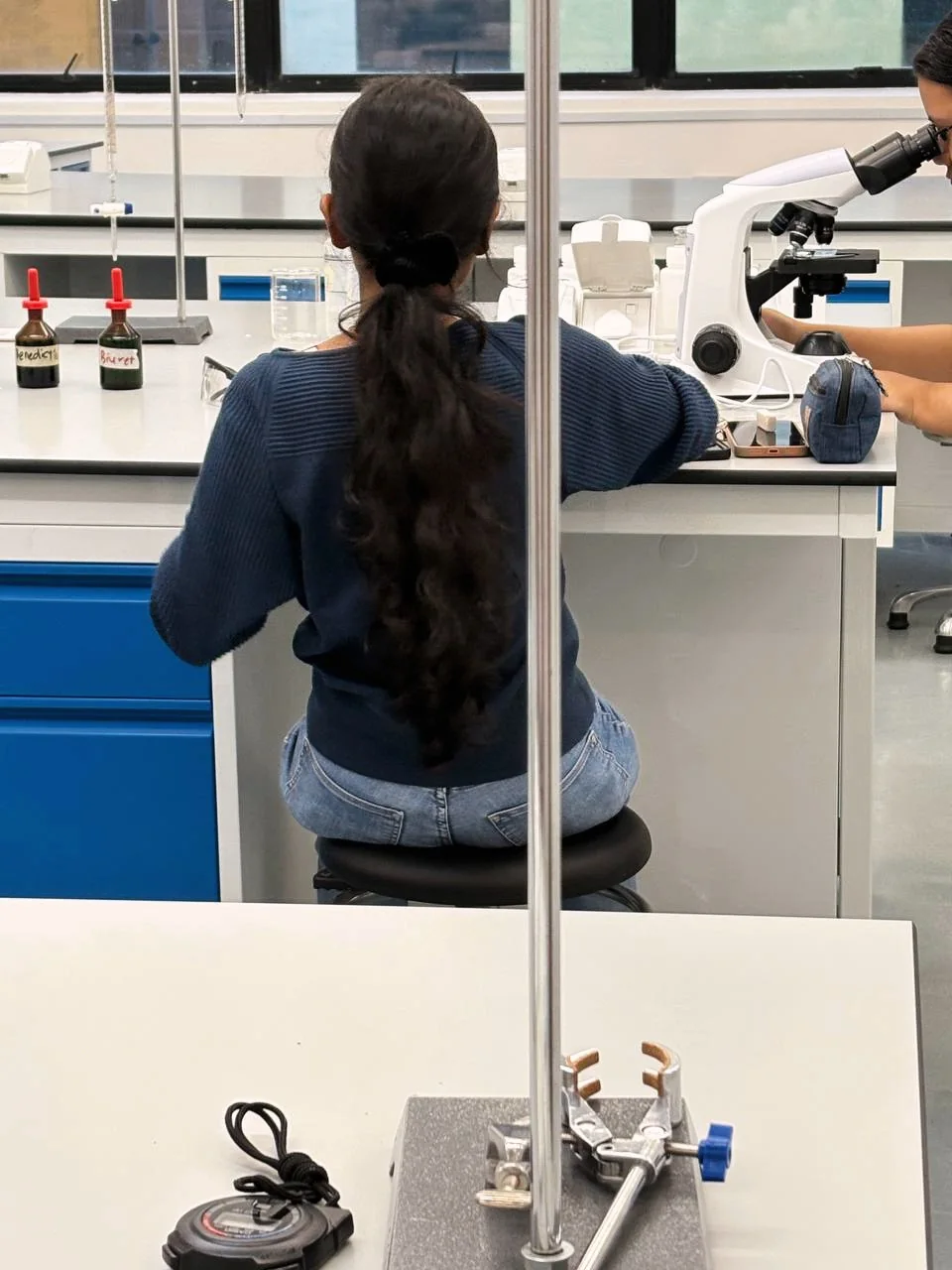
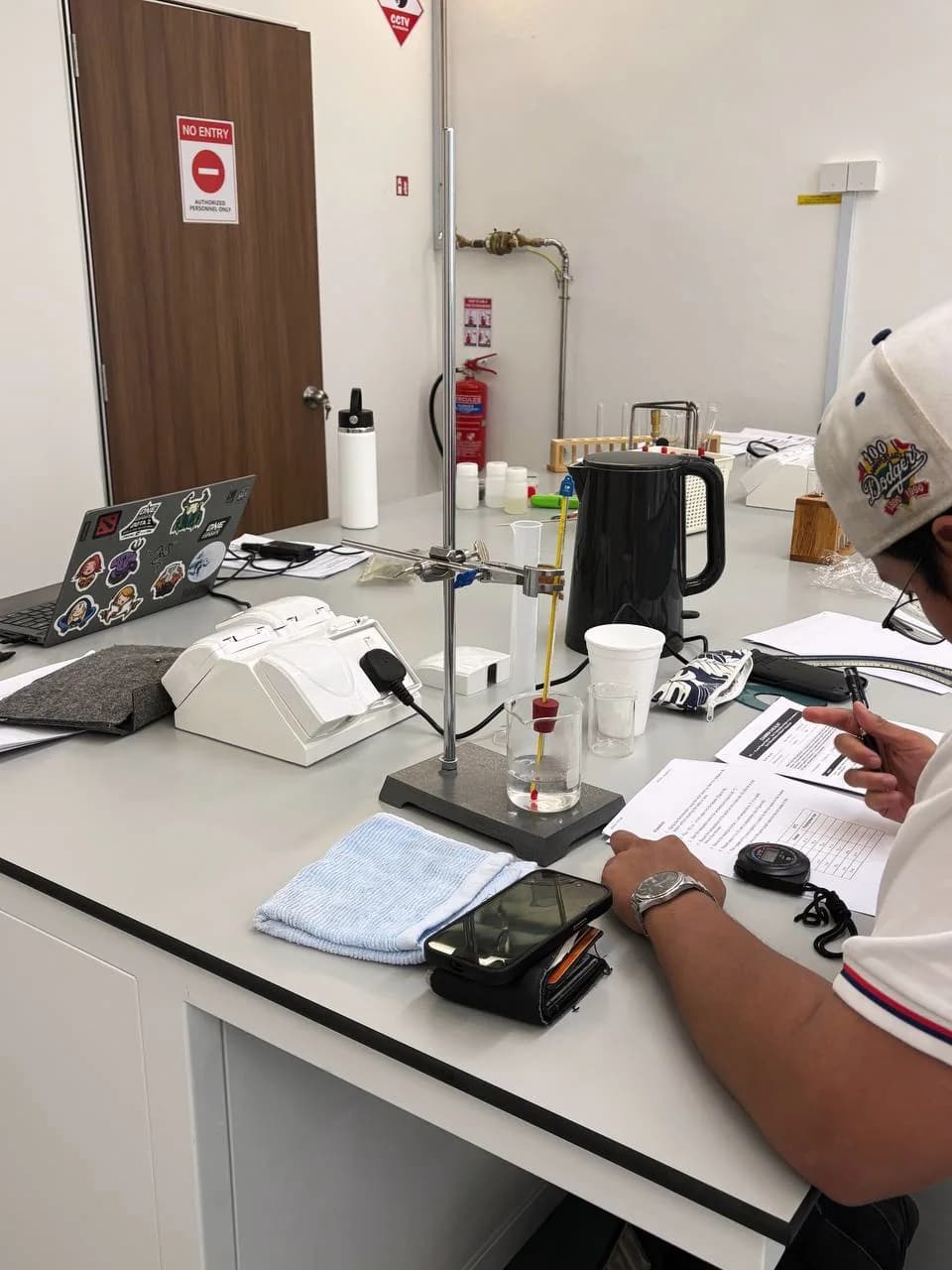
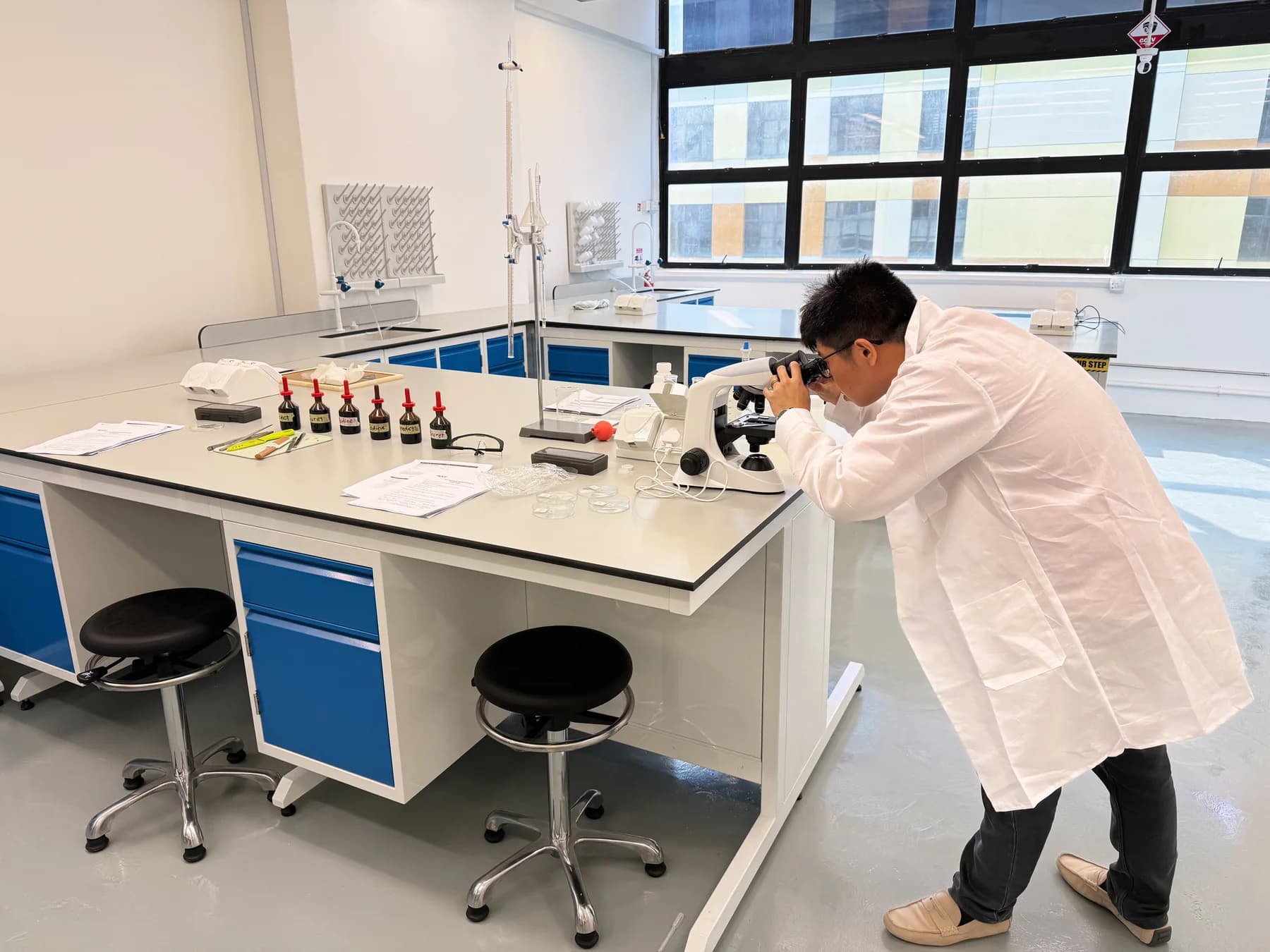
These clips show real Eclat rooms, equipment, and hands-on work from O-Level sessions. We plan IP practice around each school task.
PHYSICS
CHEMISTRY
BIOLOGY
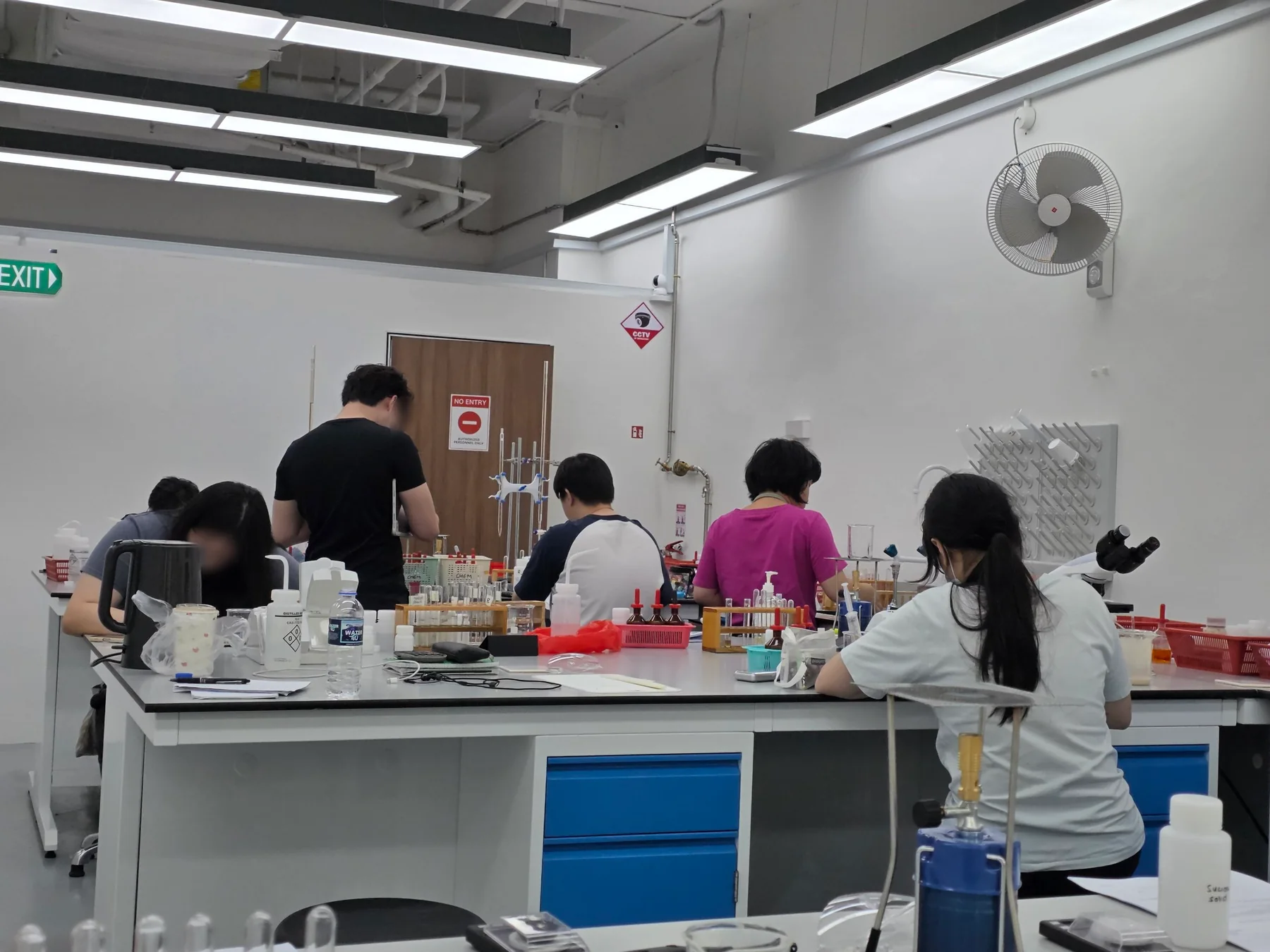
Guided lab - 1.5 hours
The tutor can pause at the exact point where the student gets stuck. The student fixes it and tries again while the equipment is still in front of them.
Practical mock - 1 hour
The student gets 50 minutes to complete the practical and 10 minutes to review the answers and mistakes. It suits a student who knows the method but needs timed practice.
Send us the student's school, year, subject, next assessment date, and any instructions from the school. We will check which session, time, and venue can meet those needs.
Guided labs and timed mocks usually run in groups. We will confirm the group size before you book.
General timings only, not a list of available classes. Dates, topics, venue and places must be confirmed before booking.
These are general two-hour windows. A one-hour mock or 1.5-hour guided lab uses part of that time. We will confirm the exact start and end time before you book.
Timings last updated: 17 July 2026.
The place depends on the subject, equipment, and available group.
A practical lab for Chemistry, Physics, and Biology.
IP guided labs and practical mocks are shorter than our two-hour O-Level and H2 practical clinics. We will confirm the current IP price before you book.
We will also put the topic, equipment, tutor, place, duration, group size, and price in writing. We do not promise a particular grade.
Attendance is recorded. An internal completion document may be issued.
Page updated: 3 October 2026
Use the notes to fix a weak idea. The H2 pages show what practical work looks like in JC.
IP students usually do not take O-Level exams. Schools can still run school practicals and other lab assessments. The practice also prepares students for subject-specific lab work in JC.
Start here if you are still working out what the student needs. Choose the Years 1 to 2 page for Combined Science, or a Physics, Chemistry, or Biology page for Years 3 to 4.
No. Each IP school can teach topics and run assessments in a different order. These pages give examples of practical work. Send the school's instructions so we can check what the student needs.
Send the student's school, year, subject, next assessment date, and any instructions or worksheet from the school. We can then check which session fits.
For practical, lab, and experiment courses, Eclat Institute keeps centre-held attendance records and may also issue an internal attendance or completion document based on participation and internal assessment.
Official references: MOE private-school certificate guidance · SEAB practical requirement for private candidates · SEAB registration declaration note.
Schools and centres can arrange lab access for learners.