Loading page…


Loading blog content…
Loading page…
Loading blog content…
H2 Chemistry tuition in Singapore for JC1 and JC2: Marcus Pang and Mr Azmi, max 8 students, weekly practice, marking, WhatsApp, and Paper 4 coaching.
Max 8
students per class
SGD 360-400/month
4 weekly 1.5h lessons
Jurong East
Jurong East Centre (Vision Exchange)
Last updated: 2026-06-05
Marcus Pang and Mr Azmi are the teachers in charge of Eclat's SEAB 9476 H2 Chemistry programme. Classes are capped at 8 students, with weekly practice, marking support, WhatsApp questions after class, Paper 4 practical coaching, and class matching around the student's schedule. Lessons are matched around the student's school schedule, then structured around the next weighted assessment, block test, promo, or prelim cycle.
Teachers in charge
Marcus Pang and Mr Azmi
Class size
Maximum 8 students
Weekly support
Practice, marking, and Paper 4 routines
After class
WhatsApp questions and schedule matching
The programme is for JC1 and JC2 students taking H2 Chemistry. It is most useful when school tutorials are being attempted, but marks still drop because organic routes, stoichiometry setup, explanation phrasing, or practical write-ups break under timed conditions. The weekly loop is deliberately practical: identify the weak strand, rehearse timed questions, mark students' attempted practice, rewrite answers into mark-scheme language, and carry corrections into the next school assignment. Students can ask follow-up questions through WhatsApp after class, so practice questions do not have to wait until the next lesson.
For topic refreshers and worked examples between lessons, use the H2 Chemistry notes hub or the H2 Chemistry syllabus 2026 guide. For Paper 4 lab skill practice, use the H2 Chemistry practicals hub.
| Teachers in charge | Marcus Pang and Mr Azmi oversee the H2 Chemistry programme. Mr Azmi brings the Chemistry subject specialism, while Marcus supports class ownership, study systems, and programme fit. |
| Class size | Maximum 8 students, so tutors can check working, spot misconceptions early, and give targeted feedback during lesson time. |
| Weekly practice | Students practise every week. Attempted questions can be marked and corrected so weak methods are fixed before the next school assessment. |
| After-class questions | Students can ask Chemistry questions through WhatsApp after class when they get stuck on homework, tutorials, or extra practice. |
| Class matching | There is no diagnostic or trial lesson route on this page. Enquiries focus on class matching and flexibility around the student's school, CCA, and family schedule. |
100+
IP Students Taught
Tiered monthly fees for 4 weekly 1.5-hour sessions.
SGD 360/month
Lowest monthly fee
SGD 380/month
Standard intake
SGD 400/month
Late catch-up intake
Note: If you enrol in the Regular or Catch-up intake and continue into the next year, your monthly fee resets to the Early Intake rate (SGD 360/month).
| JC1 foundations | Stoichiometry, bonding, energetics, early QA language, and school WA pacing. |
| JC2 recovery | Organic synthesis, electrochemistry, equilibria, redox, and full-paper timing. |
| Paper 4 | Titration, QA observations, data tables, uncertainty, and ACE evaluation. |
| Not the right fit yet | If tutorials have not been attempted or the student first needs general study planning, start by matching the class timing and weekly workload before committing to subject coaching. |
Deep-dive guides for shortlisting. Tap a topic to read it in place.
Parents often search for the best H2 Chemistry tuition after a weak WA, promo result, or JC2 block test. “Best” is not a stable claim: a class can be excellent for one student and a poor fit for another if the teaching style, class size, or Paper 4 support does not match the actual bottleneck. Compare options by fit using the checks below before booking a trial lesson.
| Bottleneck | What it looks like | Tuition format that helps |
|---|---|---|
| Concept gap | The student cannot explain why a method works | Tutor-led reteaching with diagnostic questions |
| Answer phrasing gap | The student understands the topic but loses method or explanation marks | Script rewrite, command-word drills, and marking feedback |
| Calculation gap | Stoichiometry, equilibria, or electrochemistry steps break under time pressure | Timed question blocks with error-log review |
| Organic chemistry gap | Reagents are memorised but synthesis routes fail | Reaction-map practice and route planning |
| Paper 4 gap | QA, titration, planning, or ACE answers are inconsistent | Practical workflow drills across the year |
Useful proof is specific. Ask who teaches the class, how many students are in the group, how the tutor marks weak answers, what happens after a student repeats the same mistake, whether Paper 4 skills are trained throughout the year or only near exam season, and whether the class separates JC1 foundations from JC2 exam-cycle needs. Generic claims about being “top” or “proven” are not enough on their own.


A parent checklist for deciding whether repeated errors, Paper 4 avoidance, or weak answer phrasing justify tuition yet.
A term-by-term plan for topic coverage, exam pacing, and Paper 4 milestones.
Use the notes hub between lessons for chapter refreshers, worked examples, and drill checklists.
For most JC students, yes. The main A-Level Chemistry tuition search intent is H2 Chemistry support for SEAB 9476, covering JC1 and JC2 theory papers plus Paper 4 practical. H1 Chemistry or non-SEAB routes should be checked separately before enrolling.
Ideally before the first JC1 weighted assessment so stoichiometry and QA habits are stable early, not patched in a JC2 sprint.
We cap each group at 8 students so tutors can check working, correct misconceptions early, and give targeted feedback during class.
In-person theory lessons run at Jurong East Centre (Vision Exchange) (2 Venture Dr, #16-07 Vision Exchange). Our one-north office is for talks and presentations only, not regular lessons. See the Centre section above for the full address and map link.
Tell us the school, level, and latest grade. We reply with the class that fits and the next steps.
Need a place to revise? Browse our study places near me map for libraries, community study rooms, and late-night options.
8
Max Students Per Class
10+ Years
Tutoring Excellence
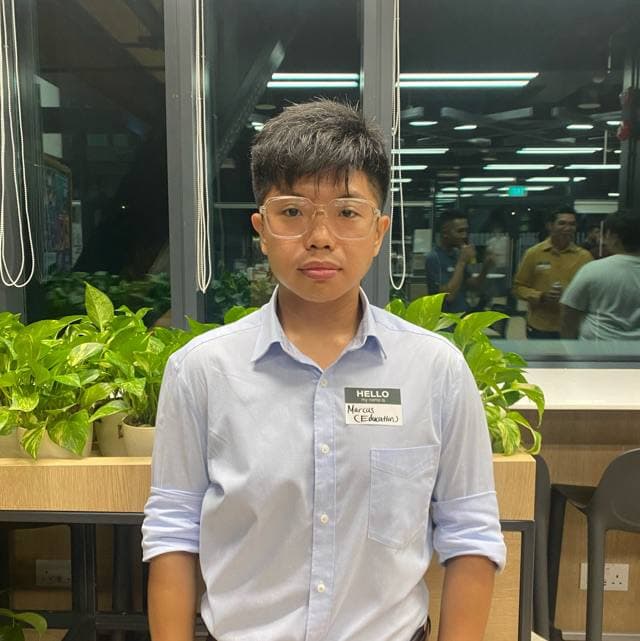
Managing Director
“Managing Director at Eclat Institute. Helps IP students build consistent study systems and strong maths foundations.”
Marcus Pang graduated from River Valley High School (RVHS IP) and has a Bachelor of Engineering (Electrical) from the National University of Singapore, as well as a master of education in curriculum and teaching by the national institute of teaching (NIE). Teaching since 2014, and with experience in MOE schools teaching IP students, he serves as the current principal tutor in Eclat Institute. He is also an adjunct lecturer, and teacher trainer for PEIs on O-Level, A-Level, IGCSE, and CIE theory classes as well as lab work. Connect on LinkedIn.
Senior Chemistry Specialist
“Senior Chemistry Specialist at Eclat Institute. Brings MOE classroom rigour + targeted small-group strategies for IP and JC chemistry.”
Mr Azmi is a Victoria Junior College alumnus and holds a Bachelor of Science in Chemistry / Biochemistry from the National University of Singapore, as well as a Master of Science in Chemistry from the University of Canterbury. He completed the NIE Postgraduate Diploma in Education, spent 18 years teaching Chemistry in MOE schools, and has led six years of private tutoring for Integrated Programme cohorts across top schools. He maintains direct access to chemistry reference materials from IP departments and junior colleges so students always practise with the same theory and practical standards they face in class.
Pricing reflects four weekly 1.5-hour lessons. Paper 4 intensives and holiday sprints are quoted separately.
Compare fees only after support depth is clear. A lower monthly fee can be weaker value if Paper 4 support, script marking, or make-up lessons are sold separately. Check the total monthly commitment, actual teaching hours, whether materials and script review are included, whether Paper 4 support is bundled or a separate block, and whether missed lessons have a clear recovery path.
Use this scorecard immediately after a trial lesson: does the tutor explain both the idea and the marking point, does the tutor identify the student's exact error pattern, does the student attempt timed exam-style work, are corrections specific and reusable, are Paper 4 routines part of the plan, and does the class pace suit the student's current level. Shortlist only options that score strongly on diagnosis, feedback, and fit.
If you are still deciding whether tuition is needed at all, read the worth-it checklist first, then return here with one repeated error pattern to test during a trial lesson.
This track is built for students whose tutorials are mostly done but whose marks stay unstable because concepts, phrasing, or practical execution still break under timed conditions.
If the issue is still unclear, start with the H2 Chemistry notes hub and then narrow the pattern with the formula sheet boundary guide.
Score each area from 1 to 5 during a trial lesson or consultation call.
The tutor explains command words clearly (define, explain, predict, deduce) and shows how to convert understanding into markscheme-ready phrasing. Students are trained to plan answers before writing structured or free-response questions.
Lesson flow is clear: diagnosis, timed practice, debrief, rewrite. Practice is calibrated to the school timeline, and correction points are tied to Chemistry command words, not generic comments.
Planning questions are taught as routines, not one-off templates. QA and volumetric analysis skills are rehearsed repeatedly, and practical preparation is integrated with theory revision instead of siloed near exam month.
Students can ask targeted questions between lessons, missed lessons have a clear recovery pathway, and support intensity increases predictably during heavy assessment windows.
Keep only options that score at least 4 out of 5 on teaching fit and class execution before comparing fees.
Lessons break concepts into worked corrections, so students see why a step earns marks and where their own answer language breaks.
The programme is designed for targeted subject support, not tuition for every subject. The first priority is the weakest high-impact Chemistry strand.
Students use correction loops and consultation touchpoints to clear school worksheet bottlenecks before the next timed practice.
Organic work focuses on route planning, reagents, conditions, and timed synthesis decisions instead of isolated memorisation.
| Cliff | Typical symptom | Tuition response |
|---|---|---|
| Mole concept → stoichiometry transfer | Shaky Sec 4 foundations compound into every H2 calculation - moles, concentration, and limiting reagent errors cascade. | Diagnostic drills on unit conversions, state symbols, and structured working before H2 topics pile on. |
| Organic synthesis planning | Students memorise individual reactions but cannot chain a 3 to 5 step synthesis route under Paper 3 time pressure. | Retrosynthesis scaffolds and timed planning exercises that build the route-reasoning habit, not more memorisation. |
| QA observation phrasing | Vague language (“white precipitate forms”) loses method marks that precise phrasing would earn. | QA phrasing clinics with mark-scheme keyword checklists: colour, solubility, confirmatory test sequence. |
| JC1 focus | JC2 focus |
|---|---|
|
|
Effective H2 Chemistry tuition follows a repeatable loop, not a content dump. Each week should look like this:
Isolate whether the drag is a content gap, calculation error pattern, phrasing weakness, or Paper 4 technique issue.
Short timed blocks - structured questions, organic synthesis planning, or QA identification - so improvement ties to exam behaviour.
Corrections target missing keywords, state symbols, and explanation depth so students learn how a full-credit answer reads.
Each lesson ends with specific follow-up actions: error-log review, targeted chapter revision, and the next timed checkpoint.
For a full Paper 4 workflow breakdown, use our H2 Chemistry practicals hub.
| Paper | Weight | Key skills |
|---|---|---|
| Paper 1 MCQ | 15 percent | Fast recall, precision, and trap avoidance |
| Paper 2 Structured | 30 percent | Multi-topic synthesis and method-mark discipline |
| Paper 3 Long Questions | 35 percent | Data handling and explanation structure |
| Paper 4 Practical | 20 percent | Titration routines, QA phrasing, and ACE evaluation |
JC programmes have replaced mid-year exams with weighted assessments and block tests. Check your college calendar early and plan tuition around WA1, WA2, and promos. A primer lives in Weighted Assessments vs Mid-Year Examination.
| Format | Best for | Differentiator |
|---|---|---|
| Micro-group (max 6-8) | Peer benchmarking and shared drills | Group QA phrasing clinics and Paper 3 mocks |
| Hybrid cohort | Students with CCA-heavy weeks | Replay organic walkthroughs and QA video drills |
| One-to-one | Urgent WA recovery or niche topic gaps | Custom error-log focus and accelerated reteaching |
Compare fees only after the teaching format and Paper 4 support are clear.
Most H2 Chemistry tuition pricing differences come from class format (small group versus larger lecture-style classes), frequency (weekly class only versus weekly class plus additional practical blocks), and the support layer (feedback loops, script review, practical coaching, and exam-cycle support). QA and volumetric analysis sessions are sometimes offered as add-on blocks rather than integrated into the main class schedule, and whether these are bundled or priced separately has a direct effect on the total monthly commitment.
Before comparing monthly fees, check the practical support tier: a theory-only tier has no structured lab routines and is usually the lowest fee, a theory-plus-planning tier adds planning questions and structured written responses at a moderate fee uplift, and a full practical tier bundles planning, QA, volumetric analysis, and correction loops for written practical reports at the highest fee tier. For students who struggle with Paper 4, the difference in support depth can matter more than the difference in headline fees.
Eclat's own H2 Chemistry tuition fees fall in the S$360 to S$400 per month range shown above, covering four weekly 1.5-hour lessons with Paper 4 practical coaching built into the weekly loop rather than sold as a separate block.
Worried about promotional exam results? What to do if your child fails JC promos covers recovery timelines, the H2-to-H1 drop decision, and when intervention helps most.
Check the SEAB 9476 paper structure, topic map, data booklet boundary, and Paper 4 weighting before planning support.
Train theory-paper lookup speed for constants, tables, spectroscopy references, and QA notes.
Separate official booklet data from equations students still need to recall, derive, and apply under time pressure.
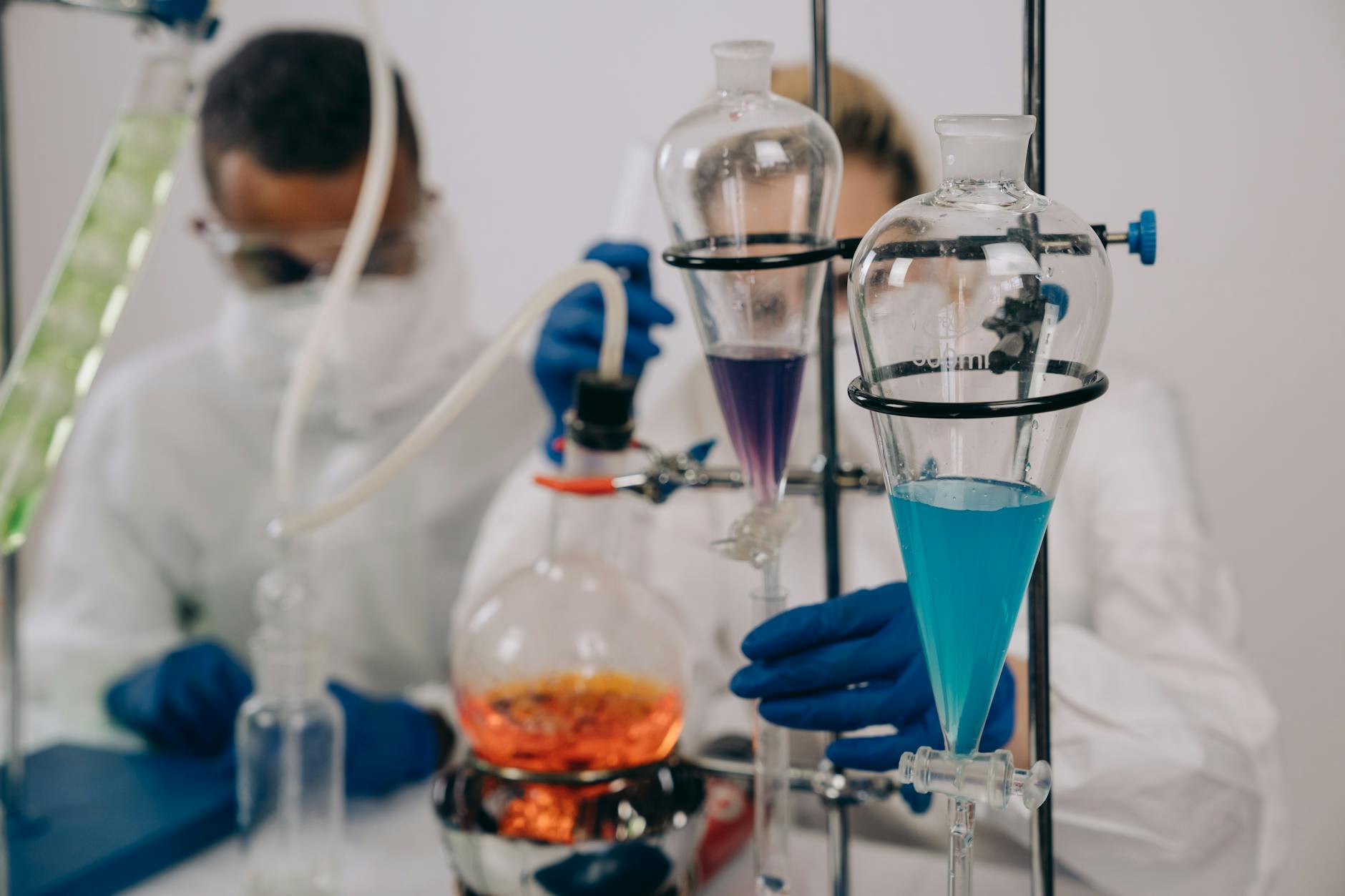
Paper 4 investigations, titration routines, QA phrasing, and ACE evaluation drills.
Route Paper 4 lab revision by titration, QA, kinetics, energetics, gas collection, planning, uncertainty, and ACE.
Fees are charged monthly per subject and tiered by intake period: Early Intake (Oct-Feb): SGD 360/month, Regular Intake (Mar-Jun): SGD 380/month, Catch-up Intake (Jul-Sep): SGD 400/month. If you enrol in the Regular or Catch-up intake and continue into the next year, your monthly fee resets to the Early Intake rate (SGD 360/month). Monthly fees cover 4 weekly 1.5-hour lessons. Holiday intensives or practical clinics (if needed) are scheduled separately-tap the WhatsApp button to check availability and class times.
Look for small-group feedback, Paper 4 coaching across the year, and explicit corrections on organic mechanisms, QA phrasing, and structured working. A strong programme should show how it handles JC1 foundations, JC2 paper planning, and exam-window pacing instead of just selling notes.
This programme page now covers teachers in charge, class format, pricing tiers, fee benchmarks, a shortlisting checklist, and Paper 4 support in one place. Use the worth-it checklist separately if you are still deciding whether tuition is needed yet.
Paper 4 is 50 marks and contributes 20% of the H2 grade. Regular titration technique, QA observation phrasing, and ACE evaluation practice matters throughout the year.
Yes. Mole concept fluency, bonding models, and organic patterns carry forward. If these are shaky, H2 topics feel harder than they need to be.
Start with the topic that is costing marks in the next school assessment, then use the 9476 syllabus and H2 notes hub to check whether the weakness is calculation setup, explanation phrasing, or multi-topic synthesis.
Three decision signals: school block-test marks stay weak despite completed tutorials, organic mechanisms cannot be written without notes, and practical write-ups are consistently avoided. If two of three repeat, use tuition to fix the pattern early instead of waiting for a full-paper collapse.
Two-question decision tree: (1) Does the target university course require H2 Chemistry? If yes, dropping may close that door. (2) Would the freed study time realistically improve other H2 grades enough to offset the half-weight UAS contribution? If not, targeted recovery on the weakest Chemistry topics may be more useful than dropping immediately.