Loading page…


Loading blog content…
Loading page…
Loading blog content…
H2 Physics tuition Singapore for JC1-JC2 A-Level students who need concept diagnosis, timed script correction, Paper 4 data-analysis practice, and 9478 exam pacing.
Max 8
students per class
SGD 360-400/month
4 weekly 1.5h lessons
Jurong East
Jurong East Centre (Vision Exchange)
Last updated: 2026-06-03
This class is for JC1 and JC2 students who have school notes and tutorials, but still lose marks because they pick the wrong concept or equation, set up algebra poorly, miss explanation marks, or make Paper 4 data mistakes under time pressure.
Each week follows a simple feedback cycle: diagnose the current script, practise timed questions, correct the working, and keep Paper 4 graphing, uncertainty, planning, and ACE habits active.
Marcus Pang, Eclat's principal tutor, owns programme fit and study systems for this class and trains other teachers on A-Level theory and lab work. Class matching and weekly structure run through him before a student's schedule is confirmed. Chee Wei Jie, Eclat's Academic Advisor (Physics), works alongside him on H2 Physics problem-solving structure and Paper 4 coaching.
100+
IP Students Taught
8
Max Students Per Class
10+ Years
Tutoring Excellence
Expected fail to B
Selected RJC J1 H2 Physics testimonial
Here is what physics students have shared publicly on Google about our Jurong East centre at Vision Exchange, where this class runs:
“I was Marcus's physics student from upper secondary till jc. I found Marcus way of teaching to be very useful as he emphasise on understanding the topics and how to be exam smart. He explains physics in ways which are easy to comprehend and makes physics a more manageable and enjoyable subject.”
“joined the class when i was weak in physics. mr pang has single handedly saved my grades. 10/10 wld recommend”
These are selected screenshots and public reviews, not a full-cohort success rate. Read the full set on our Google reviews.
Tiered monthly fees for 4 weekly 1.5-hour sessions.
SGD 360/month
Lowest monthly fee
SGD 380/month
Standard intake
SGD 400/month
Late catch-up intake
Note: If you enrol in the Regular or Catch-up intake and continue into the next year, your monthly fee resets to the Early Intake rate (SGD 360/month).
Deep-dive guides for shortlisting. Tap a topic to read it in place.
Parents often search for the best H2 Physics tuition after a weak WA, promo result, or JC2 block test. “Best” is not a stable claim: a class can be excellent for one student and a poor fit for another if the teaching style, class size, Paper 4 support, or maths dependency does not match the actual bottleneck. Compare options by fit using the checks below before booking a trial lesson.
| Bottleneck | What it looks like | Tuition format that helps |
|---|---|---|
| Concept gap | The student can substitute values but cannot explain why a model applies | Tutor-led reteaching with diagnostic questions |
| Maths transfer gap | Calculus, vectors, gradients, or sign conventions break under time pressure | Guided problem sets that link mathematics to physical meaning |
| Answer phrasing gap | The student understands the idea but loses command-word or explanation marks | Script rewrite, model phrasing, and marking feedback |
| Paper 4 gap | Spreadsheet, uncertainty, graph, or ACE answers are inconsistent | Practical workflow drills across the year |
| Stamina gap | The student knows isolated topics but runs out of time in Papers 2 and 3 | Timed mixed-topic blocks with error-log review |
Useful proof is specific. Ask who teaches the class, how many students are in the group, how the tutor marks weak structured answers, what happens after a student repeats the same vector, unit, or sign error, whether Paper 4 skills are trained throughout the year or only near exam season, and whether the class separates JC1 foundations from JC2 exam-cycle needs. Generic claims about being “top” or “proven” are not enough on their own.
Use the notes hub between lessons for chapter refreshers, worked examples, and the 9478 formula guides.
Paper 4 investigations, data treatment drills, spreadsheet analysis, and ACE routines.
Bridge the upper-sec fundamentals that still power JC mechanics and fields.




Ideally before the first JC1 weighted assessment or block test so concept transfer and Paper 4 habits are built early, not in a JC2 catch-up sprint.
We cap each group at 8 students so tutors can check working, correct misconceptions early, and give targeted feedback during class.
In-person theory lessons run at Jurong East Centre (Vision Exchange) (2 Venture Dr, #16-07 Vision Exchange). Our one-north office is for talks and presentations only, not regular lessons. See the Centre section above for the full address and map link.
Fees are charged monthly per subject and tiered by intake period: Early Intake (Oct-Feb): SGD 360/month, Regular Intake (Mar-Jun): SGD 380/month, Catch-up Intake (Jul-Sep): SGD 400/month. If you enrol in the Regular or Catch-up intake and continue into the next year, your monthly fee resets to the Early Intake rate (SGD 360/month). Monthly fees cover 4 weekly 1.5-hour lessons. Holiday intensives or practical clinics (if needed) are scheduled separately-tap the WhatsApp button to check availability and class times.
Tell us the school, level, and latest grade. We reply with the class that fits and the next steps.
Need a place to revise? Browse our study places near me map for libraries, community study rooms, and late-night options.
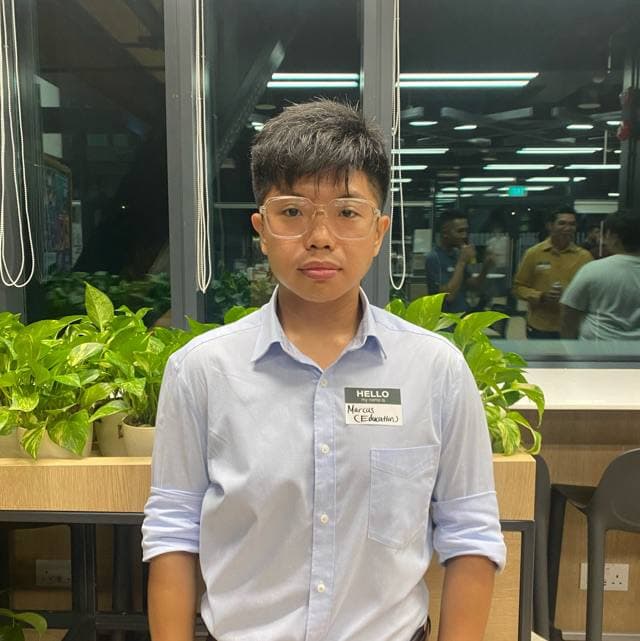
Managing Director
“Principal tutor at Eclat Institute. Owns programme fit and study systems for A-Level classes, and trains teachers on A-Level theory and lab work.”
Marcus Pang graduated from River Valley High School (RVHS IP) and has a Bachelor of Engineering (Electrical) from the National University of Singapore, as well as a master of education in curriculum and teaching by the national institute of teaching (NIE). Teaching since 2014, he serves as the current principal tutor in Eclat Institute and is an adjunct lecturer and teacher trainer for PEIs on O-Level, A-Level, IGCSE, and CIE theory classes as well as lab work.
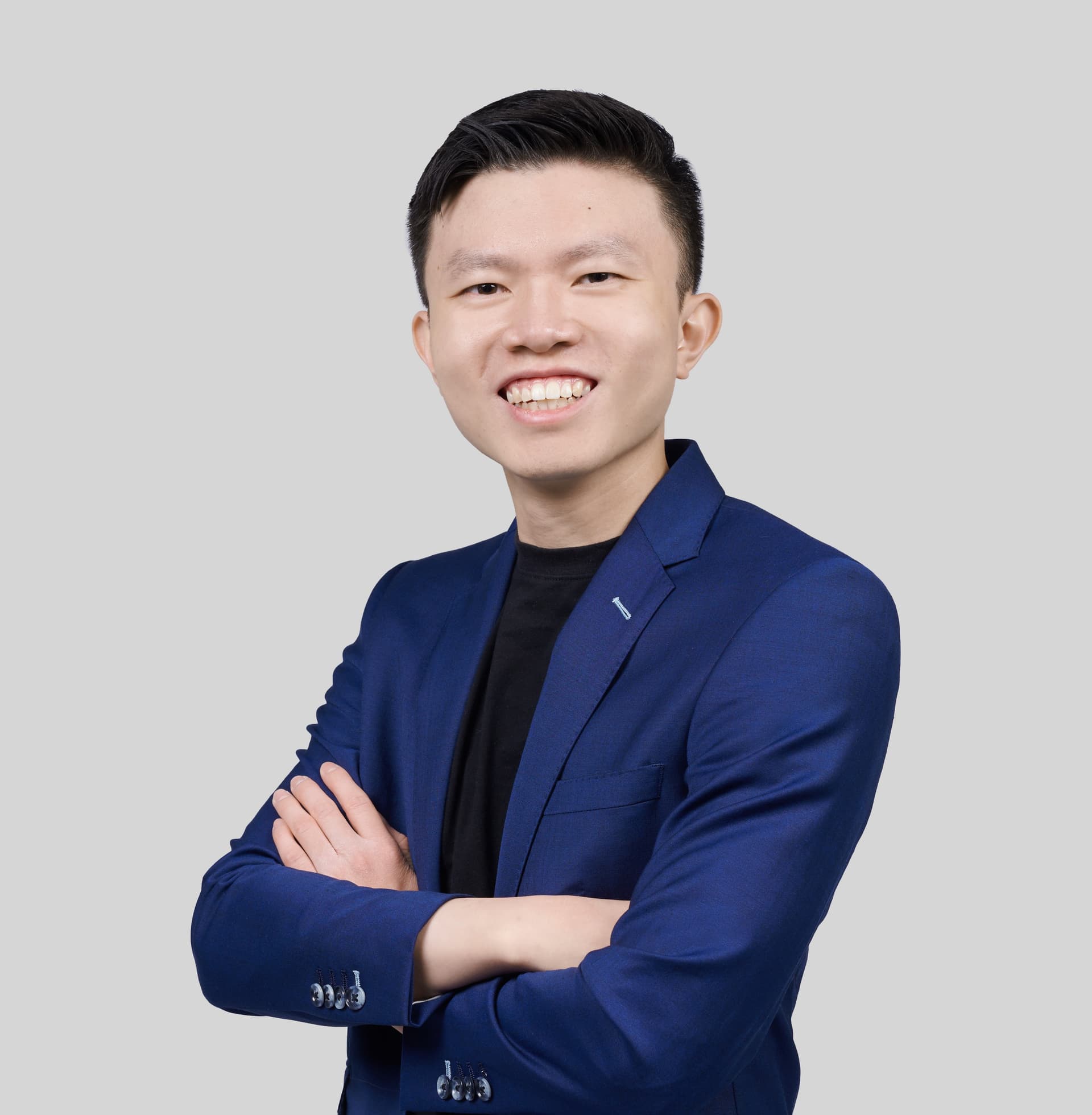
Academic Advisor (Physics)
“Academic Advisor (Physics) and Director of Technology at Eclat Institute. Focuses on strong fundamentals and clear problem-solving structure.”
Chee Wei Jie has graduated with a first class honours from Imperial College London and a Master of Advanced Study (MASt) in Mathematics from the University of Cambridge. He is an NUS High School alumni and a DSTA scholar. He worked in the AI research lab at DSO National Laboratories. Now he works on his own tech venture, Instavar. He also took IGCSE as a private candidate in 2006, which he gained experience in setting up his own lab for practice. Connect on LinkedIn.
Paper 4 intensives and holiday sprints are quoted separately when they are needed.
Score each area from 1 to 5 during a trial lesson or consultation call.
The tutor explains command words clearly (define, explain, calculate, sketch, suggest) and shows how to convert conceptual understanding into markscheme-ready phrasing. Common mistakes such as sign errors, unit conversions, and free-body diagram errors are addressed explicitly.
Lesson flow is clear: diagnosis, timed practice, debrief, rewrite. Practice is calibrated to the school timeline, and correction points are tied to Physics command words, not generic comments.
Planning questions are taught as routines. Data processing and analysis are rehearsed with spreadsheet-based methods, graphs, trendlines, and uncertainty propagation, and ACE write-ups are practised repeatedly rather than only near the exam.
Students can ask targeted questions between lessons, missed lessons have a clear recovery pathway, and support intensity increases predictably during heavy assessment windows.
Keep only options that score at least 4 out of 5 on teaching fit and class execution before comparing fees.
Most H2 Physics tuition pricing differences come from class format (small group versus larger lecture-style classes), frequency (weekly class only versus weekly class plus additional practical blocks), and the support layer (feedback loops, script review, practical coaching, and exam-cycle support). Paper 4 sessions that train spreadsheet-based data analysis, graph linearisation, and planning questions are sometimes offered as add-on blocks rather than integrated into the main class schedule, and whether these are bundled or priced separately has a direct effect on the total monthly commitment.
Before comparing monthly fees, check the practical support tier: a theory-only tier has no structured practical routines and is usually the lowest fee, a theory-plus-planning tier adds planning questions and structured written responses on experimental design at a moderate fee uplift, and a full practical tier bundles planning, spreadsheet-based data processing, graph linearisation, uncertainty analysis, and ACE correction loops at the highest fee tier. For students who struggle with Paper 4, the difference in support depth can matter more than the difference in headline fees.
Eclat's own H2 Physics tuition fees fall in the S$360 to S$400 per month range shown above, covering four weekly 1.5-hour lessons with Paper 4 practical coaching built into the weekly loop rather than sold as a separate block.
| Paper | Weight | Key skills |
|---|---|---|
| Paper 1 MCQ | 15 percent | Fast recall, precision, and trap avoidance |
| Paper 2 Structured | 30 percent | Multi-topic synthesis and method-mark discipline |
| Paper 3 Long Questions | 35 percent | Data handling and explanation structure |
| Paper 4 Practical | 20 percent | Spreadsheet data processing, graph linearisation, and ACE evaluation |
JC programmes have replaced mid-year exams with weighted assessments and block tests. Check your college calendar early and plan tuition around WA1, WA2, and promos. A primer lives in Weighted Assessments vs Mid-Year Examination.
Worried about promotional exam results? What to do if your child fails JC promos covers recovery timelines and when intervention helps most.
Look for small-group feedback, concept-transfer coaching from mechanics into fields, and regular Paper 4 data-analysis practice. A strong programme should show how it handles timed papers, spreadsheet uncertainty work, and school-specific assessment cycles instead of offering notes alone.
Paper 4 is worth 20 percent of the H2 Physics grade under SEAB 9478. Spreadsheet-based data processing, graph linearisation, uncertainty reporting, planning, and ACE evaluation should be trained throughout the year, not only in the weeks before the exam.
Three decision signals: school block-test marks stay weak despite completed tutorials, the same vector, unit, or sign error keeps recurring, and Paper 4 write-ups are consistently avoided or rushed. If two of three repeat, use tuition to fix the pattern early instead of waiting for a full-paper collapse.