

Buffer solutions in practicals: purpose, composition and handling

Understand pH control, limited buffer capacity and why composition and temperature matter before selecting a supplied buffer.
A buffer resists changes in pH when limited amounts of acid or base are added. In an enzyme investigation, a prescribed buffer helps control the reaction environment. It does not guarantee an unchanged pH under every dilution, temperature or addition.
OpenStax explains buffer capacity: that resistance is limited and depends on the amounts of the buffering components. A bottle's pH value alone does not tell you how much change its contents can resist.
Read the formulation before choosing a buffer
Check the solution name, ingredients, concentration, label conditions and intended use. The manufacturer's buffer reference distinguishes preparations and temperature-dependent properties. A buffer used for instrument calibration is not automatically suitable for a biological assay.
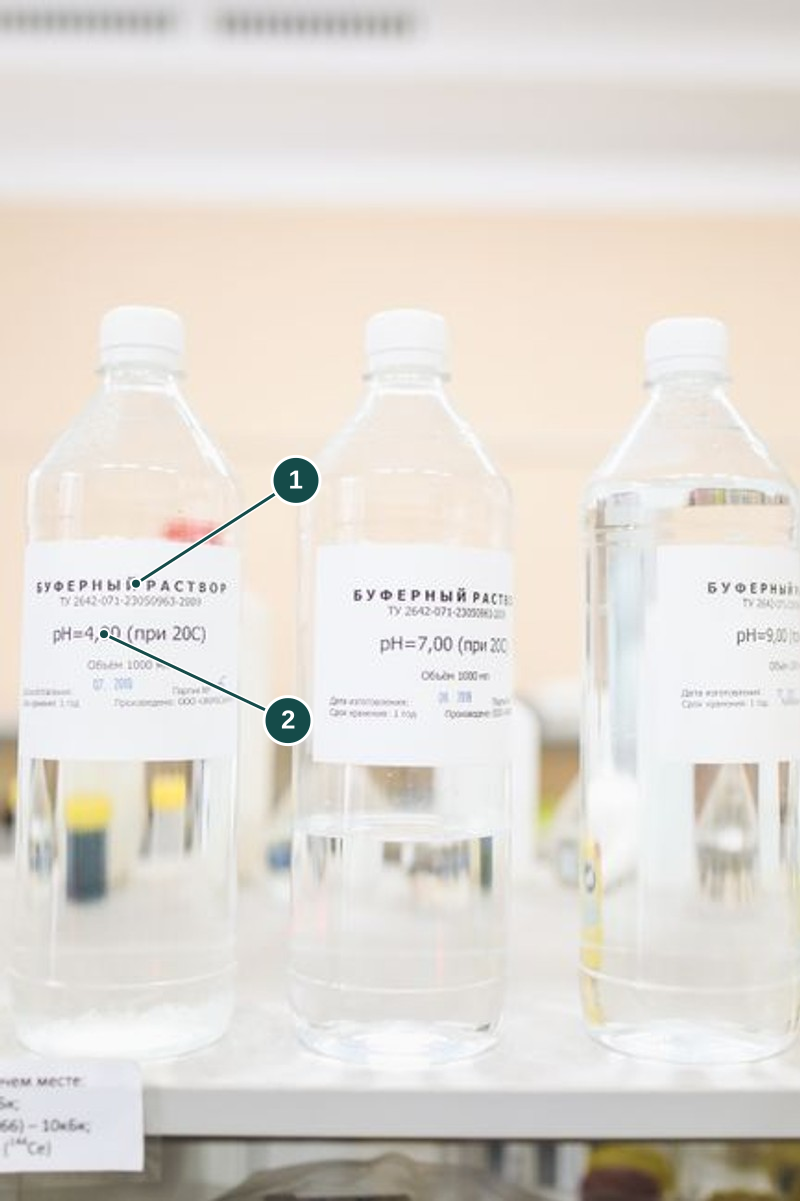
- Printed buffer label. Names the solution according to the label. Check its ingredients before using it.
- Printed pH value. Shows the pH printed on the label for its stated conditions. We have not measured the pH of these contents.