

Ripple tanks: waves, calibration and handling around water

Separate wave generation, pattern visibility and calibrated distance/time evidence.
- Explain safe handling around water and powered equipment.
A ripple tank contains the water surface being disturbed. A generator produces the wave pattern, and lighting makes that pattern easier to observe. An image shows the pattern. You also need distance and time references to measure wave speed.
The trainer chooses the tank, water depth, generator, lighting and electrical arrangement. Use that approved system rather than assembling powered wet-area equipment from unrelated parts.
Recognise the wave pattern before measuring
Identify the region and wave structure the task asks you to follow before assigning numerical distances. Reflection and overlapping disturbances can make a visible band ambiguous.
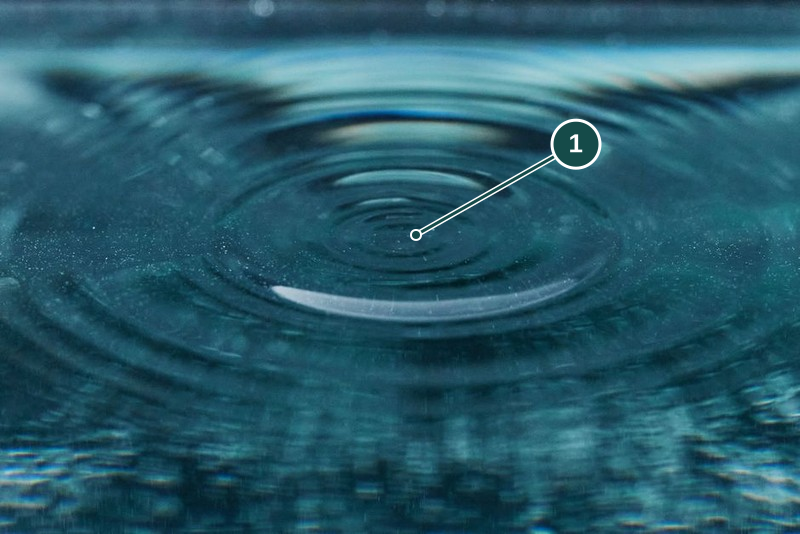
- Ripple ring. Shows a visible ring. The photo has no distance or time scale for measurement.
Stock photograph for illustration by cottonbro studio on Pexels. Circular ripples are visible on a liquid surface. This is not a calibrated ripple-tank measurement. The photo does not show Eclat's equipment or give a reading for your experiment.
We have not verified that the marked ring is a crest. This photo gives no measured wavelength, water depth or generator frequency, and does not show a calibrated classroom ripple tank.