

Rulers and protractors: reference points, scales and practical handling

Choose the correct ruler zero, protractor centre and measurement plane.
- Separate scale resolution from accuracy and handling.
A ruler gives positions along a length scale. A protractor gives angles about a centre and baseline. The instrument only answers the intended question when those reference points match the quantity being measured.
Use the actual instrument and conventions assigned by the teacher. Check its smallest divisions, condition and suitability for the setup.
Choose the relevant reference
Locate the marked ruler zero rather than assuming it is the physical end. For an angle, locate the protractor centre and the scale that starts from the assigned baseline.
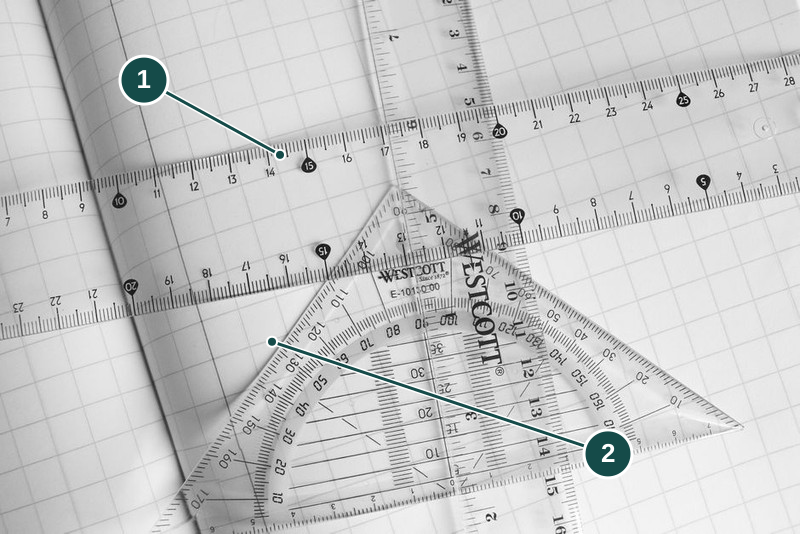
- Length scale. Provides a length reference using the instrument's zero and graduations.
- Angle scale. Provides an angle reference from the assigned baseline and centre.
Stock photograph for illustration by Jef K on Pexels. A ruler and protractor provide length and angle scales. The photo does not show Eclat's equipment or give a reading for your experiment.
This photograph shows the two types of scale. It does not calibrate the instrument on your bench or supply a numerical reading for an experiment.
Read a difference when zero is unavailable
Length is the difference between two correctly read positions. If the object's end cannot align with zero, use two positions and account for both readings. A damaged ruler end need not define the zero, but damage can still make the instrument unsuitable to handle or align.