

Test tubes, racks and receiving vessels: choose the right job

Distinguish holding a sample, supporting a tube and collecting liquid.
- Check vessel suitability before heating, measuring or combining materials.
A test tube contains a small sample. A rack supports tubes between operations. A receiving vessel collects material leaving another part of the setup. These are different jobs, and none automatically provides a calibrated volume measurement.
Choose the vessel for its assigned job before adding anything. Its material, shape, condition and instructions determine whether it suits the substance, temperature and method. Similar-looking tubes can have different limitations.
Separate the tube from its support
DWK's DURAN test-tube description gives small-sample investigations as examples of use and identifies the material of that product. That specification cannot identify the glass in a stock photo or every tube supplied for a lesson.
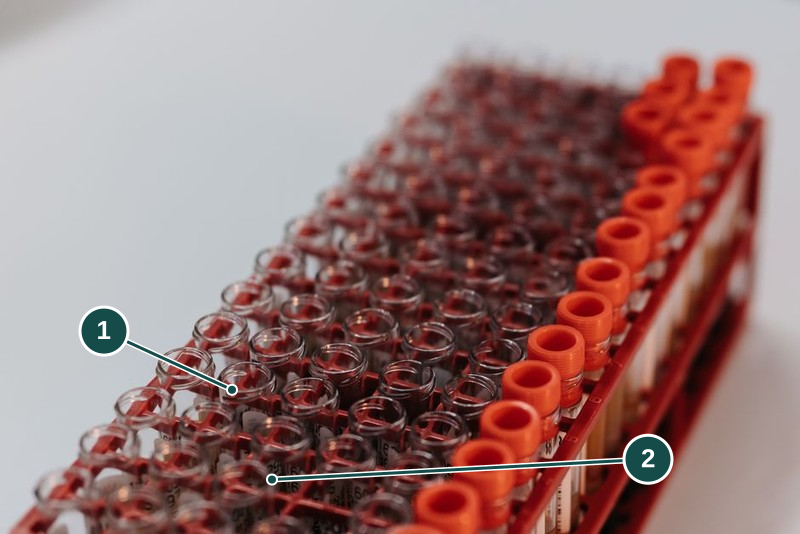
- Test tube. Contains the assigned sample; its suitability must be checked separately.
- Rack. Supports the tubes upright between the operations for which it is intended.
Stock photograph for illustration by Pavel Danilyuk on Pexels. The photo shows tubes and a rack. We have not verified the contents, glass type or temperature rating.
A rack needs a suitable fit and a stable position. A tube that tips, jams or cannot be removed as prescribed needs a different approved support. Do not hold a rack full of samples over another experiment, or use an occupied hole for a loose pipette unless that storage is part of the briefing.