

Transfer pipettes and pipette aids: function, limits and handling

Use a transfer pipette for its assigned liquid-transfer task.
- Distinguish drops from measured volumes and understand aids, compatibility and contamination.
A transfer pipette moves a small amount of liquid from one place to another. A narrow tip helps direct the delivery. It does not, by itself, prove that a drop or a filled pipette contains a particular measured volume.
Before starting, identify the liquid, the destination and whether the method needs drops, an approximate transfer or an accurately measured volume. That decision determines which instrument and instructions are appropriate.
Recognise the tip without guessing the whole instrument
Sigma-Aldrich's pipette overview distinguishes transfer pipettes from other liquid-handling instruments. Some transfer designs use a separate bulb; others have an integrated one. Use the arrangement supplied and demonstrated for the actual pipette.
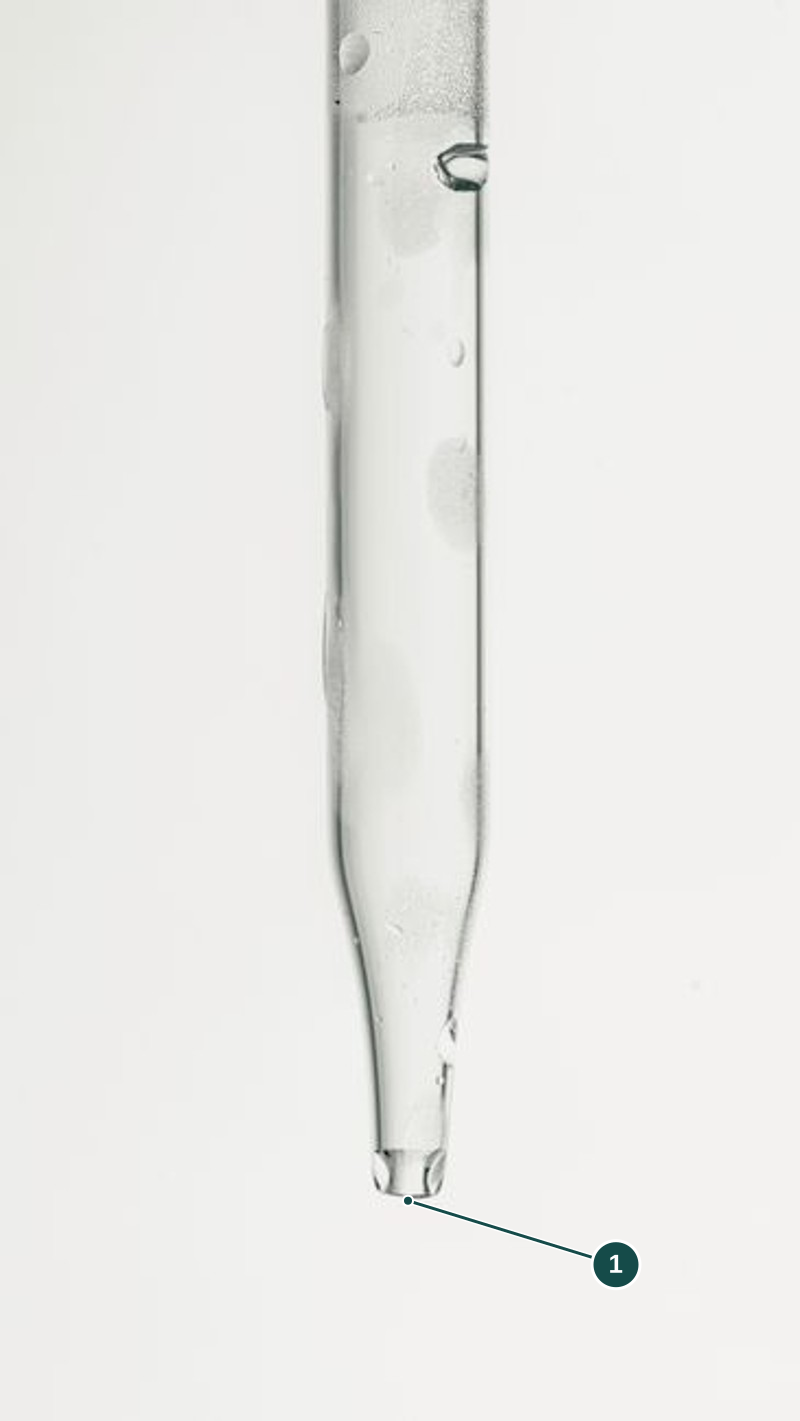
- Narrow tip. Directs the liquid. The tip alone cannot tell you the volume delivered.
Stock photograph for illustration by Jacoby Clarke on Pexels. The bulb or aid is outside this detail view. Do not infer its type, the liquid's identity or a full operating sequence from the picture.