

Cambridge International AS and A Level Biology 5: The mitotic cell cycle
Cambridge International Biology 9700 notes on chromosomes, the cell cycle, mitosis, telomeres, stem cells and tumours.
The Mitotic Cell Cycle is Cambridge International Biology 9700 Topic 5. It covers chromosome structure, interphase, mitosis, cytokinesis, telomeres, stem cells, tumours and chromosome behaviour in plant and animal cells. Theory owns stage mechanisms and image interpretation; microscope preparation and drawing technique remain in the practical hub.
1. Chromosome structure
A eukaryotic chromosome contains a long DNA molecule associated with histone proteins. Histones help package DNA into chromatin. Before DNA replication, a chromosome contains one DNA molecule. After S phase, it consists of two genetically identical sister chromatids joined at a centromere.
The centromere is the region linking sister chromatids and supporting attachment to spindle structures. Telomeres are repetitive DNA at chromosome ends. They protect coding information from progressive end loss during DNA replication.
Chromosome number counts centromeres, not chromatids. A replicated chromosome still counts as one chromosome until sister chromatids separate.
2. Interphase and the cell cycle
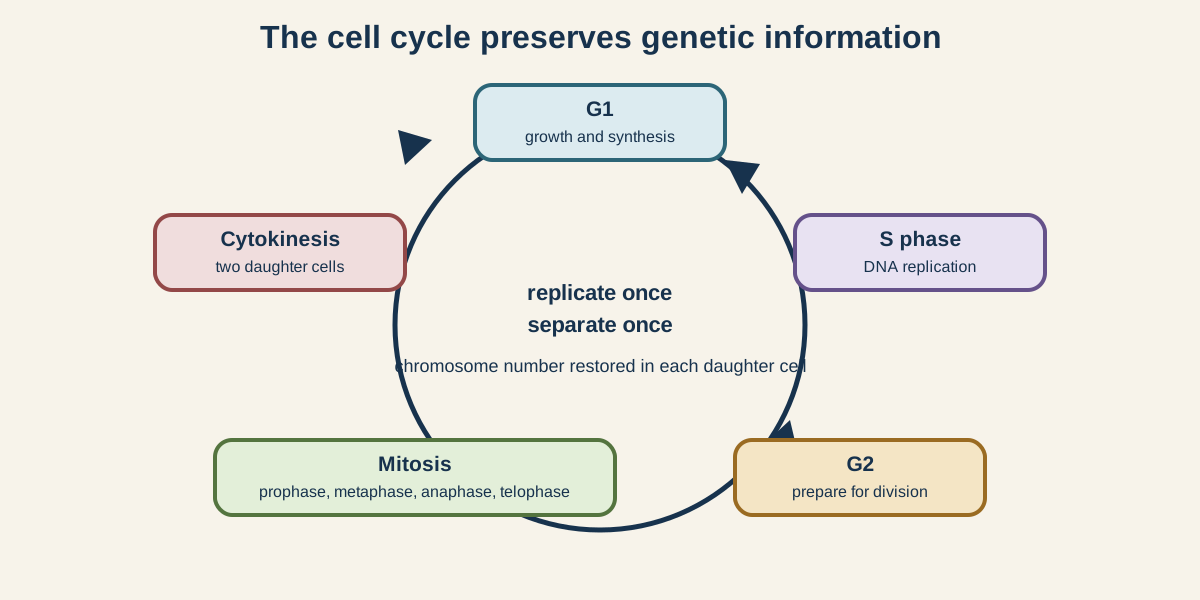
The cell cycle includes interphase, mitosis and cytokinesis. In G1, the cell grows, synthesises proteins and increases organelle content. In S phase, DNA replicates. In G2, further growth and preparation for nuclear division occur.
Interphase is metabolically active and is not a resting stage. Chromosomes are generally uncondensed and individually indistinct in light micrographs, but DNA replication occurs only in S phase.
Mitosis divides the nucleus so each daughter nucleus receives one copy of every chromosome. Cytokinesis divides the cytoplasm, producing two cells.
3. Why mitosis matters
Mitosis produces genetically identical daughter cells, subject to rare mutation. It supports growth of multicellular organisms, replacement of dead or damaged cells, tissue repair and asexual reproduction.
Genetic identity preserves chromosome number and cell-lineage information. Growth occurs by increasing cell number, not by making every existing cell indefinitely larger.
4. Prophase and metaphase
In prophase, chromosomes condense and become visible as sister-chromatid pairs. The nucleolus disappears, the nuclear envelope breaks down and spindle formation develops. In animal cells, centrioles are associated with spindle organisation; plant cells form spindles without relying on centrioles in the same way.
At metaphase, chromosomes align at the equator. Spindle microtubules attach so sister chromatids can be pulled toward opposite poles. A metaphase image often shows condensed chromosomes in a central line or plate.
5. Anaphase and telophase
Check this topic from memory
Attempt the matching topic bank before reopening the notes. Use each missed idea to decide what to review next.
Start the topic quiz