

Cambridge International AS and A Level Chemistry 6: Electrochemistry
Cambridge International Chemistry 9701 notes on oxidation numbers, electron transfer, redox equations, disproportionation and redox agents.
Electrochemistry is Cambridge International Chemistry 9701 Topic 6 at AS Level. Its official boundary is redox through electron transfer and oxidation-number change, including disproportionation, agents, equation balancing and Roman-numeral naming. Electrode potentials, cells and electrolysis belong to the later A Level electrochemistry topic, not this note.
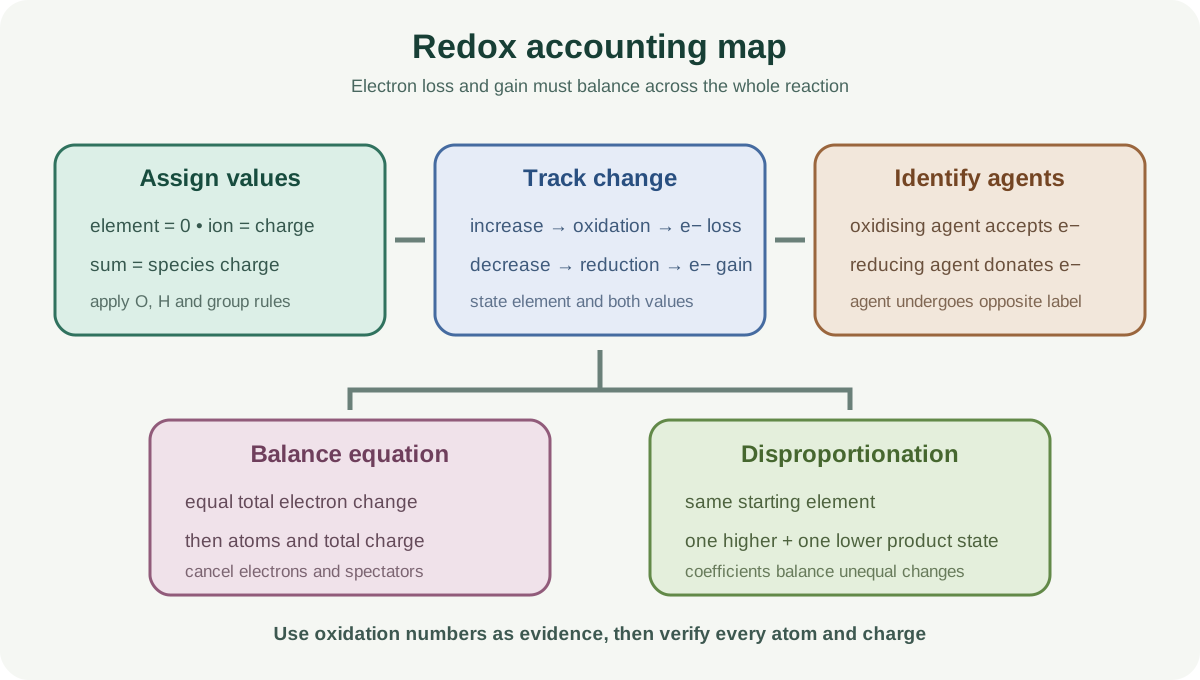
1. Oxidation number as bookkeeping
Oxidation number is a formal electron-accounting value assigned to an atom in a species. It helps track oxidation and reduction even when bonds are covalent and no complete electron transfer occurs.
An element in its uncombined state has oxidation number zero. A monatomic ion has oxidation number equal to its charge. The sum of oxidation numbers is zero in a neutral compound and equals the overall charge in a polyatomic ion.
Oxidation number is not always a literal ionic charge. Carbon in carbon dioxide is assigned plus four, but the molecule does not contain a free C4+ ion.
2. Common assignment rules
Group 1 metals are normally plus one and Group 2 metals plus two in compounds. Fluorine is minus one. Oxygen is usually minus two, except in peroxides where it is minus one. Hydrogen is usually plus one with non-metals and minus one in metal hydrides.
Halogens are commonly minus one unless bonded to oxygen or a more electronegative halogen. Apply the fixed rules first, then use the species total to solve the unknown value.
Rules have exceptions, so do not force oxygen to minus two in every formula or hydrogen to plus one in every hydride.
3. Calculate an unknown oxidation number
Assign known values and let the unknown be x. Multiply each oxidation number by the number of corresponding atoms, add the terms and set the sum equal to the species charge.
In sulfate, SO4²−, x plus four times minus two equals minus two, so sulfur is plus six. In ammonium, NH4+, x plus four times plus one equals plus one, so nitrogen is minus three.
Include brackets and subscripts correctly. The overall ion charge belongs on the right side of the accounting equation, not to each atom.
4. Oxidation and reduction by electrons
Oxidation is loss of electrons. Reduction is gain of electrons. In a half-equation, electrons appear on the product side for oxidation and reactant side for reduction.
For example, Fe2+ becomes Fe3+ plus one electron, so iron is oxidised. Cl2 plus two electrons becomes two Cl−, so chlorine is reduced.
Electrons lost by one species equal electrons gained by another in an overall redox reaction. Free electrons do not remain in the final balanced molecular equation.
Check this topic from memory
Attempt the matching topic bank before reopening the notes. Use each missed idea to decide what to review next.
Start the topic quiz