

Cambridge International AS and A Level Chemistry 30: Hydrocarbons
Cambridge International Chemistry 9701 notes on benzene and methylbenzene reactions, electrophilic substitution, aromatic stability, side-chain halogenation and directing effects.
Hydrocarbons is Cambridge International Chemistry 9701 Topic 30. This A Level boundary is specifically arene chemistry: reactions of benzene and methylbenzene, electrophilic-substitution mechanisms, aromatic stabilisation, condition-controlled ring or side-chain halogenation and substituent directing effects.
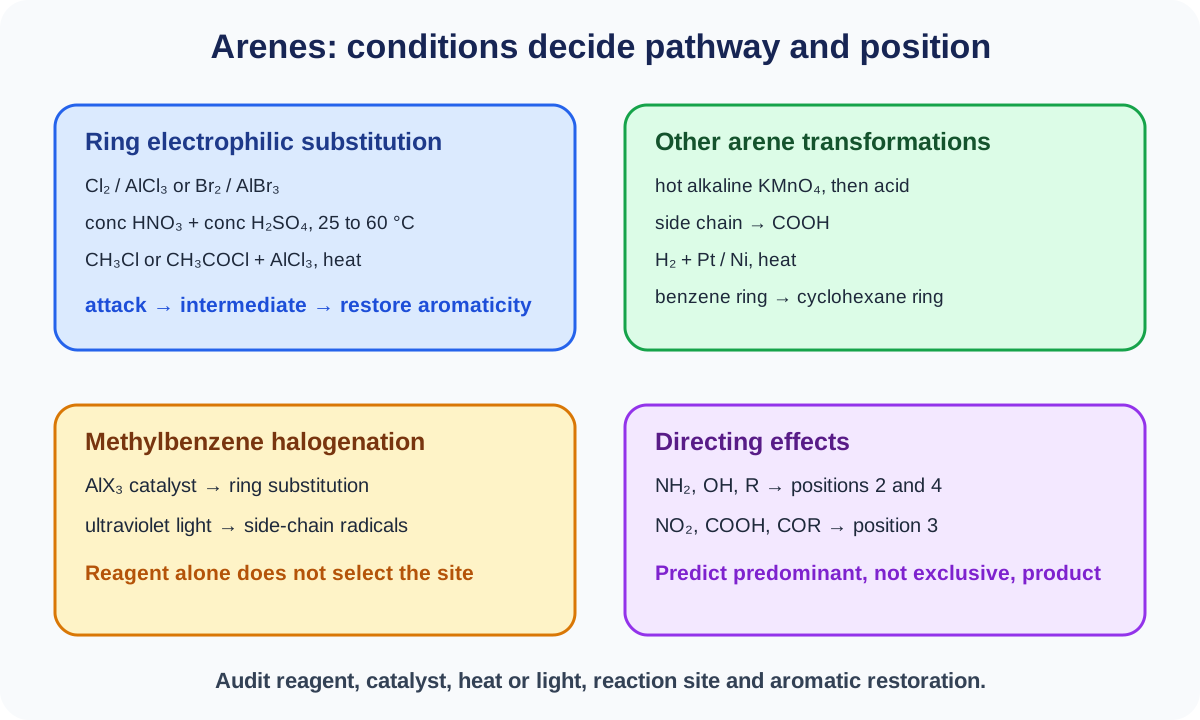
1. Why benzene normally substitutes
Benzene has a delocalised pi system spread across a planar six-carbon ring. Addition would permanently break that aromatic delocalisation, while substitution replaces a ring hydrogen and restores it.
Electrophilic substitution therefore predominates under ordinary halogenation, nitration and Friedel-Crafts conditions. This is an energetic explanation, not a claim that benzene can never add.
The ring is electron-rich enough to attack a sufficiently strong electrophile but needs catalysts or acid mixtures to generate one.
2. Chlorination and bromination
Benzene reacts with chlorine in the presence of aluminium chloride, or bromine in the presence of aluminium bromide, to form a halogenoarene and hydrogen halide.
The Lewis-acid catalyst polarises the halogen and helps generate a stronger electrophile. Dry conditions matter because aluminium halides react with water.
The catalyst is regenerated during proton loss and aromaticity restoration.
3. Nitration
Benzene is nitrated with concentrated nitric acid and concentrated sulfuric acid between 25 and 60 degrees Celsius. The electrophile is the nitronium ion.
Sulfuric acid helps nitric acid generate the nitronium ion. Ring attack forms a positively charged intermediate, then loss of a proton restores delocalisation and gives nitrobenzene.
Excessive temperature can encourage further substitution, so the specified range is part of the reaction knowledge.
4. Friedel-Crafts alkylation
Methyl chloride with aluminium chloride and heat introduces a methyl group onto benzene, forming methylbenzene. The Lewis acid activates the halogenoalkane to create an electrophilic carbon species.
This is electrophilic substitution, so a ring hydrogen is replaced and aromaticity is restored. Alkyl groups activate the ring, which can make further substitution possible.
Keep the new carbon-carbon bond distinct from simple halogenation.
5. Friedel-Crafts acylation
Ethanoyl chloride with aluminium chloride and heat introduces the ethanoyl group, producing an aromatic ketone. The active electrophile is an acylium-type species generated from the acyl chloride.
Acylation preserves the carbonyl group and is not the same product as alkylation. The carbon attached directly to the ring is the carbonyl carbon.
Check this topic from memory
Attempt the matching topic bank before reopening the notes. Use each missed idea to decide what to review next.
Start the topic quiz