

Cambridge International AS and A Level Chemistry 31: Halogen compounds
Cambridge International Chemistry 9701 notes on halogenoarene production and the contrasting reactivity of chlorobenzene and chloroethane.
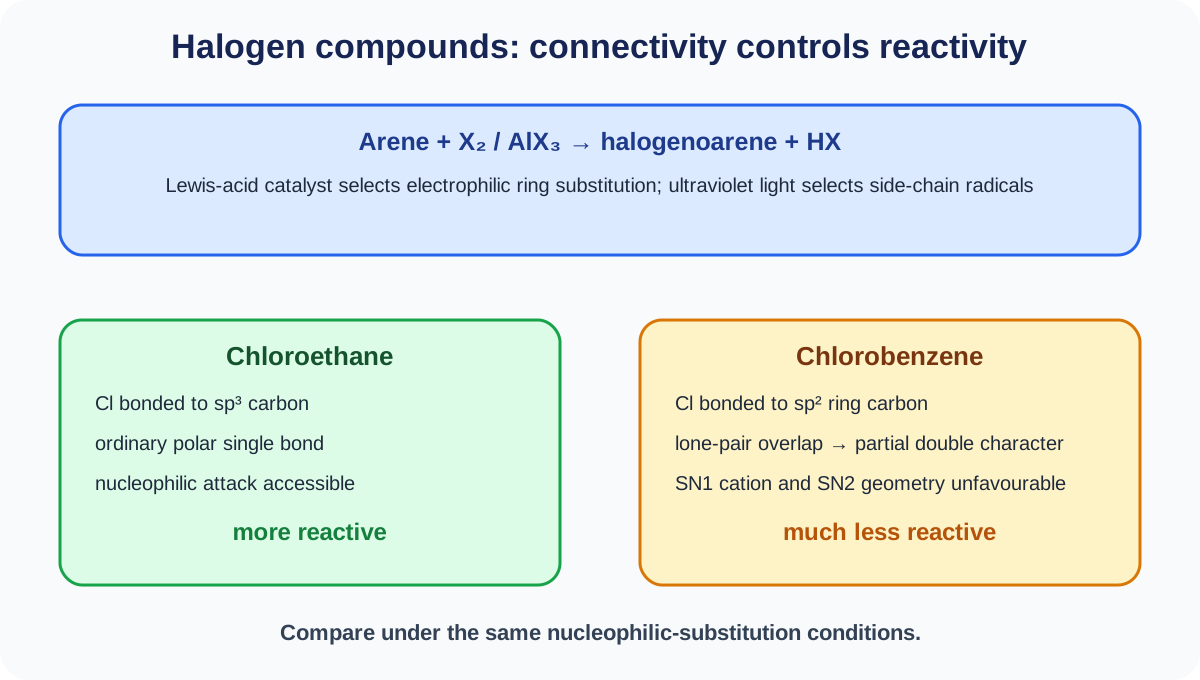
Halogen Compounds is Cambridge International Chemistry 9701 Topic 31. Its A Level boundary is narrow: making halogenoarenes by catalysed arene substitution and explaining why chlorobenzene is much less reactive toward nucleophilic substitution than chloroethane.
1. Halogenoarene definition
A halogenoarene has a halogen bonded directly to an aromatic ring carbon. Chlorobenzene is the core example.
If chlorine is bonded to a carbon in an alkyl side chain, the reactive unit is a halogenoalkane instead. Connectivity, not the presence of a benzene ring elsewhere, determines the class.
This distinction controls both naming and reaction behaviour.
2. Producing chlorobenzene
Benzene reacts with chlorine in the presence of aluminium chloride to form chlorobenzene and hydrogen chloride. The dry Lewis-acid catalyst activates chlorine and helps generate the electrophile.
The ring undergoes electrophilic substitution: chlorine replaces hydrogen and aromatic delocalisation is restored.
Do not use ultraviolet light for this ring route, because that condition belongs to radical chemistry.
3. Producing bromobenzene
Benzene reacts with bromine in the presence of aluminium bromide to form bromobenzene and hydrogen bromide.
Aluminium bromide polarises bromine strongly enough for the ring to attack. Proton loss from the intermediate restores the aromatic system and regenerates the catalytic species.
Match the catalyst halide to the halogen reagent in the expected Cambridge examples.
4. Halogenating methylbenzene on the ring
Methylbenzene reacts with chlorine and aluminium chloride by electrophilic ring substitution. The methyl group directs incoming chlorine mainly to positions 2 and 4.
The products are 2-chloromethylbenzene and 4-chloromethylbenzene in the syllabus wording, meaning chlorine is directly attached to the ring at those positions relative to methyl.
A displayed or skeletal structure prevents confusion with a chlorinated side chain.
5. Condition ownership
Lewis-acid catalyst conditions select electrophilic substitution on the aromatic ring. Ultraviolet light selects radical substitution at a suitable side chain.
The same chlorine reagent can therefore produce different connectivity from methylbenzene depending on conditions.
Always state reagent, catalyst or light, and the exact site of substitution.
6. Chloroethane reacts by nucleophilic substitution
The carbon-chlorine bond in chloroethane is polar because chlorine is more electronegative. Its carbon is electron-deficient and can be attacked by a nucleophile.
Check this topic from memory
Attempt the matching topic bank before reopening the notes. Use each missed idea to decide what to review next.
Start the topic quiz