

Cambridge IGCSE Biology Notes 1: Characteristics and Classification
Cambridge IGCSE Biology 0610 and 0970 notes on life characteristics, species, binomial names, dichotomous keys, DNA relationships, kingdoms, vertebrates, arthropods, plants, and...
Topic 1 of Cambridge IGCSE Biology 0610 and 0970 explains how biologists recognise life, name species and classify organisms using observable and molecular evidence. Core candidates study life characteristics, species, binomial names, keys and major animal and plant groups. Extended candidates add evolutionary relationships, DNA sequence evidence, five kingdoms, fern and flowering-plant groups and virus features.
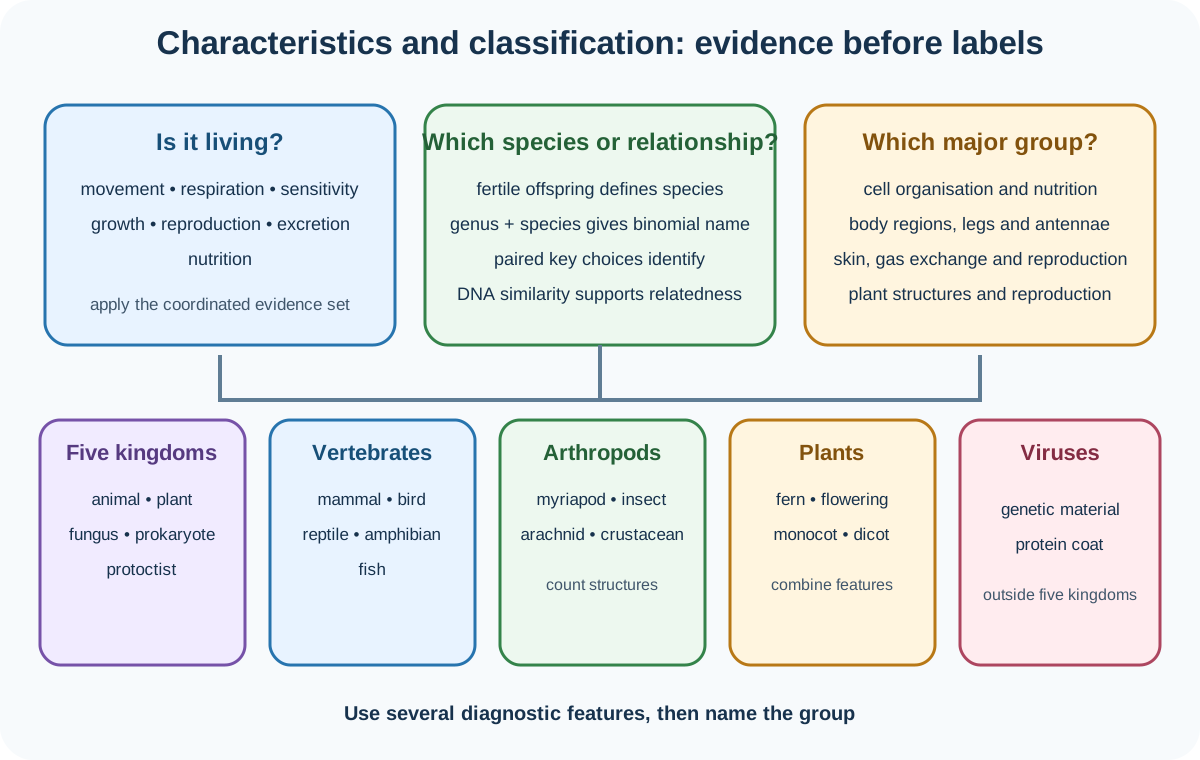
1.1 Characteristics of living organisms
Movement
Movement is an action by an organism or part of an organism that causes a change of position or place. It is broader than locomotion. A plant shoot bending toward light and a flower opening both involve movement even though the whole plant does not travel.
Respiration
Respiration is the set of chemical reactions in cells that break down nutrient molecules and release energy for metabolism. It is not the same as breathing. Breathing moves air; respiration releases usable energy inside cells.
Sensitivity
Sensitivity is the ability to detect and respond to changes in the internal or external environment. The change is a stimulus and the resulting action is a response. A pupil changing size and a root growing with gravity are responses to detected changes.
Growth
Growth is a permanent increase in size and dry mass. Water uptake alone can increase fresh mass temporarily without creating new biological material, so permanence and dry mass distinguish growth from swelling.
Reproduction
Reproduction comprises the processes that make more of the same kind of organism. An individual can remain alive without reproducing, but reproduction is necessary for continuation of its kind across generations.
Excretion
Excretion is removal of metabolic waste products and substances in excess of requirements. Carbon dioxide from respiration and urea from amino-acid breakdown are excretory products. Faeces contain undigested material, so their removal is egestion rather than excretion.
Nutrition
Nutrition is taking in materials for energy, growth and development. Animals ingest organic material. Green plants obtain carbon dioxide, water and mineral ions and use light energy to make carbohydrate.
These characteristics are applied as an evidence set, not as a rule that one visible feature proves life. Fire spreads and uses oxygen but does not show the coordinated cellular characteristics of an organism.
1.2 Concept and uses of classification systems
Shared features and species
Classification arranges organisms into groups based on features they share. A useful group is defined by positive evidence, not by one vague resemblance.
Check this topic from memory
Attempt the matching topic bank before reopening the notes. Use each missed idea to decide what to review next.
Start the topic quiz