

Cambridge IGCSE Biology Notes 10: Diseases and Immunity
Cambridge IGCSE Biology 0610 and 0970 notes on pathogen transmission, body defences, antibodies, vaccination, active and passive immunity and cholera.
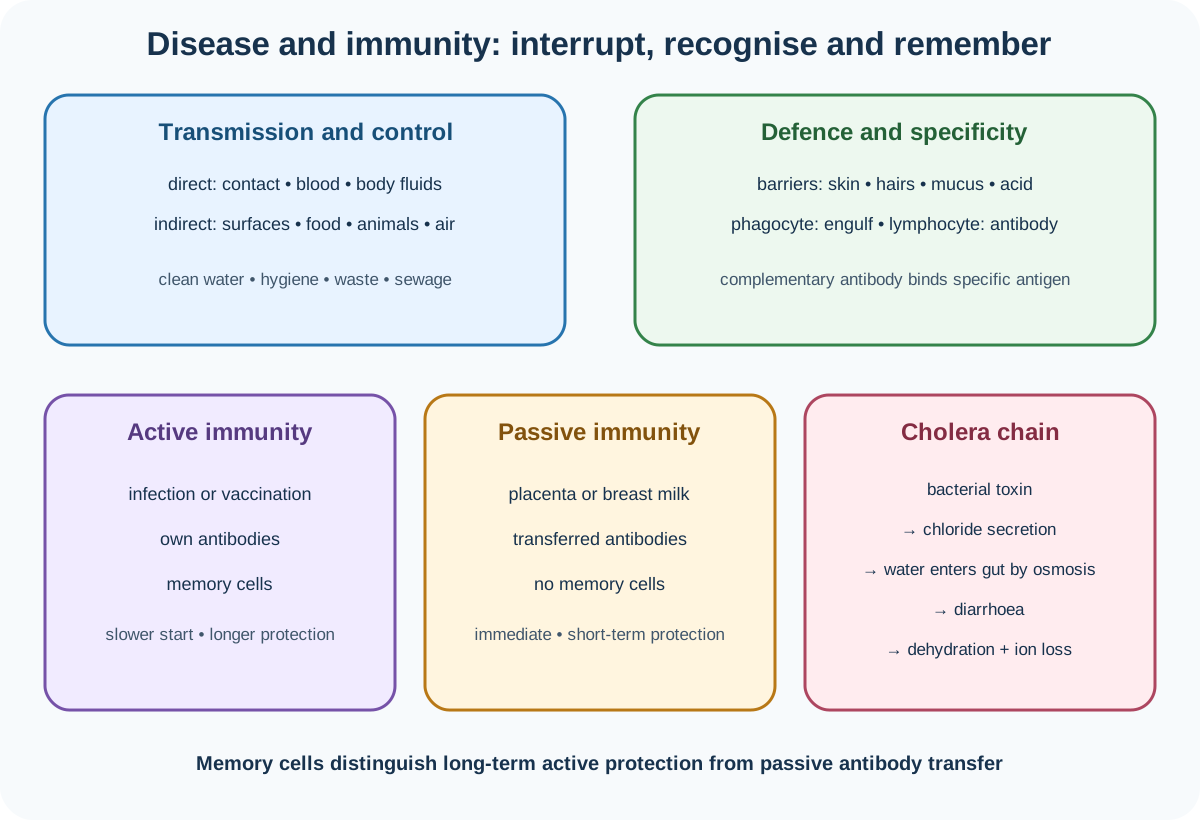
Topic 10 of Cambridge IGCSE Biology 0610 and 0970 follows disease control from pathogen transmission and body barriers to specific antibodies, active and passive immunity, vaccination and the required cholera mechanism. The official boundary is section 10.1 for both examination codes.
Pathogens and transmissible disease
A pathogen is a disease-causing organism. A transmissible disease is a disease in which the pathogen can pass from one host to another. Not every microorganism causes disease, so microorganism and pathogen are not synonyms.
Direct transmission includes contact between hosts and transfer through blood or other body fluids. Indirect transmission includes contaminated surfaces, food, animals and air. A contaminated object or environmental route carries the pathogen between hosts without the required direct host-to-host contact.
Match a control to the pathway. A measure is convincing only if it reduces pathogen release, survival, transfer or entry at a relevant stage.
Controlling transmission
A clean water supply prevents ingestion of water contaminated with pathogens. Treatment and protected distribution matter because visibly clear water can still contain microorganisms.
Hygienic food preparation includes hand washing, preventing cross-contamination, cooking where appropriate and safe storage. These actions reduce transfer and pathogen survival in food.
Good personal hygiene, including effective hand washing, reduces movement of pathogens from body fluids, surfaces and faecal contamination to the mouth, nose, eyes or other people.
Waste disposal removes material that could contaminate food or water or support animals that carry pathogens. Sewage treatment reduces release of human waste and pathogens into water supplies. Detailed treatment stages are not required.
Use the context when choosing controls. Clean water and sewage treatment directly target water-borne transmission, while surface cleaning is relevant to contaminated objects. A generic list without a route explanation is weaker than a matched chain.
Body defences
Skin forms a physical barrier that prevents many pathogens entering. If it is cut, the barrier is breached and clotting helps close the route.
Hairs in the nose trap larger particles. Mucus traps pathogens and particles in breathing passages. Stomach acid kills many microorganisms swallowed with food or mucus.
White blood cells provide internal defence. Phagocytes engulf pathogens by phagocytosis. Lymphocytes produce antibodies. These are different functions, not two names for the same process.
Barriers reduce entry, while immune responses act on material that has entered. No single defence prevents every infection, so the system relies on several layers.
Check this topic from memory
Attempt the matching topic bank before reopening the notes. Use each missed idea to decide what to review next.
Start the topic quiz