

Combined Science Biology B1: Characteristics of Living Organisms
Cambridge IGCSE Combined Science 0653 notes on movement, respiration, sensitivity, growth, reproduction, excretion and nutrition.
Cambridge IGCSE Combined Science Biology B1.1 defines seven characteristics of living organisms: movement, respiration, sensitivity, growth, reproduction, excretion and nutrition. These are processes shown by organisms over suitable timescales. Use the exact biological meaning of each term, then connect it to observable evidence.
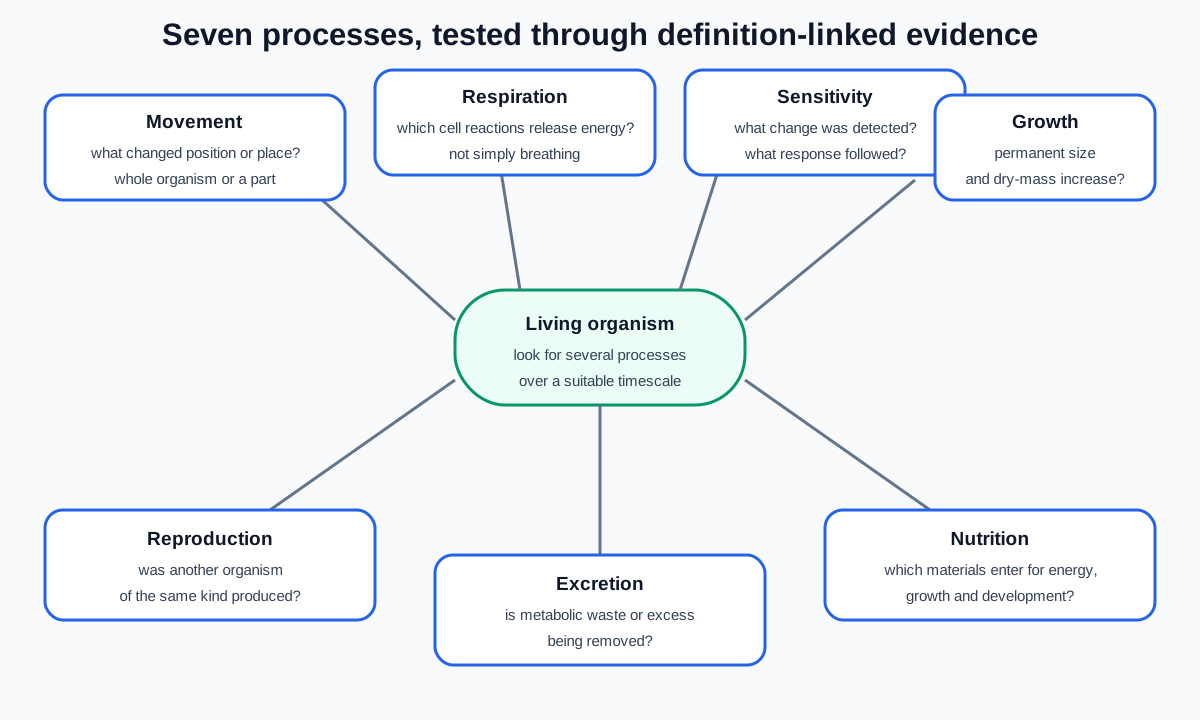
Movement changes position or place
Movement is an action by an organism, or part of an organism, that causes a change of position or place.
An animal may change place by walking or swimming. Movement also includes a plant shoot bending towards light, a flower opening or a pupil changing diameter because part of the organism changes position.
Movement does not require rapid whole-body locomotion. Evidence must show a change rather than merely a structure that could move.
Respiration releases energy in cells
Respiration is the chemical reactions in cells that break down nutrient molecules and release energy for metabolism.
It occurs in plants, animals and microorganisms. Breathing and gas exchange can provide oxygen and remove carbon dioxide, but neither is the definition of respiration. Respiration is a cellular chemical process.
Released energy supports processes such as active transport, growth, movement and maintaining body temperature. The detailed equations are developed in B12; here, own the definition and recognise evidence of cellular energy use.
Sensitivity detects and responds to change
Sensitivity is the ability to detect and respond to changes in the internal or external environment.
A stimulus is a detectable change. Bright light causing a pupil response is external sensitivity. Regulation following a change in internal temperature shows response to an internal change.
Both detection and response matter. A movement that happens randomly is not automatically evidence of sensitivity unless it is linked to a change in the environment.
Plants show sensitivity even without a nervous system. A shoot growing towards light or roots responding to gravity can provide evidence across a longer timescale.
Growth is permanent increase
Growth is a permanent increase in size and dry mass.
Dry mass excludes temporary changes caused only by water uptake. A cell or organism that swells after absorbing water may increase in size temporarily without producing new biological material.
Growth can result from cell division, cell enlargement and synthesis of new material. It is directional over time, although an organism's total mass can fluctuate between measurements.
A seedling becoming taller while its dry mass increases is strong growth evidence. An inflated balloon becoming larger is not biological growth because no living material is produced.
Check this topic from memory
Attempt the matching topic bank before reopening the notes. Use each missed idea to decide what to review next.
Start the topic quiz