

Co-ordinated Sciences Biology B16: Inheritance
Cambridge IGCSE Co-ordinated Sciences 0654 Biology B16 notes with worked examples, misconception checks and assessment guidance.
Biology B16 of Cambridge IGCSE Co-ordinated Sciences 0654 links chromosomes, DNA, genes and alleles to nuclear division and monohybrid inheritance. Official sections B16.1 to B16.3 cover XX and XY sex inheritance, haploid and diploid nuclei, mitosis, meiosis, pedigrees, Punnett squares and 1 : 1 or 3 : 1 phenotypic ratios. Protein synthesis, test crosses, codominance and sex linkage are outside this boundary.
Chromosomes, genes and alleles
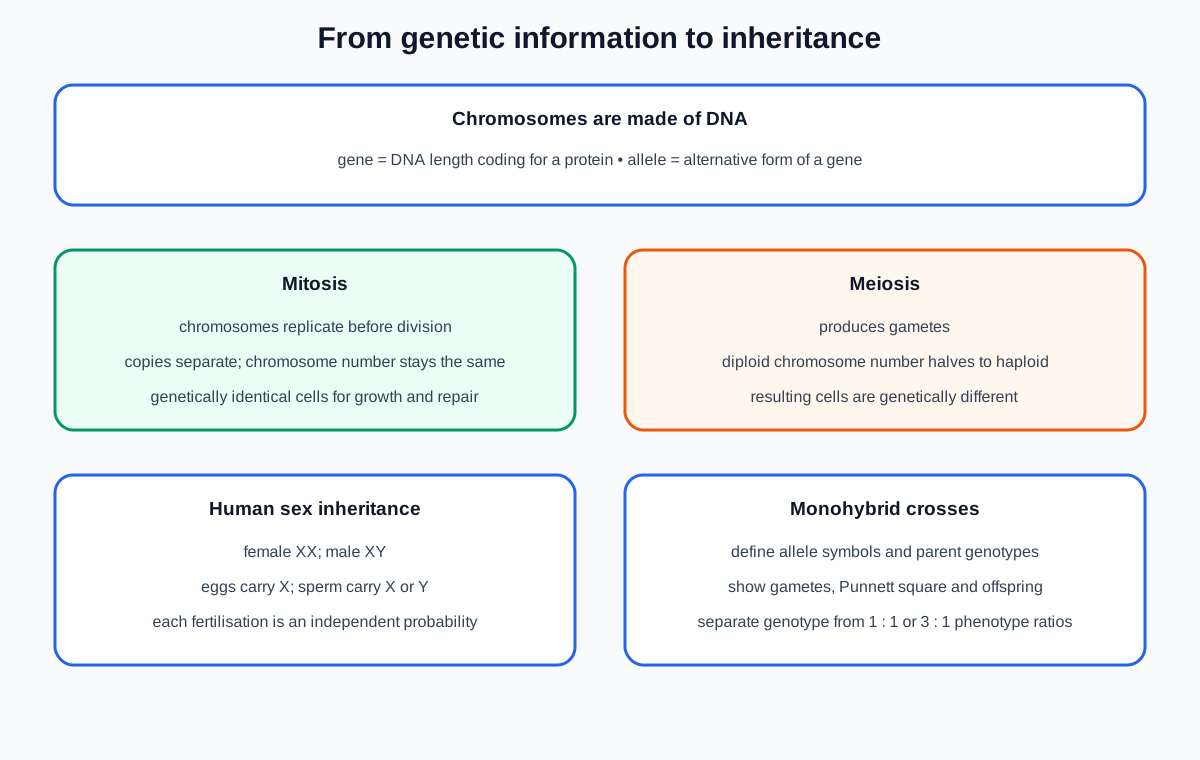
Chromosomes are made of DNA. DNA contains genetic information in lengths called genes. A gene is a length of DNA that codes for a protein. An allele is an alternative form of a gene.
Genes occur at corresponding positions on a pair of chromosomes in a diploid cell. The alleles may be identical or different. An allele is not an alternative chromosome and a gene is not the entire DNA content of an organism.
Inheritance is transmission of genetic information from generation to generation. Gametes carry alleles from parents, and fertilisation combines them in a zygote.
Haploid, diploid and human chromosomes
A haploid nucleus contains one set of chromosomes. A diploid nucleus contains two sets.
In a diploid cell, there is a pair of each chromosome type. A human diploid cell has 23 pairs, or 46 chromosomes. A normal human gamete is haploid and has 23 single chromosomes.
The chromosome number refers to chromosome structures, not DNA base pairs or individual genes.
Sex determination in humans
Human females normally have two X chromosomes, XX. Human males normally have one X and one Y, XY.
Egg cells carry an X chromosome. Approximately half of sperm carry X and half carry Y. Fertilisation by an X-bearing sperm gives XX and by a Y-bearing sperm gives XY, so the sperm chromosome determines chromosomal sex in this model.
Each fertilisation is an independent probability. A previous child's sex does not force the outcome of the next fertilisation.
Mitosis
Mitosis is nuclear division giving rise to genetically identical cells. Exact chromosome replication occurs before mitosis. During mitosis, chromosome copies separate, maintaining chromosome number in each daughter cell.
Mitosis supports growth, repair of damaged tissues, replacement of cells and asexual reproduction.
Stem cells are unspecialised cells that divide by mitosis. Their daughter cells can become specialised for particular functions.
Details of mitotic stages are not required. Focus on prior replication, copy separation, chromosome-number maintenance and genetically identical products.
Meiosis
Check this topic from memory
Attempt the matching topic bank before reopening the notes. Use each missed idea to decide what to review next.
Start the topic quiz