

Co-ordinated Sciences Biology B18: Organisms and Their Environment
Cambridge IGCSE Co-ordinated Sciences 0654 Biology B18 notes with worked examples, misconception checks and assessment guidance.
Biology B18 of Cambridge IGCSE Co-ordinated Sciences 0654 follows energy into, through and out of biological systems while carbon cycles between organisms and the environment. Official sections B18.1 to B18.3 cover feeding relationships, trophic levels, inefficient energy transfer, human food-web impacts and the carbon cycle. Ecological pyramids, the nitrogen cycle and population curves are outside this boundary.
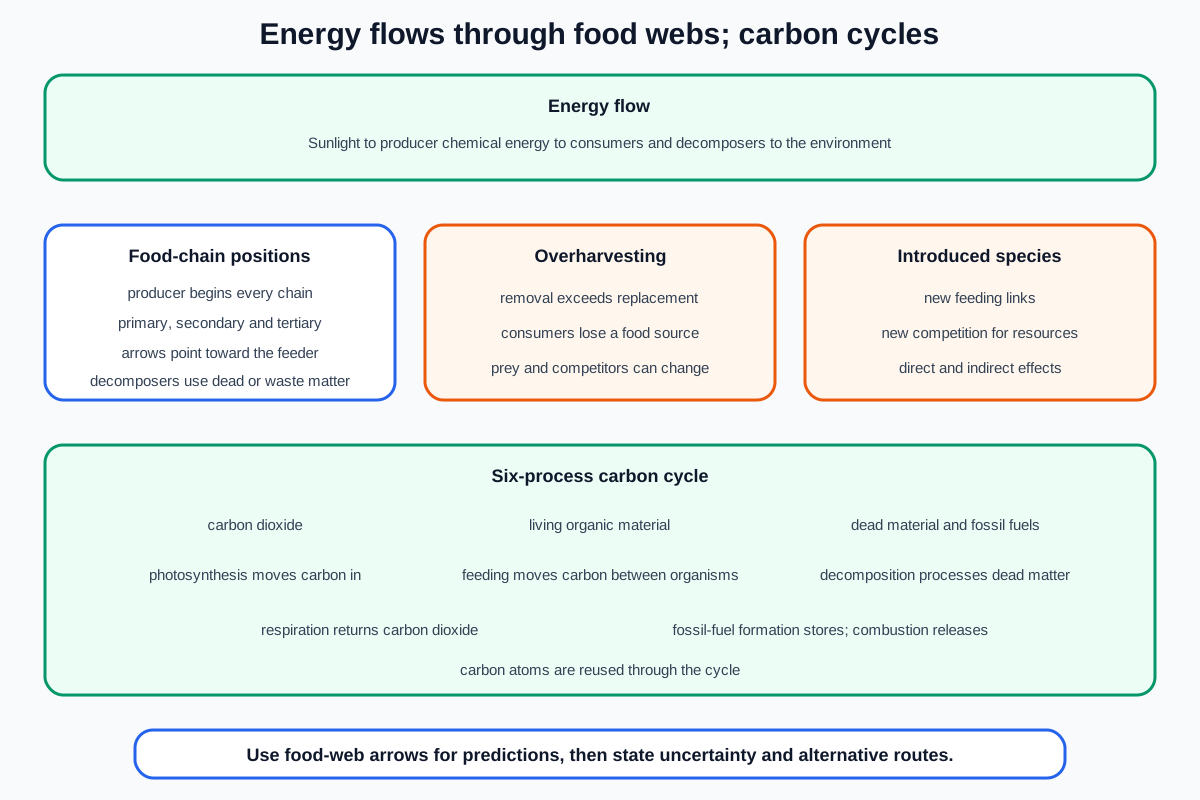
Energy enters from the Sun
The Sun is the principal source of energy input to biological systems. Producers absorb light energy and transfer some of it into chemical energy in organic nutrients through photosynthesis.
Chemical energy passes to consumers and decomposers through feeding. At every stage, organisms respire and eventually transfer energy to the environment, mainly as heat.
Energy flows in one direction. It is not recycled to the Sun or rebuilt automatically at the previous trophic level. Carbon cycles, but usable energy becomes dispersed in the environment.
Food chains and food webs
A food chain shows energy transfer from one organism to the next and begins with a producer. An arrow points in the direction of energy transfer, from the organism eaten toward the organism that feeds.
A producer makes its own organic nutrients, usually using sunlight through photosynthesis. A consumer gets energy by feeding on other organisms.
A herbivore is an animal that obtains energy by eating plants. A carnivore obtains energy by eating other animals. A decomposer obtains energy from dead or waste organic material.
A food web is a network of interconnected food chains. One organism can have several prey, predators or food sources. A change can therefore spread along more than one route.
Trophic levels
A trophic level is an organism's position in a food chain or food web.
The producer is the first trophic level. A primary consumer feeds on a producer. A secondary consumer feeds on a primary consumer. Tertiary and quaternary consumers occupy later levels.
An omnivore may occupy different trophic levels depending on what it eats in a particular chain. Trophic level is a feeding position, not a permanent species label in every context.
Human changes to food webs
Overharvesting removes organisms faster than their populations recover. Removing a food species reduces that population directly, can deprive predators of food and can release its prey from predation. The effect depends on all web connections.
Introducing a foreign species can add a predator, competitor, herbivore or pathogen. A foreign species may spread rapidly if local controls are weak, changing native populations and energy routes.
Check this topic from memory
Attempt the matching topic bank before reopening the notes. Use each missed idea to decide what to review next.
Start the topic quiz