

Cambridge IGCSE Environmental Management 3: Water
Cambridge IGCSE Environmental Management 0680 notes on water.
Cambridge IGCSE Environmental Management 0680 Topic 3 covers water stores and supply, pollution, water-related disease, marine aquaculture and harvesting, oil pollution and plastic pollution. These notes follow official sections 3.1 to 3.6 for 2027 to 2029; field measurements remain in the separate fieldwork hub.
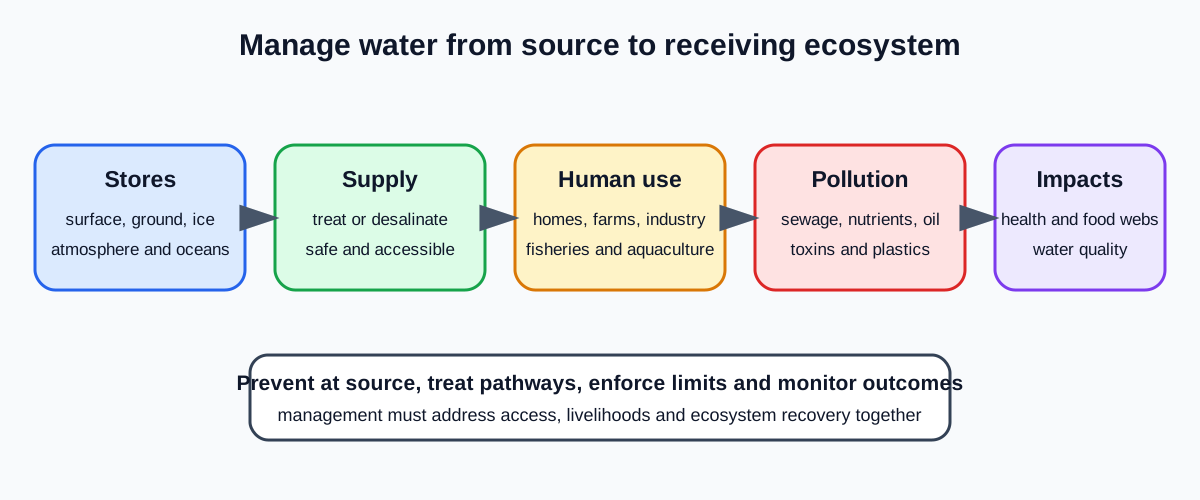
1. Water cycle, sources and potable supply
Water stores include oceans, ice sheets and glaciers, groundwater, the atmosphere, lakes and rivers. Transfers include precipitation, interception, surface runoff, infiltration, through-flow, groundwater flow, transpiration, evaporation and condensation. A store is where water remains; a transfer moves it.
People obtain fresh water from rain and snow, rivers, lakes and reservoirs, aquifers and wells, and desalinated ocean water. The five oceans are Pacific, Atlantic, Indian, Southern and Arctic. Potable water is safe to drink, not necessarily chemically pure.
Conventional treatment uses screening to remove large debris, sedimentation to settle suspended material, filtration to remove smaller particles and chlorination to kill many pathogens. Each stage has a different function.
Availability differs between water-rich and water-poor regions and between urban and rural communities. Physical supply, infrastructure, treatment, income, governance and sewage systems all affect access. National abundance does not ensure household access.
2. Desalination and dams
In distillation, salty water boils, salts remain, and steam is condensed as fresh water. Reverse osmosis applies high pressure to force water through a membrane that stops most ions and other molecules. Both can provide reliable coastal supply but require energy, capital, maintenance and management of concentrated brine.
Multipurpose dams can control floods, generate hydroelectricity, store irrigation and drinking water, support transport, recreation, tourism and fish farming. Limitations include high cost, displacement, flooded habitats, trapped sediment, altered downstream flow and fish movement, evaporation and the risk that benefits are distributed unequally.
3. Water pollution
Sources include domestic waste, sewage, plastic, industrial processes and agriculture. Untreated sewage can transmit cholera. Industrial toxins may accumulate in one organism over time, called bioaccumulation, and rise in concentration at higher food-chain levels, called biomagnification.
Acid rain can lower lake and river pH, harming organisms. Fertiliser ions and organic waste can enrich water. Algal growth blocks light; decomposers consume oxygen as biomass dies; oxygen depletion kills aquatic organisms. This eutrophication chain should be explained, not merely named.
Check this topic from memory
Attempt the matching topic bank before reopening the notes. Use each missed idea to decide what to review next.
Start the topic quiz