

IGCSE Physics Practical Skills 7: Thermal Investigations
Cambridge IGCSE Physics practical notes on heating, cooling, specific heat capacity, insulation, conduction, convection, radiation, graphs, and evaluation.
Q: What does IGCSE Physics Practical Skills 7: Thermal Investigations cover?
A: It gives a complete Paper 5 and Paper 6 preparation route for the named skill, including apparatus, variables, data, safety, and evaluation.
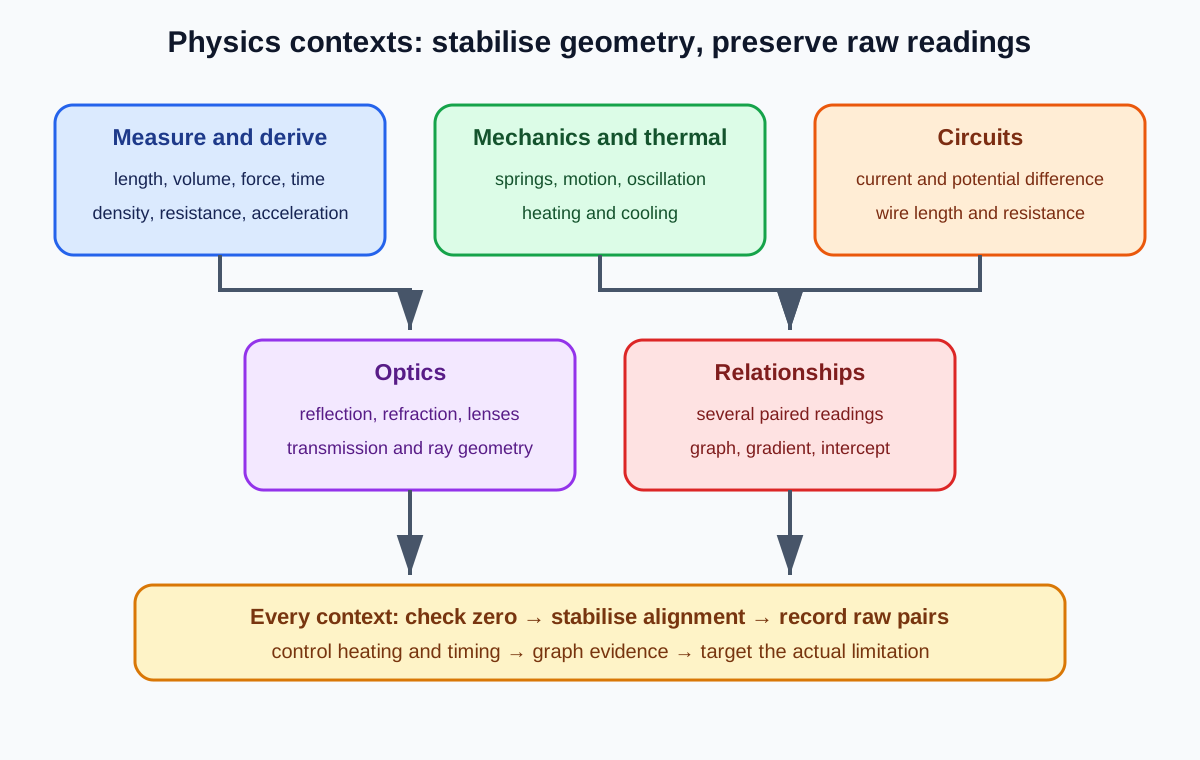
Aim
Measure or compare temperature changes and thermal-transfer rates while controlling mass, geometry, surface, power, and surroundings.
Apparatus and setup
- thermometer or temperature probe and stopwatch
- beakers, insulated containers, lids, and measuring cylinder
- low-voltage heater and electrical meters where supplied
- test materials for insulation or surface comparisons
Draw the apparatus as a working scientific diagram: use straight lines, label the parts that affect the method, and show where measurements are taken. Do not add decorative detail.
Method
- Measure mass or volume and allow all samples to reach a common starting temperature.
- Place the thermometer consistently and prevent it touching the container when inappropriate.
- Apply a measured heating input or begin cooling from a defined condition.
- Record temperature at fixed time intervals while stirring consistently if required.
- Repeat with one insulation, surface, material, or mass variable changed.
- Plot temperature against time and compare gradients or changes over the same interval.
Variables
- Independent variable: insulation, surface finish, material, mass, or heating time.
- Dependent variable: temperature change or heating or cooling rate.
- Controls: container, exposed area, starting temperature, heater power, probe position, and surroundings.
A control variable is not just something kept the same. State how it is kept the same so another student could repeat the comparison.
Recording and processing results
Record time and temperature with consistent precision. If electrical energy is used, record current and voltage as well as time. Compare like-for-like time intervals.
Use one table for raw readings and calculated values when the relationship is simple. Put each unit in the heading, not in every cell. Preserve the instrument precision in raw data and round calculated values only at the end.
Safety
Use low-voltage equipment, keep electrical connections dry, handle hot water and heaters carefully, and allow apparatus to cool before dismantling.
Check this topic from memory
Attempt the matching topic bank before reopening the notes. Use each missed idea to decide what to review next.
Start the topic quiz