

IGCSE Physics Practical Skills 8: Light and Optics
Cambridge IGCSE Physics practical notes on reflection, refraction, critical angle, lenses, ray tracing, focal length, parallax, graphs, and evaluation.
Q: What does IGCSE Physics Practical Skills 8: Light and Optics cover?
A: It gives a complete Paper 5 and Paper 6 preparation route for the named skill, including apparatus, variables, data, safety, and evaluation.
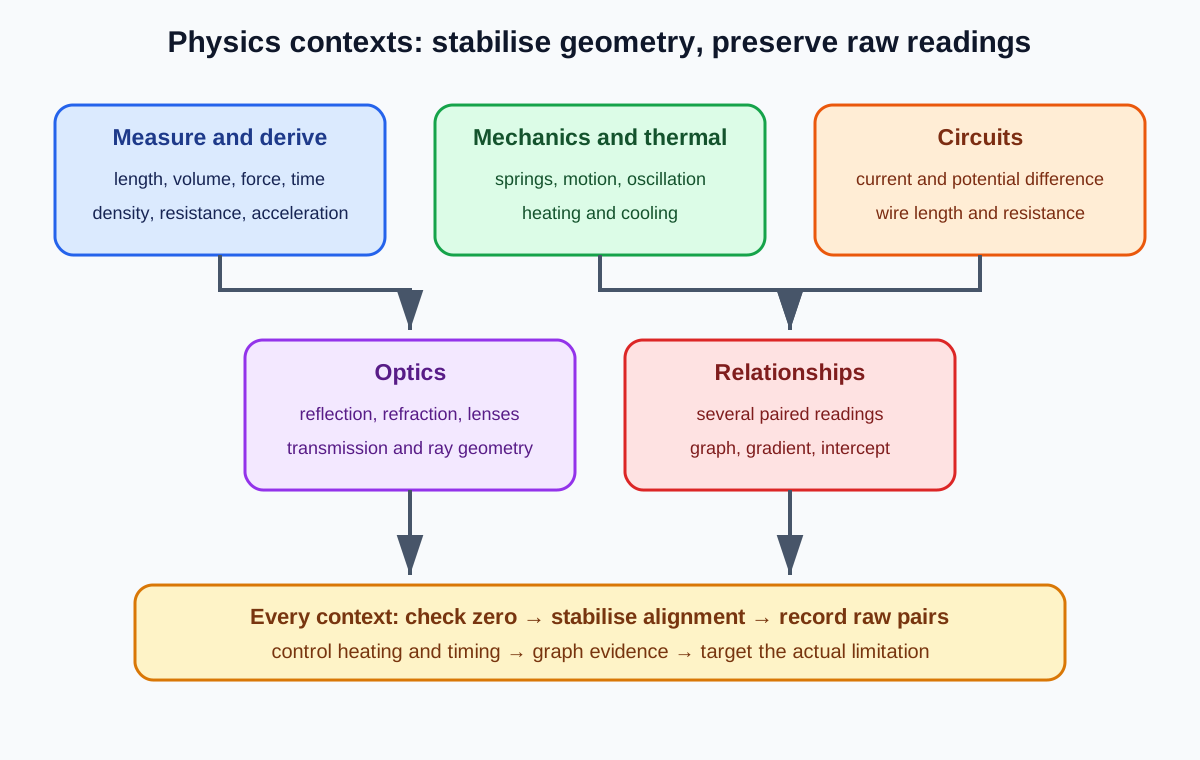
Aim
Trace rays or form images to determine reflection, refraction, or lens relationships using accurate alignment.
Apparatus and setup
- ray box or optical pins, white paper, ruler, and protractor
- plane mirror, transparent block, or semicircular block
- converging lens, illuminated object, and screen
- metre rule and holders for coaxial alignment
Draw the apparatus as a working scientific diagram: use straight lines, label the parts that affect the method, and show where measurements are taken. Do not add decorative detail.
Method
- Draw a thin reference line and normal with a sharp pencil.
- Align the mirror or block exactly on its outline and use narrow rays or widely spaced pins.
- Mark ray positions before removing apparatus, then join points with a ruler.
- Measure all angles from the normal and repeat across a suitable range.
- For a lens, align object, lens, and screen at the same height and focus the sharpest image.
- Repeat position measurements from the lens centre and plot the requested relationship.
Variables
- Independent variable: incidence angle or object distance.
- Dependent variable: reflection angle, refraction angle, image distance, or magnification.
- Controls: optical component, wavelength or colour, alignment, reference point, and ambient light.
A control variable is not just something kept the same. State how it is kept the same so another student could repeat the comparison.
Recording and processing results
Record raw angles or distances before calculating ratios. Use a table with repeated readings where possible and show the normal and ray direction clearly on diagrams.
Use one table for raw readings and calculated values when the relationship is simple. Put each unit in the heading, not in every cell. Preserve the instrument precision in raw data and round calculated values only at the end.
Safety
Use low-power school ray boxes, never look directly into a bright beam, handle glass carefully, and keep trailing leads away from walkways.
Check this topic from memory
Attempt the matching topic bank before reopening the notes. Use each missed idea to decide what to review next.
Start the topic quiz