

Pearson International A Level Biology Unit 1: Molecules, Diet, Transport and Health
Pearson IAL Biology notes on molecules, membranes, proteins, DNA, gene expression, transport and health.
Pearson Edexcel International A Level Biology Unit 1 is an externally assessed written unit. This note follows the official specification content and keeps theory ownership separate from the dedicated practical-skills hub. Experimental evidence can appear inside theory questions, but Units 3 and 6 remain the written practical-skills papers.
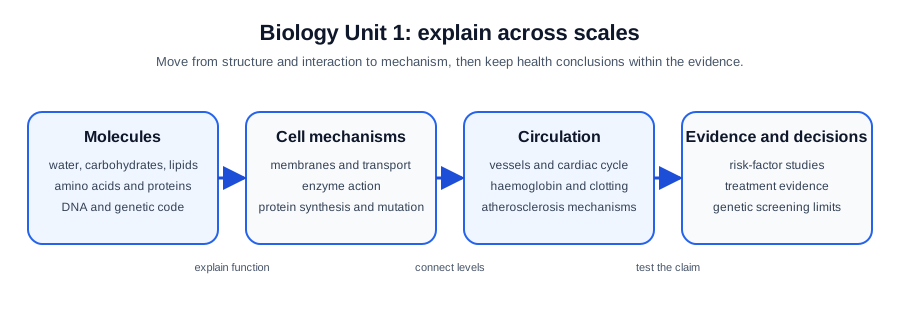
Official unit scope
- Biological molecules. Connect water, carbohydrates and lipids to transport, energy storage and membrane structure, and distinguish molecular evidence from claims about whole-organism health.
- Circulation and cardiovascular disease. Relate vessel structure, the cardiac cycle, haemoglobin, atherosclerosis and blood clotting, then evaluate risk-factor studies, risk perception and treatment evidence without turning association into proof of cause.
- Membranes, transport and proteins. Use membrane structure, water potential, passive and active transport, amino-acid chemistry, protein structure and enzyme action to explain movement and function at the molecular level.
- Nucleic acids and inherited conditions. Explain DNA replication, the genetic code, protein synthesis and mutation, then apply these ideas to cystic fibrosis, genetic screening and its ethical and social questions.
The content is assessed through unfamiliar contexts as well as direct recall. Build explanations from first principles: identify the system, name the relevant quantities or structures, state the mechanism, connect cause to observation and limit the conclusion to the evidence supplied. A list of keywords is not a causal explanation.
Core reasoning and methods
- Link molecular structure to interaction and function instead of recalling isolated labels.
- Separate correlation from causation when interpreting epidemiological evidence, and identify possible confounding variables.
- For transport questions, state the direction, driving gradient, membrane route and whether metabolic energy is required.
Quantitative work should begin with the governing relationship, followed by unit conversion, substitution, calculation and a reasonableness check. Keep additional significant figures during working and round at the end. Qualitative work needs the same discipline: compare like with like, identify a control or baseline, and distinguish an observed result from an inferred mechanism.
Graphs and tables are arguments in compressed form. Read axes, units, uncertainty indicators and scales before describing a trend. A valid conclusion identifies the relevant interval, direction and evidence. If data scatter or overlap weakens the claim, say so. Extrapolation beyond the measured range requires justification.
Check this topic from memory
Attempt the matching topic bank before reopening the notes. Use each missed idea to decide what to review next.
Start the topic quiz