

Pearson International A Level Chemistry Unit 6: Practical Skills II
Pearson IAL Chemistry practical notes on advanced experimental procedures and techniques developed through Units 4 and 5.
Pearson explains that International A Level practical skills are assessed mainly through Unit 3 and Unit 6 written exams, without a hands-on practical assessment. This guide practises planning, recording, processing, conclusions and evaluation in familiar and unfamiliar contexts. Check the specification for your course and examination series for exact unit requirements.
Aim and scientific principle
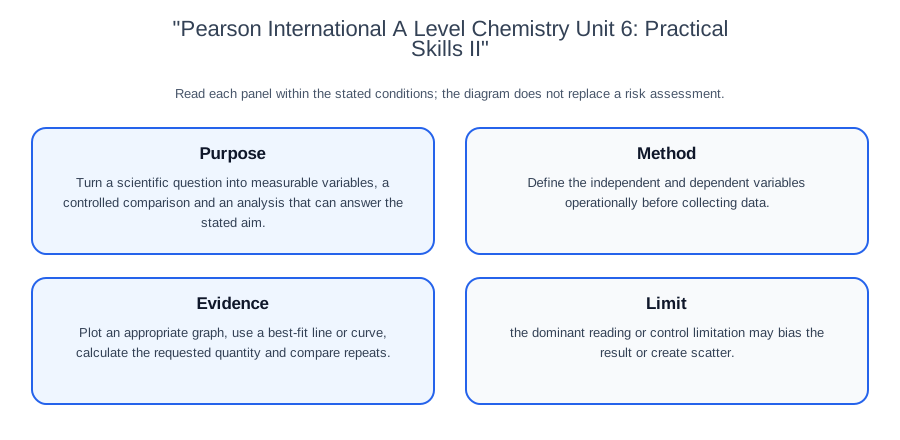
Turn a scientific question into measurable variables, a controlled comparison and an analysis that can answer the stated aim.
Begin by translating the title into a testable question. Identify what is deliberately changed, what is measured directly, what is calculated and what must remain controlled. Predict a relationship only after naming the mechanism. A prediction without a reason is weak; a reason without measurable variables cannot guide a practical design.
Apparatus and setup
Use appropriate measuring instruments, labelled containers or supports, a timer where needed, and equipment selected for suitable range and resolution. Consider measuring range, resolution, uncertainty, calibration and suitability for the sample, not the instrument name alone. Draw a labelled scientific setup that shows the working geometry and exactly where readings are taken. Include a control or blank when it distinguishes the target effect from drift, contamination or background response.
Before collecting results, check zero readings, calibration, leaks, alignment or sterility as relevant. Record the instrument resolution beside the first raw-data table. If a digital device displays more digits than its underlying accuracy supports, do not treat every digit as equally certain.
Method
- Define the independent and dependent variables operationally before collecting data.
- Choose a sensible range with enough values to reveal the expected relationship.
- Control relevant factors, use independent experimental replicates where needed, distinguish them from repeat readings, and record raw data with units and instrument resolution.
- Process the results using the specified calculation or graph, then evaluate uncertainty, anomalies and limitations.
Plan the analysis before starting. This reveals whether an additional measurement is needed for a derived quantity and prevents a completed experiment from lacking a mass, length, concentration, background or calibration value. A method should be detailed enough for another trained student to reproduce, while avoiding decorative steps that do not affect validity.
Variables and controls
Check this topic from memory
Attempt the matching topic bank before reopening the notes. Use each missed idea to decide what to review next.
Start the topic quiz