

Pearson International A Level Physics Core Practical 7: Determine the electrical resistivity of a material
Pearson IAL Physics practical notes on determine the electrical resistivity of a material.
This practice outline estimates wire resistivity. It supports development of a locally approved method and electrical risk assessment; it is not a complete validated procedure. Check current Pearson documents for course-specific requirements.
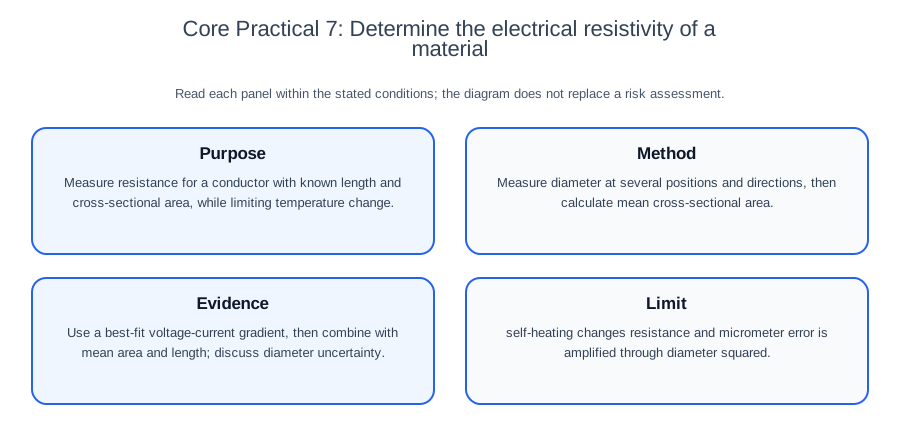
Aim and scientific principle
Estimate resistivity from resistance, the length between voltage-sensing points and the conducting cross-sectional area. The simple relation assumes a uniform material and approximately uniform area at the stated temperature, with the measured resistance representing that segment. Resistivity is not independent of temperature or material condition.
Begin by translating the title into a testable question. Identify what is deliberately changed, what is measured directly, what is calculated and what must remain controlled. Predict a relationship only after naming the mechanism. A prediction without a reason is weak; a reason without measurable variables cannot guide a practical design.
Apparatus and setup
Use test wire, micrometer, metre rule, low-voltage supply, ammeter, voltmeter, switch, variable resistor and leads. Consider measuring range, resolution, uncertainty, calibration and suitability for the sample, not the instrument name alone. Draw a labelled scientific setup that shows the working geometry and exactly where readings are taken. Include a control or blank when it distinguishes the target effect from drift, contamination or background response.
Before collecting results, check zero readings, calibration, leaks, alignment or sterility as relevant. Record the instrument resolution beside the first raw-data table. If a digital device displays more digits than its underlying accuracy supports, do not treat every digit as equally certain.
Check this topic from memory
Attempt the matching topic bank before reopening the notes. Use each missed idea to decide what to review next.
Start the topic quiz