

Pearson International GCSE Biology 3: Reproduction and Inheritance
Pearson International GCSE Biology notes on reproduction, DNA, genes, inheritance, variation and selection.
Reproduction passes genetic information between generations while mutation and meiosis generate variation.
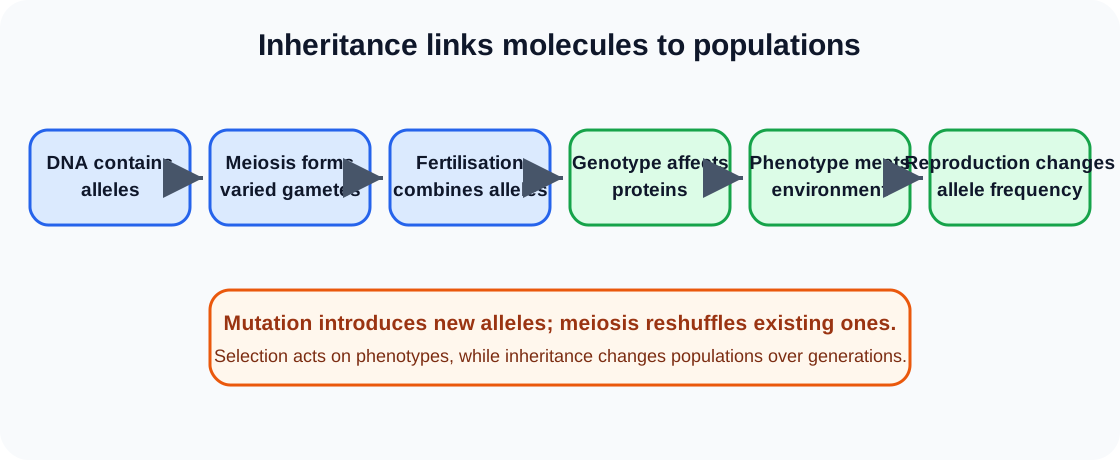
Pearson 4BI1 connects reproduction to inheritance: DNA is copied and transmitted, meiosis and fertilisation create new allele combinations, and variation provides material for selection. Genetic diagrams predict probabilities for each conception, not guaranteed family outcomes.
Main ideas
- Compare sexual and asexual reproduction and relate each to genetic variation.
- Describe reproduction in flowering plants and humans, including fertilisation and development.
- Link DNA, genes, chromosomes and proteins.
- Use genetic diagrams to predict monohybrid inheritance and sex determination.
- Distinguish inherited and environmental variation.
- Explain natural selection and selective breeding as different selection processes.
Sexual and asexual reproduction
Asexual reproduction involves one parent and no fusion of gametes. Mitosis produces genetically identical offspring unless mutation occurs. It is rapid and does not require a mate, which is useful in stable conditions, but low genetic variation can make a population vulnerable to the same environmental change or disease.
Sexual reproduction fuses haploid male and female gametes to form a diploid zygote. Meiosis produces genetically varied gametes and fertilisation combines alleles from two parents. It is slower and requires investment in gametes or finding mates, but variation can increase the chance that some offspring survive change.
Flowering-plant reproduction
Anthers produce pollen containing male nuclei; the stigma receives pollen; the ovary contains ovules with female gametes. Pollination transfers pollen from anther to stigma and is not fertilisation. After compatible pollen germinates, a pollen tube grows through the style, allowing a male nucleus to fuse with the female nucleus in an ovule.
After fertilisation, the ovule develops into a seed and the ovary commonly develops into a fruit. Seeds contain an embryo and food store protected by a coat. Germination requires water, oxygen and suitable temperature. Light is not a universal germination requirement, although seedlings later need light for photosynthesis.
Wind-pollinated flowers produce abundant light pollen and have exposed anthers and feathery stigmas. Insect-pollinated flowers use colour, scent, nectar and sticky pollen. Adaptations should be linked to transfer mechanism rather than memorised as isolated lists.
Human reproduction and development
Check this topic from memory
Attempt the matching topic bank before reopening the notes. Use each missed idea to decide what to review next.
Start the topic quiz