

Pearson International GCSE Biology 5: Use of Biological Resources
Pearson International GCSE Biology notes on food production, microorganisms, genetic modification and cloning.
Biological resources can be managed and modified to produce food, medicines and useful organisms.
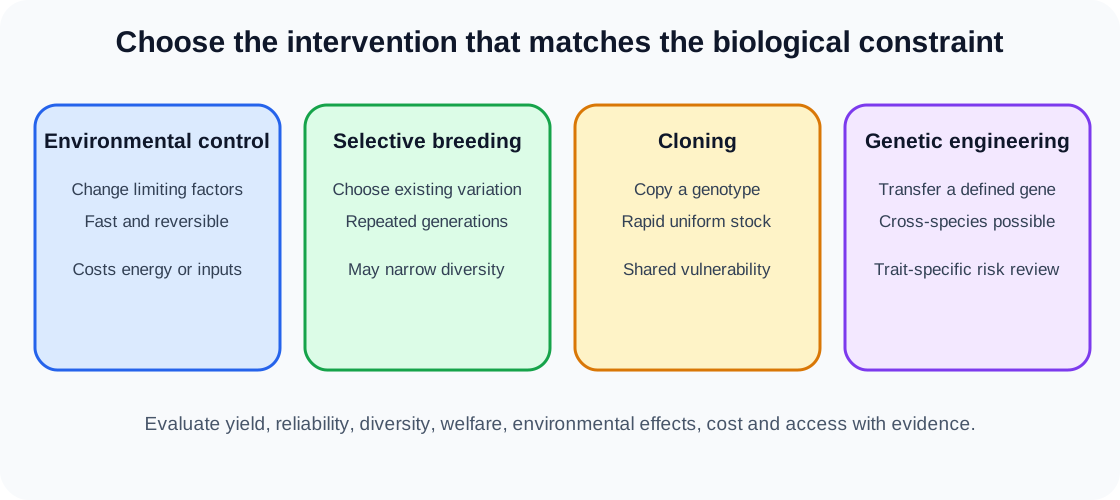
Pearson 4BI1 treats biotechnology as applied biology. Yield or product quality depends on controlling limiting factors, selecting or modifying organisms, and balancing benefits against biological, environmental, economic and ethical consequences.
Main ideas
- Explain how greenhouse conditions and fertilisers affect crop yield.
- Relate selective breeding to desired traits and reduced genetic diversity.
- Describe fermentation by microorganisms and the control of industrial fermenters.
- Explain tissue culture and cloning as methods of producing genetically identical organisms.
- Outline genetic engineering using restriction enzymes, vectors and host cells.
- Evaluate benefits, risks and ethical concerns using evidence rather than slogans.
Increasing crop yield
Greenhouses allow light, temperature, carbon dioxide, water and mineral supply to be managed. Heating can increase enzyme-controlled reaction rates when temperature is limiting, while ventilation prevents overheating and supplies carbon dioxide. Artificial light extends photosynthetic time but costs energy. Carbon dioxide enrichment raises photosynthesis only until another factor limits it.
Fertilisers supply mineral ions. Nitrate supports amino-acid and protein synthesis; magnesium is needed for chlorophyll. Excess application can leach into water and cause eutrophication, so maximum application is not automatically optimal. Pest control can raise yield, but pesticides may affect non-target species, persist in food webs or select resistant pests. Biological control can reduce chemical use but requires careful assessment so the introduced control species does not harm the ecosystem.
Food production and trophic efficiency
Producing food lower in a food chain can deliver more usable biomass because less energy is lost through intermediate organisms. Livestock efficiency can be increased by restricting movement, maintaining warm conditions and providing energy-rich feed, so less respiratory energy supports movement or temperature regulation. These practices raise animal-welfare questions and may increase disease transmission in dense populations.
Fish farming controls food supply, breeding and predators, increasing yield. High density can spread disease, waste can pollute water and escaped fish can affect wild populations. Evaluation should compare output with feed inputs, environmental effects, welfare and long-term sustainability.
Check this topic from memory
Attempt the matching topic bank before reopening the notes. Use each missed idea to decide what to review next.
Start the topic quiz