

Pearson IGCSE Biology Practical 6: Photosynthesis, Respiration and Gas Exchange
Pearson International GCSE Biology practical notes on photosynthesis, respiration and breathing investigations.
Gas exchange and temperature changes can provide indirect measures of photosynthesis and respiration.
Pearson 4BI1 written practical questions in this area depend on interpretation. Oxygen volume, carbon dioxide indicator and temperature change are indirect evidence, and the method must separate photosynthesis, respiration, organism variation and non-biological apparatus effects.
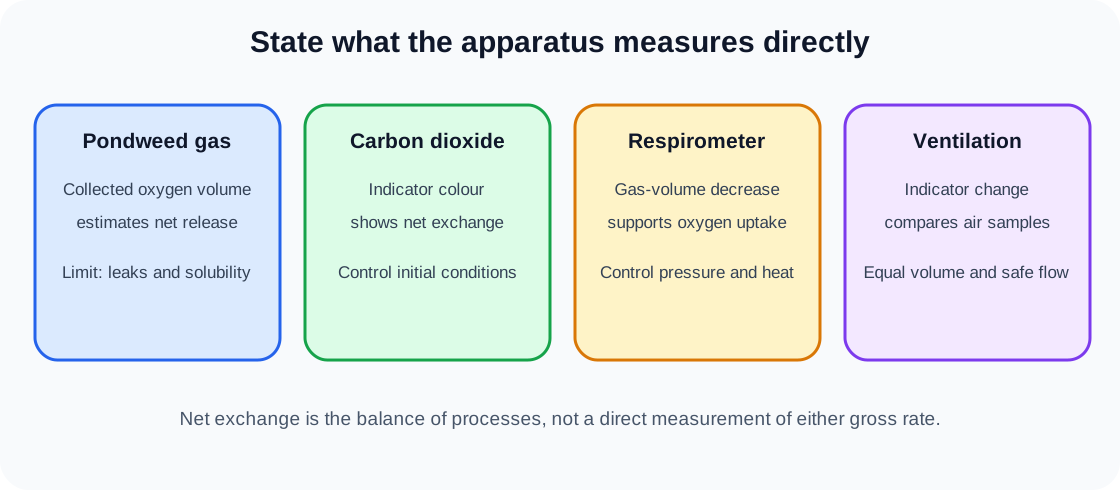
Core contexts
- Measure pondweed oxygen production by collected gas volume where possible rather than bubble count.
- Vary light intensity using measured distance while controlling temperature with a heat shield or water bath.
- Use hydrogencarbonate indicator to compare net carbon dioxide exchange under different light conditions.
- Demonstrate respiration in germinating seeds with carbon dioxide or heat evidence and a suitable control.
- Compare inhaled and exhaled air using a fair flow arrangement.
Pondweed and oxygen production
Place a cut aquatic shoot under a funnel connected to an inverted graduated tube or gas syringe. Allow acclimatisation, then record oxygen volume over a fixed time. Gas collection is stronger than bubble count because bubble sizes vary, though oxygen can dissolve and leaks can lower the collected volume.
Vary lamp distance or measured light intensity across at least five values. Keep shoot species and length, carbon dioxide supply, wavelength, temperature, water volume and timing constant. A water bath, heat shield or cool LED reduces lamp heating. Distance is only a proxy for intensity and should not be described as intensity itself without a light-meter measurement or stated model.
Repeat each condition and calculate volume per unit time. A plateau at high light is consistent with another limiting factor, such as carbon dioxide or temperature. The evidence estimates net oxygen release, not total photosynthetic oxygen production, because the plant also respires.
Hydrogencarbonate indicator
Hydrogencarbonate indicator changes colour with carbon dioxide concentration. Use equal indicator volumes, similar leaf area or organism mass, equal sealed containers and the same exposure time. Include an indicator-only control to show any non-biological change.
In bright light, photosynthesis may remove carbon dioxide faster than respiration releases it. In darkness, respiration releases carbon dioxide without photosynthesis. At the compensation point, photosynthetic uptake and respiratory release are equal, so there is no net carbon dioxide change even though both processes continue.
Colour comparison is semi-quantitative unless a standard scale or calibrated instrument is used. Do not expose indicator tubes to different temperatures or initial carbon dioxide conditions while attributing colour only to light.
Check this topic from memory
Attempt the matching topic bank before reopening the notes. Use each missed idea to decide what to review next.
Start the topic quiz