

Pearson IGCSE Chemistry Practical 5: Separation, Chromatography and Solubility
Pearson International GCSE Chemistry practical notes on separation methods, chromatography and solubility curves.
Separation methods exploit differences in solubility, boiling point, particle size or attraction to phases.
Practical questions test whether the chosen method matches the mixture and whether the procedure actually recovers the requested product. A complete answer identifies the useful property difference, gives an ordered method and explains how purity or completion is judged.
Core contexts
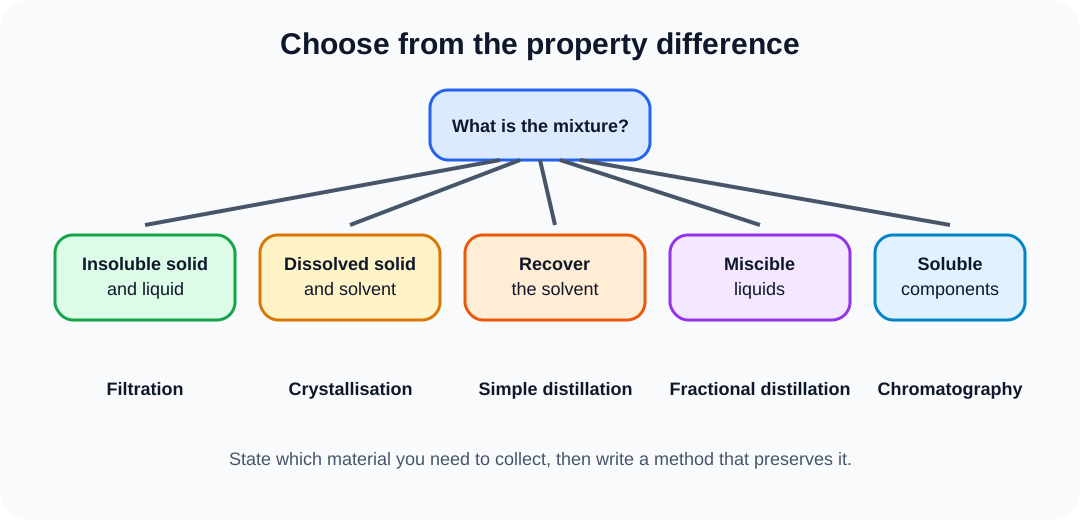
- Choose filtration, crystallisation, simple distillation or fractional distillation from mixture properties.
- Keep a pencil chromatography baseline above the solvent and mark the solvent front promptly.
- Compare chromatogram spots under the same conditions and calculate retention factors.
- Determine solubility at a stated temperature from mass dissolved in a known water mass.
- Construct and interpret a solubility curve, including crystallisation on cooling.
Choose the method from the mixture
Filtration separates an insoluble solid from a liquid because the liquid and dissolved substances pass through the filter while solid particles are retained. Wash the residue with a small amount of suitable solvent when dissolved impurities must be removed, then dry it appropriately.
Crystallisation recovers a dissolved solid. Heat the solution gently to evaporate some solvent until it is near saturation, then allow it to cool so crystals form. Filter the crystals, wash them with a little cold solvent and dry them. Evaporating to dryness may decompose a heat-sensitive salt and often produces a less pure powder rather than well-formed crystals.
Simple distillation recovers a solvent or separates a volatile liquid from non-volatile solute. Heat the mixture, condense the vapour in a cooled condenser and collect the distillate. Fractional distillation separates miscible liquids with different boiling ranges. The fractionating column provides repeated condensation and vaporisation, improving separation when boiling temperatures are closer.
Set up paper chromatography
Draw the baseline in pencil because graphite is insoluble in the solvent. Place small concentrated sample spots on the line and allow them to dry, repeating carefully if a stronger spot is needed. Keep the solvent level below the baseline so samples travel with the solvent rather than dissolving directly into the reservoir.
Cover the container to reduce evaporation and allow the solvent to rise. Remove the paper before the solvent reaches the top and mark the solvent front immediately in pencil. Dry the chromatogram before measuring from the original baseline to the centre of each spot.
Check this topic from memory
Attempt the matching topic bank before reopening the notes. Use each missed idea to decide what to review next.
Start the topic quiz