

Pearson Edexcel International GCSE Human Biology 7: Respiration
Pearson Edexcel International GCSE Human Biology 4HB1 notes on respiration.
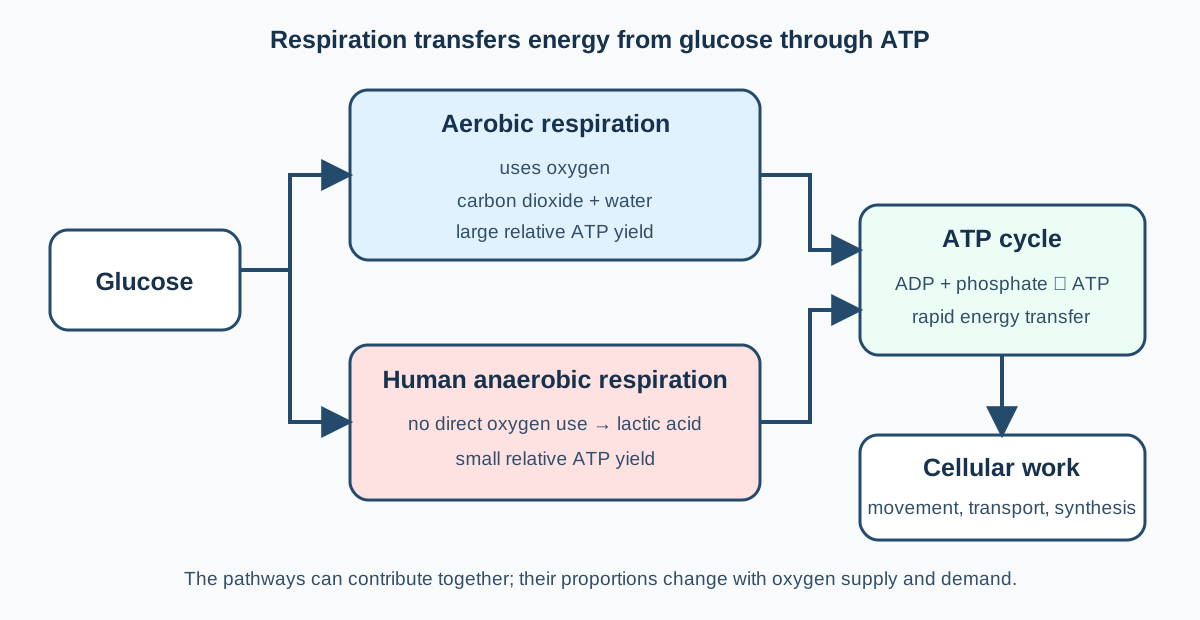
Respiration is the controlled release of energy from organic molecules in living cells. Pearson Edexcel International GCSE Human Biology (4HB1) Topic 7 distinguishes aerobic from anaerobic respiration, requires both forms of the aerobic equation and explains ATP as the immediate energy-transfer molecule. Breathing and gas exchange support respiration but are not the same process.
1. Why cells respire
Cells require energy for active transport, synthesis of large molecules, muscle contraction, cell division, maintaining body temperature and transmitting nerve impulses. Respiration transfers energy from chemical stores in glucose through enzyme-controlled reactions. It does not simply “make energy”, because energy is conserved and changes form.
Some transferred energy becomes available for cellular work, while some is dissipated as heat. The rate of respiration changes with cellular demand. Contracting muscle, active ion pumps and growing tissues require rapid energy transfer.
Respiration occurs continuously in living cells, not only during exercise or when a person is visibly breathing. Mitochondria are major sites of aerobic respiration, while the first stages of glucose breakdown occur in the cytoplasm.
2. Aerobic respiration
Aerobic respiration uses oxygen and releases a relatively large amount of energy from each glucose molecule. Its word equation is:
glucose + oxygen → carbon dioxide + water
Its balanced chemical symbol equation is:
C₆H₁₂O₆ + 6O₂ → 6CO₂ + 6H₂O
The coefficients balance atoms: six carbon atoms form six carbon dioxide molecules, twelve hydrogen atoms form six water molecules, and the oxygen atoms then balance on both sides. The equation summarizes many enzyme-controlled stages; glucose does not burn in one uncontrolled reaction inside cells.
Oxygen ultimately allows more complete oxidation of glucose. Carbon dioxide is carried to the lungs and exhaled, while water enters body fluid or is lost through urine, sweat and exhaled air.
3. Anaerobic respiration in human muscle
When oxygen delivery cannot meet the demand of intensely active muscle, some ATP continues to be supplied by anaerobic respiration in the cytoplasm. Pearson requires the word equation:
glucose → lactic acid
Anaerobic respiration releases much less energy per glucose molecule because glucose is only partly broken down. It can support rapid short-term activity but cannot sustain the same output indefinitely. Lactic acid accumulation is associated with falling muscle performance and must later be processed, much of it through transport to the liver.
Recovery requires continued oxygen uptake to restore physiological conditions. Avoid reducing this to “oxygen pays off all lactic acid directly”: recovery also restores oxygen stores, ATP-related compounds, temperature and circulation.
Check this topic from memory
Attempt the matching topic bank before reopening the notes. Use each missed idea to decide what to review next.
Start the topic quiz