

Pearson Edexcel International GCSE Human Biology 10: Homeostatic mechanisms
Pearson Edexcel International GCSE Human Biology 4HB1 notes on homeostatic mechanisms.
Homeostasis maintains internal conditions within ranges compatible with cell function. Pearson Edexcel International GCSE Human Biology (4HB1) Topic 10 integrates temperature, excretion, renal water balance, blood glucose, kidney replacement and liver function through negative feedback. A regulated value can fluctuate: homeostasis is dynamic correction, not perfect constancy.
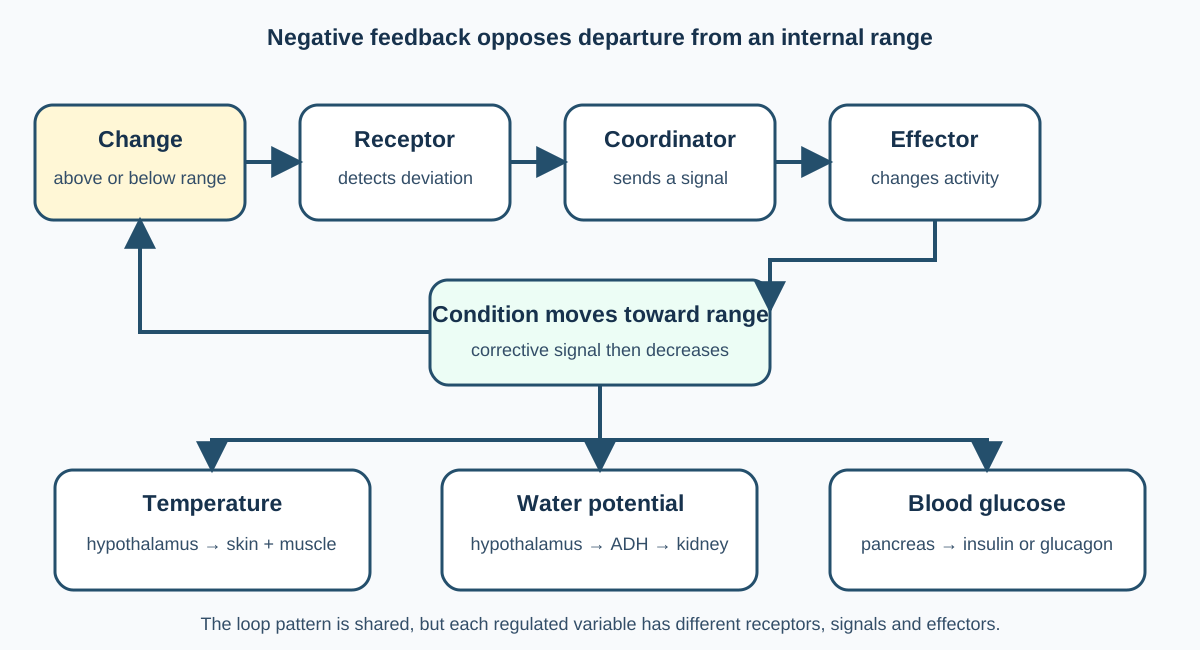
1. Negative feedback
In negative feedback, receptors detect departure from a normal range, a coordination centre processes the information, and effectors produce changes that oppose the departure. As the regulated condition returns toward its range, the corrective signal diminishes.
Temperature, blood water content and blood glucose each use this pattern, but their receptors, signals and effectors differ. Negative does not mean harmful: it describes opposition to change.
2. Skin and temperature regulation
The skin contains an epidermis over a dermis. The dermis contains blood vessels, sweat glands, sensory receptors, hair follicles and erector muscles. Subcutaneous tissue contains fat that insulates and stores energy.
When body temperature rises, the hypothalamus coordinates vasodilation of skin arterioles. More blood flows through surface capillaries, increasing heat transfer to the environment. Sweat glands release sweat; evaporation requires energy and cools the skin. Hairs lie flatter, although this has limited effect in humans.
When temperature falls, vasoconstriction reduces skin blood flow and heat loss. Skeletal muscles shiver, increasing respiration and heat production. Erector muscles raise hairs, trapping an insulating air layer more effectively in furry mammals than in humans.
Vasodilation does not mean capillaries actively widen. Arterioles supplying capillary networks change diameter. Sweating cools only when water evaporates.
3. Excretion and metabolic waste
Excretion is removal of metabolic waste and substances in excess of requirements. Carbon dioxide is produced by respiration and excreted through lungs. Urea is formed in the liver from excess amino-acid nitrogen and excreted mainly by kidneys. Water is lost through kidneys, lungs and skin.
Egestion is removal of undigested food from the alimentary canal and is not excretion, because that material has not entered body cells.
4. Renal system
Renal arteries bring blood to kidneys and renal veins carry it away. Each kidney contains many nephrons. Urine flows through ureters to the bladder and leaves through the urethra.
At a glomerulus, high hydrostatic pressure filters water and small solutes into Bowman’s capsule. Blood cells and most plasma proteins remain in blood. In a healthy person with blood glucose below the renal threshold, filtered glucose is normally reabsorbed along the tubule, together with much water and required ions. The loop and collecting duct help establish and use concentration gradients. Remaining fluid becomes urine.
Check this topic from memory
Attempt the matching topic bank before reopening the notes. Use each missed idea to decide what to review next.
Start the topic quiz