

Pearson Edexcel International GCSE Human Biology Practical Skills 4: Exercise, breathing and circulation data
Pearson Edexcel International GCSE Human Biology Practical Skills 4HB1 notes on exercise, breathing and circulation data.
This chapter consolidates Pearson Edexcel International GCSE Human Biology (4HB1) practical outcomes 7.2, 8.5 and 8.11: comparing inspired and expired carbon dioxide, investigating exercise effects on breathing and lung capacity, and investigating pulse response. Theory owns ventilation and cardiovascular mechanisms. This page owns participant protection, standardised workload, measurement, recovery data and evaluation.
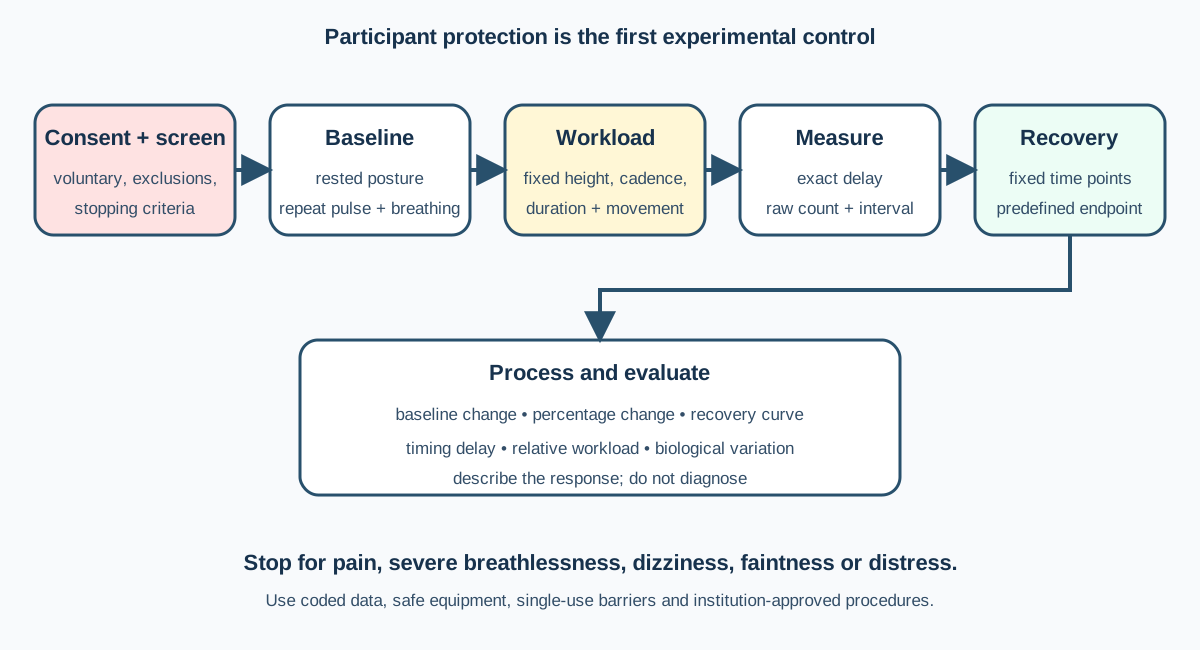
1. Ethical and safety gate
Participation must be voluntary and based on informed instructions. Screen for reasons not to exercise, including current illness, injury, asthma not managed for the activity, known cardiovascular problems or any concern identified by institutional guidance. A participant can stop without penalty.
Use a low-risk workload suitable for the group, such as a timed step test or repeated sit-to-stand movement. Check the floor, step stability and surrounding space. Provide supervision and recovery seating. Stop for pain, severe breathlessness, dizziness, faintness or distress and follow the institution’s emergency procedure.
Do not rank or shame participants by fitness, mass, lung volume or recovery. Code data and avoid collecting unnecessary health information. Human measurements require ethics as well as technique.
2. Baseline conditions
Allow the participant to sit quietly for a defined period. Record room temperature, posture and relevant timing. Measure resting pulse and breathing rate more than once, then use a mean if stable.
Recent caffeine, food, exercise, stress, sleep, hydration and illness can affect results. These cannot all be eliminated, but the design can standardize pre-test instructions and use within-person comparisons.
Baseline is not a “no-exercise control group”. It is the participant’s pre-workload reference under specified conditions.
3. Measuring pulse rate
Locate the radial pulse at the wrist with index and middle fingers, not the thumb. Count beats for 30 or 60 seconds. A shorter interval gives faster post-exercise measurement but greater proportional counting uncertainty. A validated heart-rate monitor can record continuously, but fit and signal artefacts must be checked.
Convert a 15-second count to beats per minute by multiplying by four. Record the actual count and interval rather than only the converted value. If rhythm appears irregular or measurement is uncertain, stop and seek supervisor guidance rather than inventing a value.
Pulse estimates heart rate but is a pressure wave, not blood itself moving under the fingers.
4. Measuring breathing rate
One complete rise and fall of the chest is one breath. Count unobtrusively for a defined interval because awareness can change breathing. Immediately after exercise, use a method that starts quickly and records exact timing.
Check this topic from memory
Attempt the matching topic bank before reopening the notes. Use each missed idea to decide what to review next.
Start the topic quiz