

Pearson Edexcel International GCSE Human Biology Practical Skills 5: Sensory, health and disease evidence
Pearson Edexcel International GCSE Human Biology 4HB1 practical notes on sensory receptors, audible frequency, antibacterial agents and health evidence.
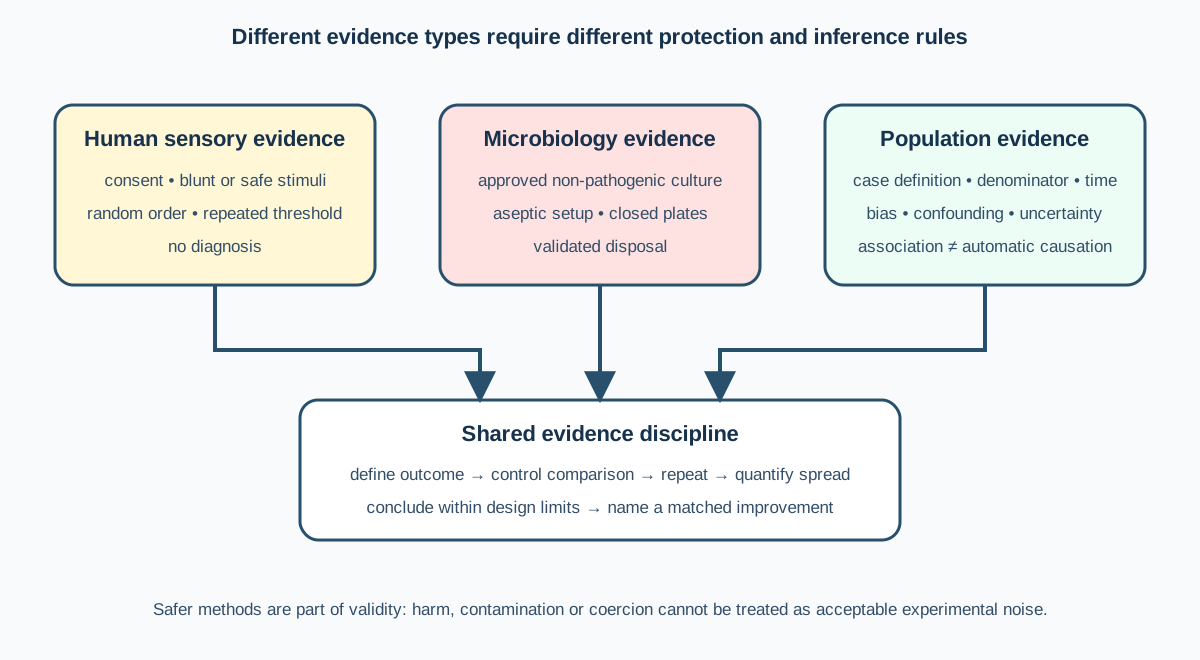
This chapter consolidates Pearson Edexcel International GCSE Human Biology (4HB1) practical outcomes 5.7, 5.15 and 12.6: investigating skin sensory-receptor distribution, the range of audible frequencies, and antibacterial-agent effects on a bacterial culture. It also develops interpretation of health and epidemiological evidence. Theory owns receptor, hearing, disease and resistance mechanisms; this page owns ethical measurement, biosafety, sampling, controls and inference.
1. Human-participant principles
Sensory investigations require voluntary informed participation, coded data and the right to stop. Explain the stimulus before testing and avoid collecting unnecessary medical information. Exclude or modify work for participants with relevant skin injury, sensory difficulty, hearing concern or discomfort.
Results describe performance under the test conditions, not intelligence, health or personal worth. Never diagnose sensory loss from a classroom activity. Use clean equipment and avoid shared items that contact skin or ears unless disinfected or protected appropriately.
2. Mapping touch sensitivity
A two-point discrimination test estimates the minimum separation perceived as two contacts. Use a purpose-made aesthesiometer or two blunt identical tips. Never use sharp compass points. Apply both tips simultaneously with light, standardized pressure and the same orientation.
Test a sequence of separations in random order, including occasional one-point trials so the participant cannot simply answer “two”. Ask the participant to close their eyes or use an approved screen. Repeat each separation and define a threshold rule, such as the smallest distance identified correctly in a stated proportion of trials.
Compare approved skin regions, such as fingertip and forearm, while keeping tip material, contact duration, pressure, participant and decision rule constant. Greater discrimination is consistent with denser receptor fields and greater cortical representation, but the test measures a perceptual threshold, not a direct receptor count.
3. Mapping temperature sensitivity
Use safe warm and cool objects whose temperatures are checked and remain well within institutional limits. Apply briefly to mapped skin positions in randomized order. Do not use ice directly, hot water, open flames or prolonged contact.
Record whether warm, cool or neutral is perceived, but acknowledge adaptation and expectation. Allow intervals between trials and avoid repeatedly stimulating the same point. Skin temperature, pressure and object conductivity affect perception.
A map of responses can suggest non-uniform sensitivity. It does not show individual receptors directly, and missed responses may reflect attention or adaptation.
Check this topic from memory
Attempt the matching topic bank before reopening the notes. Use each missed idea to decide what to review next.
Start the topic quiz