

Pearson IGCSE Physics Practical 6: Electricity, Charging and Magnetism
Pearson International GCSE Physics practical notes on circuits, electrostatic charging and magnetic fields.
Electrical and magnetic investigations require correct connections, controlled heating and clear field evidence.
Pearson 4PH1 written practical questions can combine circuit construction, current-voltage evidence, electrostatic observations and magnetic-field mapping. Each requires a different kind of control: electrical ratings and temperature for circuits, neutral comparison for charging, and position plus direction for fields.
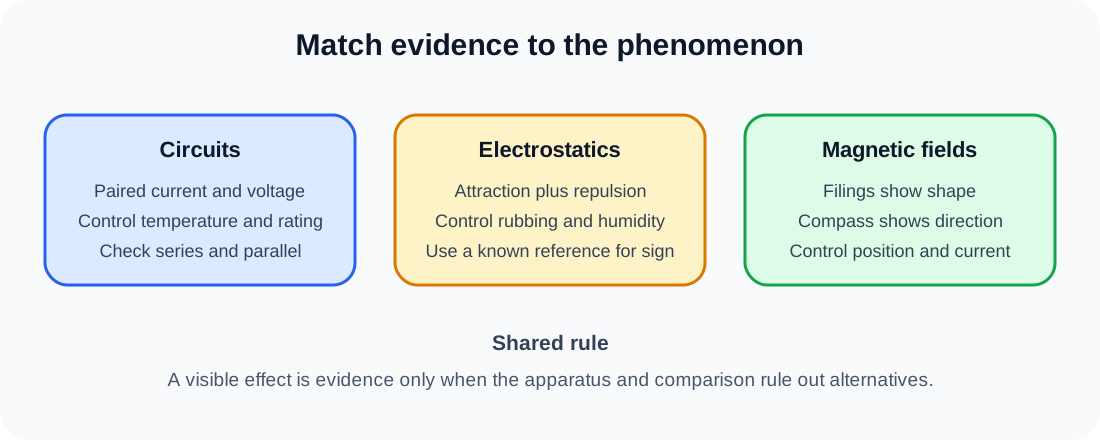
Core contexts
- Connect ammeters in series and voltmeters in parallel with correct polarity.
- Vary potential difference systematically and allow components to cool when temperature should be controlled.
- Plot current-voltage characteristics and calculate resistance only where appropriate.
- Charge insulating materials by friction and distinguish attraction from proof of charge sign.
- Map magnetic fields with plotting compasses or iron filings and add direction using a compass.
Constructing and checking circuits
Build with the supply switched off. Connect the ammeter in series with the component and the voltmeter in parallel across it. Check direct-current polarity, begin with safe high meter ranges and inspect for a low-resistance path before switching on. A variable resistor can limit current and change potential difference without repeatedly rebuilding the circuit.
Record current and potential difference as a pair only after both readings stabilise. Switch off between readings when heating would change resistance. Never connect an ammeter directly across a supply: its low resistance can produce a large current, overheat leads or damage the meter. The circuit diagram must match the physical connection rather than merely include the correct symbols.
Current-voltage characteristics
For a fixed resistor, vary potential difference across a safe range and record current. Reverse the supply or component connections if negative values are required, while preserving meter polarity. Repeat points and plot current against potential difference or the requested axis arrangement. A straight line through the origin at constant temperature supports proportionality; its gradient depends on which quantity is vertical.
A filament lamp heats as current increases, so resistance changes and the current-voltage graph curves. Control the starting temperature by allowing comparable cooling before repeats, but do not try to keep the lamp cold throughout a characteristic that specifically demonstrates heating. For a diode, use a protective series resistor and small voltage steps near the forward threshold. Never infer one fixed resistance from a strongly non-linear graph without specifying the operating point.
Check this topic from memory
Attempt the matching topic bank before reopening the notes. Use each missed idea to decide what to review next.
Start the topic quiz