

IGCSE Biology Practical Skills 3: Microscopy, Drawing and Magnification
Cambridge IGCSE Biology 0610 and 0970 practical notes on specimen observation, line drawings, labels, image magnification, actual size and scale bars.
Cambridge IGCSE Biology Papers 5 and 6 can require observation, recording and measurement of familiar or unfamiliar biological specimens. Candidates may draw a specimen or image, label visible features and calculate magnification or actual size. This note develops the same AO3 evidence skills for both 0610 and 0970.
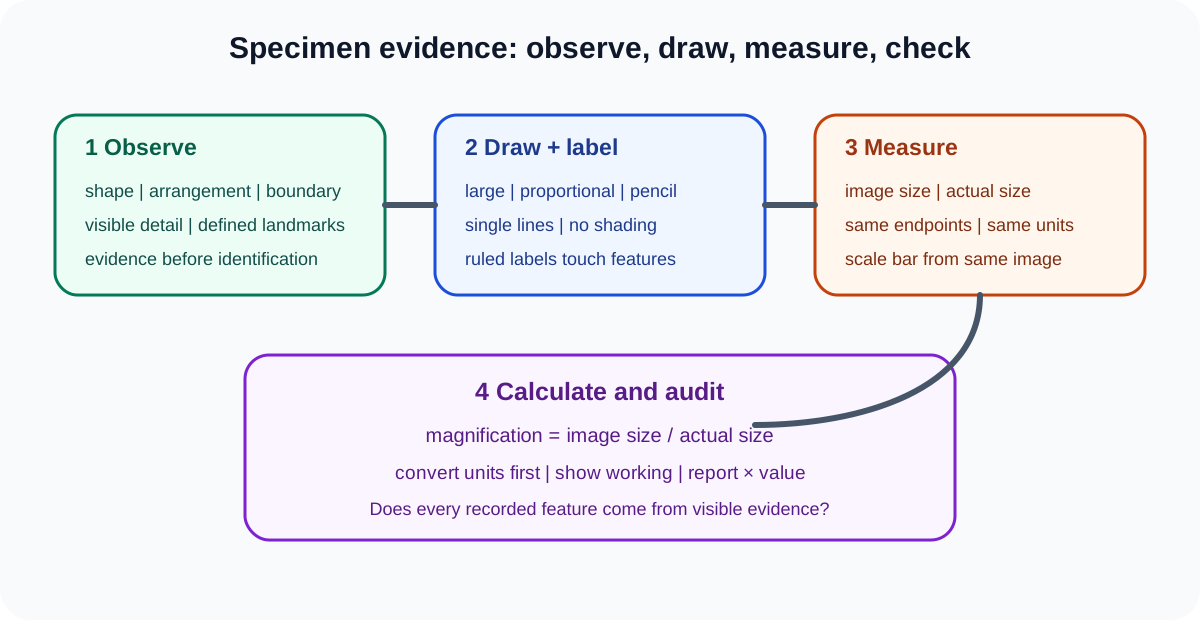
Observe before identifying
Begin with visible evidence: overall shape, number and arrangement of parts, boundaries, textures, colour differences and repeated structures. An unfamiliar specimen does not require a memorised name before it can be described accurately.
Use comparative language when two specimens are supplied. State one feature for both sides of a comparison, such as "specimen A has five broad petals, whereas specimen B has six narrow petals". Avoid separate descriptions that leave the examiner to infer the difference.
Measure from defined landmarks. For a leaf, length may run from the base of the blade to its tip rather than including the petiole, if that is the stated rule. Apply the same landmarks to every specimen.
Use a microscope systematically
Place a thin specimen on a slide, add a suitable liquid or stain if instructed and lower a coverslip carefully to reduce trapped air. Follow the supplied procedure because not every specimen needs the same preparation.
Start with the lowest-power objective. Centre the specimen over the light and bring it into focus. Use coarse focus at low power, then fine focus for a sharp image. Re-centre the feature before changing to higher power because the field of view becomes smaller.
At high power, use fine focus carefully and avoid driving the objective into the slide. Adjust illumination to reveal boundaries without washing out detail.
The total optical magnification of a microscope is eyepiece magnification multiplied by objective magnification. This is distinct from calculating the magnification of a printed image or drawing.
Prepare a clear line drawing
Use a sharp pencil to make fine, single, continuous lines. Draw large enough to use most of the available space and preserve the specimen's proportions.
Show only features that are visible. Do not add remembered structures, idealised cell contents or decorative detail. If asked for a plan drawing, show tissue boundaries and relative regions without drawing individual cells. If asked for selected cells, draw the visible cells at appropriate relative sizes.
Do not shade or use colour. Avoid sketchy, doubled or feathered outlines. A biological drawing records structural evidence rather than artistic texture.
Add labels correctly
Check this topic from memory
Attempt the matching topic bank before reopening the notes. Use each missed idea to decide what to review next.
Start the topic quizSources
Want supervised lab practice?
Explore practical lessons, with timings, fees, and locations on the programme page.
View Cambridge IGCSE Biology Practical Skills Practicals