

Cambridge IGCSE Biology Notes 4: Biological Molecules
Cambridge IGCSE Biology 0610 and 0970 notes on carbohydrate, fat and protein elements and building blocks, food tests, DNA double-helix structure and complementary base pairing.
Topic 4 of Cambridge IGCSE Biology 0610 and 0970 links the elemental composition and building blocks of carbohydrates, fats and proteins to five identification tests. Extended candidates also study the syllabus-limited structure of DNA: two strands in a double helix, bases, bonds between paired bases and complementary A-T and C-G pairing.
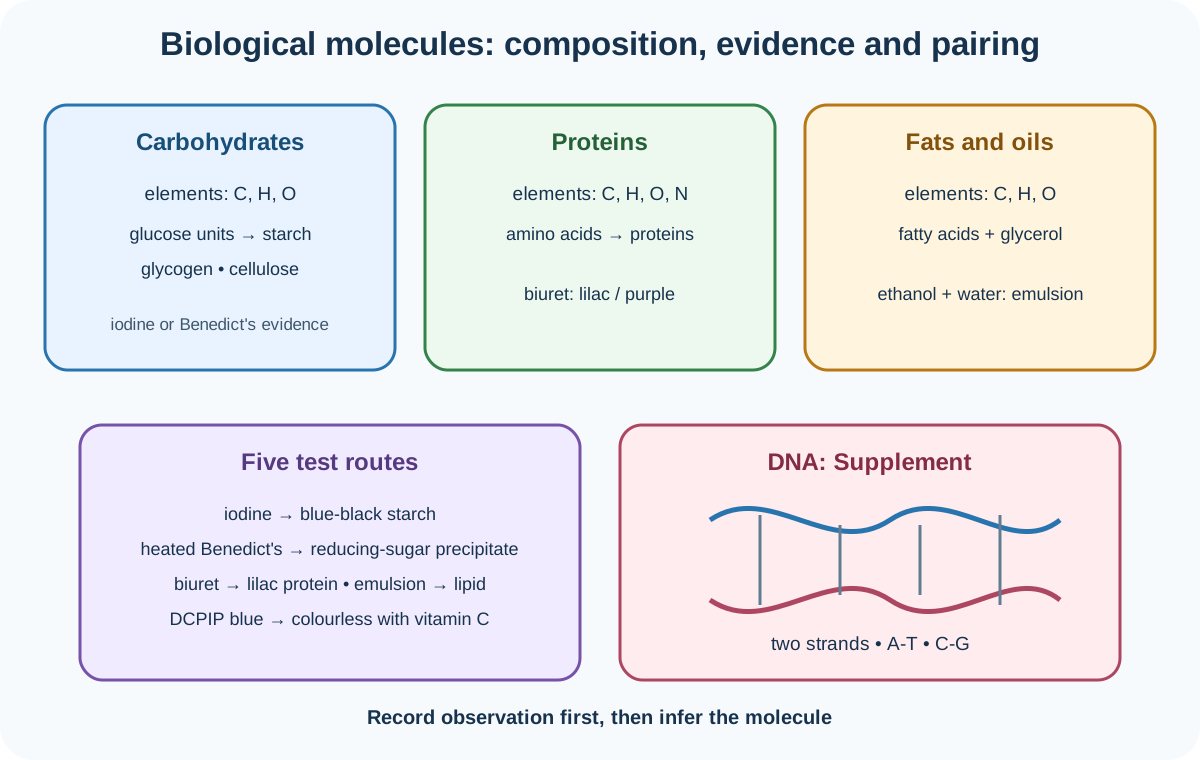
Elements in biological molecules
Carbohydrates contain carbon, hydrogen and oxygen. Fats and oils also contain carbon, hydrogen and oxygen, but their element ratios and structures differ from carbohydrates.
Proteins contain carbon, hydrogen, oxygen and nitrogen. Some proteins can contain other elements, but nitrogen is the required distinguishing element in this Topic 4 boundary.
Element lists do not identify a molecule by themselves. Carbohydrates and fats share the same three named elements, so structure, properties or test evidence is needed to distinguish them.
Large molecules from smaller molecules
Many large biological molecules are assembled from smaller units.
- Starch, glycogen and cellulose are made from glucose units.
- Proteins are made from amino acids.
- Fats and oils are made from fatty acids and glycerol.
The shared glucose building block does not give starch, glycogen and cellulose the same role. Their units are arranged and linked differently, producing different properties. Starch stores carbohydrate in plants, glycogen stores it in animals and fungi, and cellulose forms plant cell walls.
Amino-acid order affects protein structure and function. The detailed chemistry of peptide-bond formation is beyond this Topic 4 outcome, but the building-block relationship is essential for digestion, growth and later genetic topics.
Fats and oils share fatty acid and glycerol components. At this level, their state at room temperature can differ, but both belong to the same broad lipid relationship in the syllabus.
The word "made from" describes structural units. It does not mean that adding glucose directly to a test tube automatically produces cellulose or that food tests reveal every structural detail.
Food-test evidence
Food tests identify particular classes or examples of biological molecule through an observable result. Include a negative control containing water and, where useful, a known positive sample. A control shows whether the reagent and procedure behave as expected.
Iodine solution test for starch
Add iodine solution to the sample. A blue-black colour indicates starch. If starch is absent, the iodine remains yellow-brown or orange-brown.
Check this topic from memory
Attempt the matching topic bank before reopening the notes. Use each missed idea to decide what to review next.
Start the topic quiz