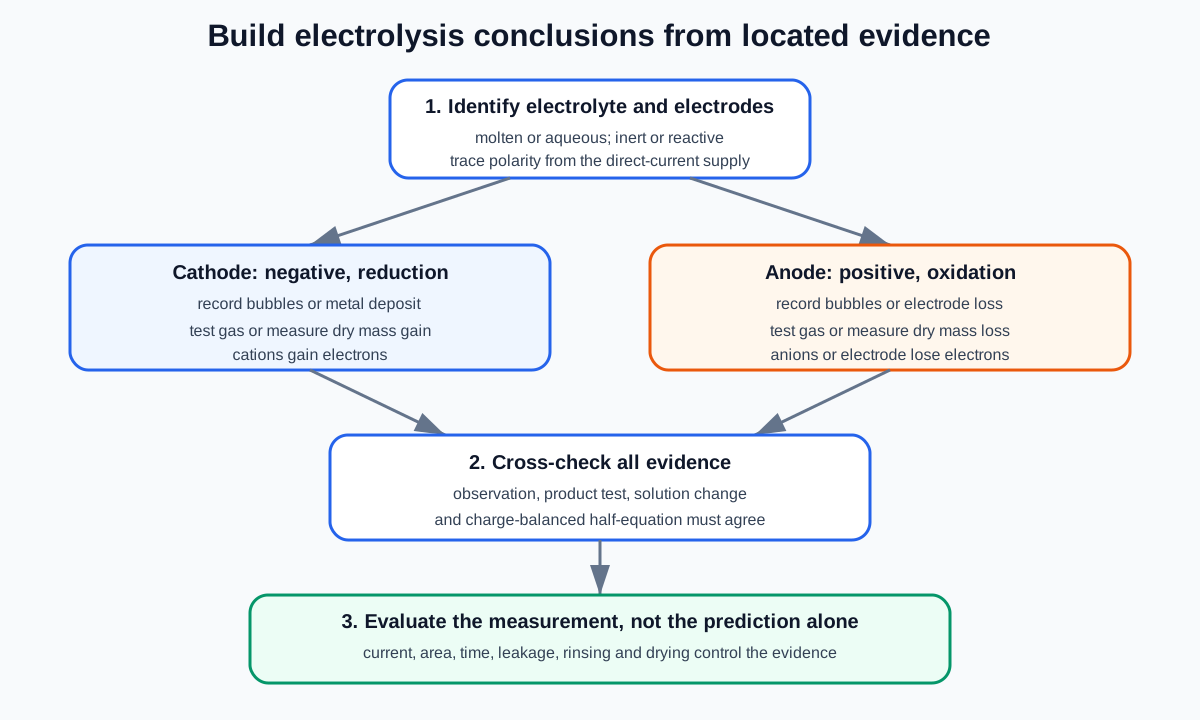
Practical Skill 9 develops observations and measurements for Cambridge IGCSE Chemistry section 4.1 and the shared electrolysis context. It connects a correctly wired low-voltage cell to products at each electrode, confirmatory tests, solution and electrode changes, controlled mass or gas measurements, and evidence-led evaluation.
Label the cell before predicting products
Electrolysis decomposes an ionic compound in the molten state or in aqueous solution by passage of electric current.
In an electrolytic cell:
the anode is connected to the positive terminal
the cathode is connected to the negative terminal
the electrolyte is the molten or aqueous ionic substance
cations move towards the cathode
anions move towards the anode
Electrons move through the external wires. Ions move through the electrolyte. Do not draw electrons crossing the solution as the charge carriers.
Switch off the supply before connecting or adjusting electrodes. Trace each lead from terminal to electrode rather than relying on electrode position in the diagram.
Choose and prepare electrodes
Use the electrode material specified by the question. Platinum and graphite are treated as inert in the named IGCSE examples, while copper electrodes participate during electrolysis of aqueous copper(II) sulfate.
Clean electrodes consistently to remove grease and oxide. For a mass-change investigation, dry and weigh each electrode before immersion. Mark or control the immersed area and keep electrode separation fixed.
Suspend electrodes parallel without allowing them to touch. Contact can short-circuit the electrolyte pathway. Use equal exposed areas when comparing rates or mass changes.
The electrolyte must cover the intended area but should not reach clips or unprotected electrical connections.
Record observations by electrode
Prepare separate cathode, anode and electrolyte rows. Record:
bubbles and relative rate of bubbling
colour and physical form of any deposit
electrode thinning, roughening or coating
solution colour change
pH or indicator change when requested
gas-test result
current, time, gas volume or electrode mass where measured
“A reaction happened” is not an observation. Write “bubbles of colourless gas at the cathode” before identifying hydrogen from a positive test.
Check this topic from memory
Attempt the matching topic bank before reopening the notes. Use each missed idea to decide what to review next.
Observe before testing. A gas test is additional evidence, not a replacement for noting where and how the gas formed.
Use product tests safely
Collect only small gas samples with the apparatus specified. Test away from the running cell when possible.
Hydrogen gives a squeaky pop with a lighted splint. Oxygen relights a glowing splint. Chlorine bleaches damp litmus paper after an initial acidic colour change and is hazardous, so use only the supplied small-scale procedure and ventilation.
Do not smell gases directly. A negative test can result from too small a sample, air contamination, dissolution or leakage; it does not automatically prove the predicted product was absent.
For a metal deposit, record colour and appearance, then use mass change or other supplied evidence. Do not apply flame tests directly to an electrode coating unless instructed.
Named system 1: molten lead(II) bromide
Molten lead(II) bromide contains mobile lead ions and bromide ions. Lead forms at the cathode and bromine forms at the anode.
The compound must be molten for ions to move. Solid lead(II) bromide does not conduct through mobile ions. This demonstration involves high temperature and toxic or corrosive materials, so it is teacher-controlled or interpreted from supplied observations rather than improvised.
The practical evidence may include a metallic product at the cathode and brown bromine vapour at the anode. Do not confuse an electrode product with the electrode material itself.
Named system 2: concentrated aqueous sodium chloride
With inert electrodes, hydrogen forms at the cathode and chlorine forms at the anode. The remaining solution becomes alkaline as hydroxide ions accumulate in the overall process.
Record colourless bubbling separately at both electrodes, then use the correct confirmatory tests. Chlorine may appear pale green under suitable conditions but colour can be difficult to see in small quantities; the damp-litmus result is stronger evidence.
Concentration matters for aqueous halide product prediction. Do not transfer the concentrated-brine result uncritically to every dilute halide solution.
Named system 3: dilute sulfuric acid
With inert electrodes, hydrogen forms at the cathode and oxygen at the anode. The expected collected gas-volume ratio is approximately two volumes of hydrogen to one volume of oxygen when both are measured under comparable conditions.
Real ratios may differ because of start-up air, leakage, gas solubility, unequal collection paths or reading delay. Identify each gas with its test rather than using volume ratio alone.
Keep the power source low voltage and the gases separated. Do not ignite a mixed hydrogen-oxygen sample.
Named system 4: aqueous copper(II) sulfate with inert electrodes
Using graphite or platinum electrodes, copper forms at the cathode and oxygen forms at the anode. The blue solution becomes paler as copper ions are removed, provided electrolysis continues sufficiently.
Record the reddish-brown or pink-brown copper coating rather than calling it only “a solid.” The cathode may gain mass, but a fragile deposit can fall off during handling.
The inert anode does not supply replacement copper ions. Oxygen bubbles are therefore expected there under the syllabus model.
Named system 5: aqueous copper(II) sulfate with copper electrodes
Copper is deposited at the cathode while the copper anode dissolves. Copper-ion concentration, and therefore solution colour, remains approximately constant when copper transfer at the two electrodes balances.
The cathode gains mass and the anode loses mass. Their measured changes may not match exactly because of incomplete drying, deposits falling off, side reactions, different exposed areas or balance resolution.
This system shows why electrode material is an experimental variable, not decorative apparatus.
Connect observations to half-equations
At the cathode, reduction occurs by electron gain. At the anode, oxidation occurs by electron loss.
Use half-equations to check charge and product identity after observations are recorded. Electrons belong on the reactant side for reduction and the product side for oxidation.
State symbols matter. A deposited metal is solid; electrode gases are gaseous. Balance atoms and total charge separately.
The practical answer should not consist only of equations. Pair each equation with visible or tested evidence at the correct electrode.
Measure gas volume fairly
Use matched collection tubes or gas syringes where supplied. Begin from known readings, check for leaks and collect for the same time at the same current.
Read liquid levels at eye level and account for any initial trapped air. Gas dissolving in the electrolyte can lower collected volume. Bubbles adhering to an electrode or tube are formed product but not yet measured product.
Keep electrode area, separation, electrolyte volume, concentration, temperature, current and duration constant when comparing conditions.
If current changes during a run, product rate changes too. Monitor it with an ammeter or use a regulated supply if the question permits.
Measure electrode mass change
Clean, rinse, dry and weigh the electrode before electrolysis.
Control exposed area and position.
Run for a measured time at a monitored current.
Switch off before removing the electrode.
Rinse gently to remove electrolyte without dislodging deposit.
Dry to consistent conditions and reweigh.
A wet electrode has an artificially high final mass. Aggressive rubbing can remove deposited metal and make mass gain too small. Handling with fingers can add grease.
Use the same balance and record all displayed precision. Independent repeats require freshly restored starting conditions.
Plan an electroplating investigation
The object to be plated is the cathode. The plating metal is commonly the anode, and the electrolyte contains ions of that metal.
Clean the object so the deposit adheres. Control current, time, electrolyte concentration, temperature, electrode separation and immersed area. A low, steady current can improve deposit quality compared with a current that is too high, which may create rough or uneven coating.
To compare coating mass, weigh a clean dry object before and after consistent rinsing and drying. Appearance and corrosion resistance are purposes of electroplating, but a school mass experiment normally measures deposition rather than long-term corrosion performance.
Interpret solution and electrode changes together
A fading solution colour can support removal of coloured ions, but dilution, lighting and short duration can mask it. Compare against an un-electrolysed control sample when colour change is central.
An electrode's visible change may identify its role. A thinning copper anode supports oxidation of copper; a growing copper cathode supports reduction of copper ions.
Do not infer that unchanged bulk colour means no electrolysis. Products may form while coloured-ion concentration remains balanced or the change remains below visual resolution.
Evaluate directional errors
Gas leakage or dissolution makes measured volume too low. Check joints and use a collection method suited to the gas.
Initial air makes an early collected sample impure and can distort gas ratios. Allow correct collection as instructed and confirm with tests.
Changing current makes deposition or gas-production rate inconsistent. Monitor or regulate current.
Unequal immersed areas change effective reaction area. Mark a fixed depth and use matching electrodes.
Wet electrodes make measured mass too high. Rinse and dry to stable conditions.
Deposit lost during rinsing makes cathode mass gain too low. Rinse gently and avoid touching the coating.
Electrode contact bypasses the intended ionic path. Fix them parallel at constant separation.
Safety
Use only the specified low-voltage direct-current source. Switch off before touching leads, electrodes or electrolyte. Keep electrical connections dry and never use mains electricity directly.
Wear eye protection and avoid skin contact with electrolytes. Chlorine and bromine are toxic or irritating, molten lead compounds present serious high-temperature and toxicity hazards, and hydrogen is flammable. Use the syllabus systems only through the centre's prescribed scale and controls. Keep ignition tests small and away from the cell.
Worked application: explain copper-electrode mass evidence
A copper cathode has mass 12.48 g before electrolysis and 12.73 g after rinsing and drying, so it gains 0.25 g. The copper anode falls from 13.06 g to 12.82 g, a loss of 0.24 g. These nearly matching changes support transfer of copper from anode to cathode through copper ions. The 0.01 g difference does not prove extra copper was created; it may reflect balance resolution, incomplete drying or slight deposit loss. The solution remaining approximately blue is consistent with copper ions removed at the cathode being replaced at the anode. A wet cathode would make its apparent gain too large.
Common misconceptions and corrections
Calling the anode negative in electrolysis. It is connected to the positive terminal.
Calling the cathode positive. It is connected to the negative terminal.
Drawing electrons through the electrolyte. Ions carry charge in the liquid or melt.
Expecting a solid ionic compound to conduct by mobile ions. It must be molten or aqueous.
Treating graphite as a source of metal ions. It is inert in the named school model.
Predicting products before checking electrode material. Reactive electrodes can change the outcome.
Combining anode and cathode observations. Record each separately.
Calling bubbles proof of hydrogen. Apply the correct gas test.
Smelling chlorine directly. Use damp litmus under prescribed controls.
Testing a hydrogen-oxygen mixture with flame. Keep gases separated and samples small.
Using the two-to-one gas ratio as the only identity evidence. Confirm each gas.
Predicting sodium from aqueous sodium chloride. Hydrogen forms at the cathode.
Predicting chlorine from every aqueous chloride regardless of concentration. Concentration affects the syllabus prediction.
Expecting inert copper-sulfate electrolysis to keep the solution equally blue. Copper ions are removed without replacement.
Expecting copper-electrode electrolysis to fade blue rapidly. Copper ions are approximately replenished.
Saying oxidation happens at the cathode. Cathode is reduction.
Putting electrons on the wrong half-equation side. Reduction consumes electrons; oxidation produces them.
Weighing an electrode while wet. Retained liquid inflates mass.
Scrubbing a plated cathode before weighing. Deposit can be removed.
Letting electrodes touch. This can short-circuit the intended cell path.
Comparing runs with different immersed areas. Product rate is no longer fairly compared.
Assuming fixed voltage guarantees fixed current. Current can change with cell resistance.
Saying electroplating metal is placed at the anode object. The object to coat is the cathode.
Calling unchanged colour evidence of no current. Balanced ion replacement may preserve colour.
Assessment guidance
Diagrams should label direct-current polarity, anode, cathode, electrolyte and product-collection position. Observation answers need electrode location, visible change and confirmatory test before identification. Predictions must distinguish molten from aqueous electrolyte and inert from copper electrodes. Half-equations should balance atoms and charge and agree with observed products. Quantitative methods need controlled area, separation, current and time plus consistent rinsing and drying. Evaluation should give an error direction, such as retained water making cathode mass too high, followed by a targeted correction. Safety answers must name the actual gas, electrolyte or electrical hazard.
Retrieval practice
Draw and label five electrolytic cells from memory. Predict and test products for every named syllabus system. Write matching observations and half-equations. Interpret gas ratios, solution colours and paired electrode masses. Plan an electroplating comparison, then diagnose twelve faults involving polarity, electrode material, exposed area, current drift, gas collection, rinsing, drying and unsafe testing.
Theory and practical ownership
This practical note owns cell setup, electrode observations, product tests, gas and mass measurement, electroplating method, safety and evaluation. The Chemistry theory hub owns general aqueous product rules, charge-transfer models and extended half-equation practice.