

Co-ordinated Sciences Biology B12: Respiration
Cambridge IGCSE Co-ordinated Sciences 0654 Biology B12 notes with worked examples, misconception checks and assessment guidance.
Biology B12 of Cambridge IGCSE Co-ordinated Sciences 0654 distinguishes cellular respiration from breathing and gas exchange. The official outcome covers named energy uses, aerobic and muscle anaerobic respiration, the smaller anaerobic energy yield and the complete lactic-acid oxygen-debt recovery pathway. Yeast respiration is outside this topic boundary.
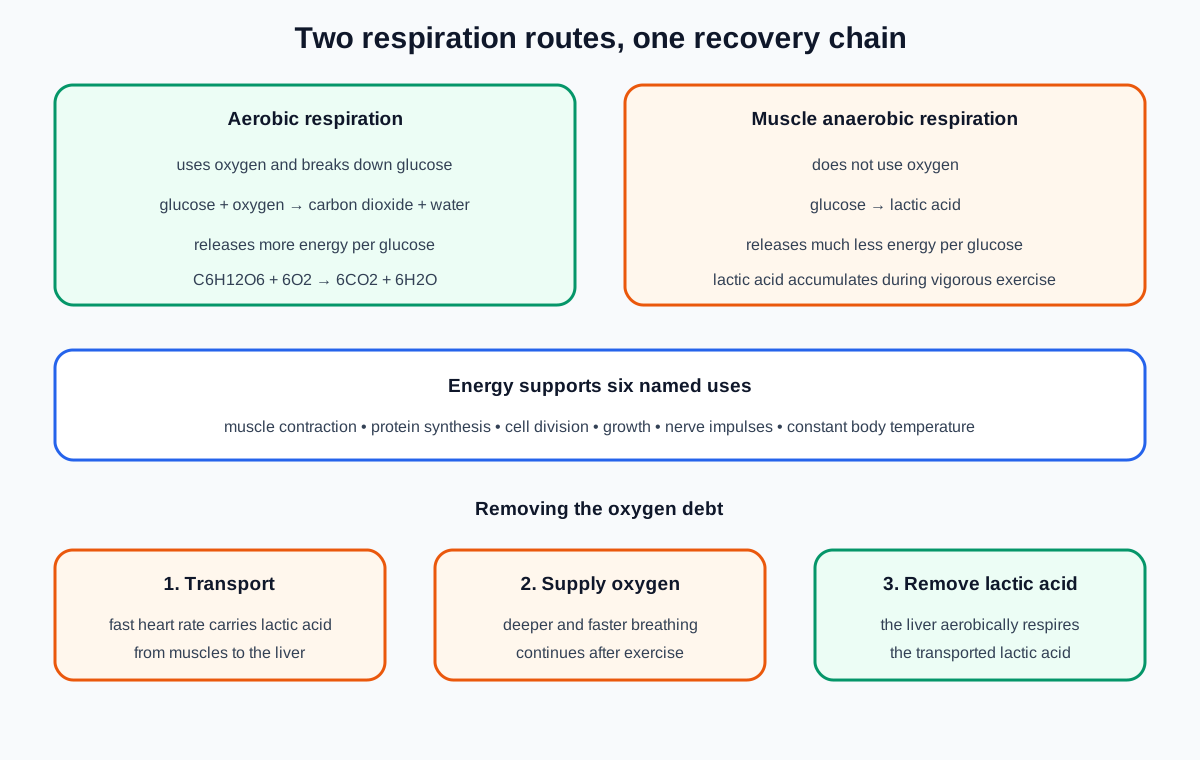
Respiration releases energy for life
Respiration describes chemical reactions in cells that break down nutrient molecules and release energy. It occurs in living cells throughout an organism. Breathing ventilates lungs; gas exchange moves oxygen and carbon dioxide; respiration is the chemical process that releases energy.
Cambridge names six uses of energy:
- muscle contraction
- protein synthesis
- cell division
- growth
- passage of nerve impulses
- maintenance of a constant body temperature
Energy is transferred to cellular processes rather than created as a material substance. Carbon dioxide and water are chemical products of aerobic respiration; energy is released during the reactions.
Protein synthesis and growth are related but not identical. Energy may build amino acids into proteins, while growth is a permanent increase in size and dry mass involving many synthetic and cellular processes.
Aerobic respiration
Aerobic respiration is the chemical reactions in cells that use oxygen to break down nutrient molecules to release energy.
The Core word equation is:
Check this topic from memory
Attempt the matching topic bank before reopening the notes. Use each missed idea to decide what to review next.
Start the topic quiz