Pearson International GCSE Chemistry 3: Physical Chemistry
Pearson International GCSE Chemistry notes on energetics, rates, equilibria and industrial chemistry.
Physical chemistry explains why reactions transfer energy, why their rates change and how reversible reactions respond to conditions. These ideas are connected: temperature may increase reaction rate while also changing an equilibrium yield, so industrial decisions must consider both kinetics and equilibrium.
The official 4CH1 specification marks additional bold content for Paper 2. Treat Paper 2 as building on the whole course, not as a separate list disconnected from Paper 1.
Energetics and energy profiles
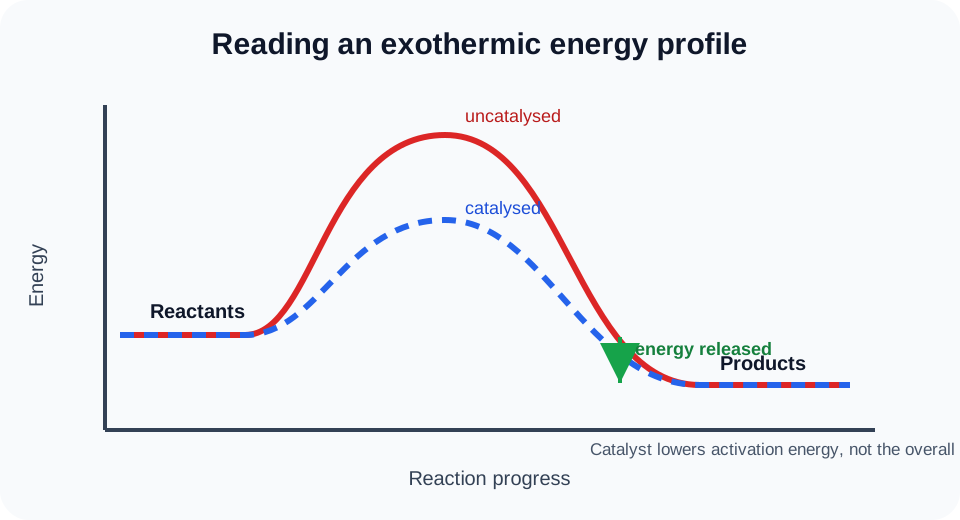
An exothermic reaction transfers energy to the surroundings, usually causing a temperature rise. Its products are at lower energy than its reactants and its enthalpy change is negative. An endothermic reaction takes in energy from the surroundings, usually causing a temperature fall. Its products are at higher energy and its enthalpy change is positive.
Activation energy is the minimum energy needed for a successful collision. On an energy-level diagram it is measured from the reactant level to the top of the energy barrier. A catalyst provides an alternative pathway with lower activation energy, but it does not change the energies of reactants and products or the overall energy change.
Bond breaking requires energy and bond making releases energy. An estimate using mean bond energies follows:
Check this topic from memory
Attempt the matching topic bank before reopening the notes. Use each missed idea to decide what to review next.
Start the topic quiz