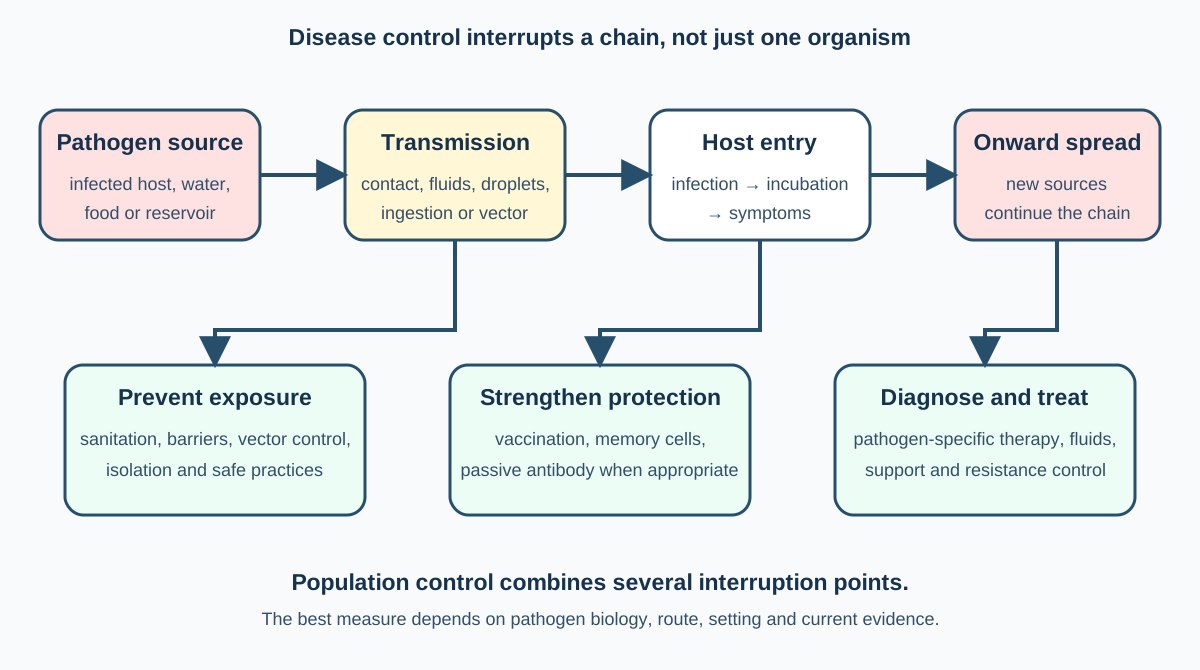
Disease biology connects a pathogen’s structure and reproduction to transmission, symptoms, treatment and prevention. Pearson Edexcel International GCSE Human Biology (4HB1) Topic 12 covers viruses, bacteria, fungi, vectors, immunity, antibiotics, resistance, decomposition and sewage treatment. Because control guidance changes, the named-disease summaries below use current public-health sources while staying at syllabus depth.
1. Infection, incubation and symptoms
A pathogen is a microorganism or infectious agent that causes disease. Infection begins when a pathogen enters and establishes itself in a host. During the incubation period, it reproduces or causes changes before characteristic symptoms appear. A person may sometimes transmit infection during incubation. Symptoms are experienced effects such as pain or nausea; signs are observable or measurable features such as fever.
Not all microorganisms are pathogenic. Many live harmlessly or beneficially, and fungi and bacteria are essential decomposers.
2. Viruses
A virus consists of genetic material, either DNA or RNA, enclosed in a protein coat; some have a lipid envelope with surface proteins. It has no cellular cytoplasm, ribosomes or independent metabolism.
A virus attaches to a complementary host-cell receptor, enters or delivers its genetic material, uses host machinery to copy viral nucleic acid and make proteins, assembles new particles and releases them. Release may destroy the cell or occur by budding. Antibiotics do not treat viruses because viral replication lacks the bacterial targets those drugs attack.
3. Ebola
Ebola disease is caused by ebolaviruses. It spreads through direct contact with blood or other body fluids of a symptomatic infected person or contaminated materials, and can spread through unsafe handling of bodies. It is not described accurately as routine long-distance airborne spread.
Prevention includes rapid identification and isolation, protective equipment, infection control, contact tracing, safe laboratory and funeral practices, community engagement and vaccination where an appropriate licensed vaccine matches the outbreak virus. Early intensive supportive care, including fluids and treatment of symptoms, improves survival. Approved targeted treatments exist for disease caused by Zaire ebolavirus, but availability and virus species matter.
4. HIV and AIDS
HIV infects immune cells, especially CD4 T lymphocytes, progressively weakening immune defence if untreated. AIDS is the advanced stage of HIV infection, not the virus itself.
Transmission can occur through semen, vaginal fluids, blood and breast milk, including unprotected sex, shared contaminated injecting equipment and transmission during pregnancy, birth or breastfeeding. It is not transmitted through ordinary contact, hugging or sharing food.
Check this topic from memory
Attempt the matching topic bank before reopening the notes. Use each missed idea to decide what to review next.
Antiretroviral therapy suppresses viral replication, protects immune function and allows long healthy lives, but does not currently eliminate HIV. A person taking effective therapy with a sustained undetectable viral load does not sexually transmit HIV. Prevention includes condoms, sterile injecting equipment, testing, treatment, pre- or post-exposure prophylaxis when clinically appropriate and prevention of parent-to-child transmission.
5. Bacterial structure and reproduction
Bacteria are prokaryotic cells. They have a cell membrane, cytoplasm, ribosomes and a cell wall, but no nucleus. Circular chromosomal DNA lies free in cytoplasm and plasmids may carry additional genes. Some bacteria have capsules or flagella.
Bacteria obtain nutrients by absorbing soluble substances. Some release extracellular enzymes to digest material outside the cell. They reproduce asexually by binary fission: DNA replicates, the cell enlarges, copies separate and the cell divides.
A batch-culture growth curve has lag, exponential, stationary and decline phases. In lag phase cells adapt; in exponential phase they divide rapidly; in stationary phase nutrient depletion and waste accumulation make division roughly balance death; in decline phase deaths exceed new cells. A plateau does not mean every bacterium has stopped metabolizing.
6. Cholera and oral rehydration
Cholera is caused by Vibrio cholerae and spreads through food or water contaminated with infected faeces. Bacterial toxin causes secretion of ions into the intestine; water follows by osmosis, producing severe watery diarrhoea and dangerous dehydration.
Oral rehydration solution contains water, glucose and salts in suitable proportions. Glucose and sodium are co-transported into intestinal cells, and water follows by osmosis, replacing lost fluid even while diarrhoea continues. Severe cases may need intravenous fluid and appropriate antibiotics. Prevention relies on safe water, sanitation, hand hygiene, safe food and vaccination in relevant settings.
ORS replaces water and ions; it does not directly kill the bacterium.
7. Gonorrhoea
Gonorrhoea is a bacterial sexually transmitted infection. It spreads through unprotected vaginal, anal or oral sex and shared unwashed sex toys. Some people have no symptoms, while others may have discharge or pain when urinating.
Diagnosis and antibiotic treatment are required through appropriate health services, with partner notification, testing and avoidance of sexual contact until advised safe. Condoms and testing reduce spread. Antibiotic resistance is a growing concern, so treatment should follow current clinical guidance rather than a memorized drug name.
8. Athlete’s foot
Athlete’s foot is a fungal infection of skin, commonly between toes. It can spread through direct contact or contaminated floors, towels, footwear and surfaces, especially in warm moist conditions. It may cause itching, scaling, cracking or soreness.
Antifungal medicines treat it. Prevention includes keeping feet clean and dry, changing socks, allowing footwear to dry, avoiding shared towels and wearing footwear in communal wet areas. Antibiotics are ineffective against fungi.
9. Vectors: malaria and typhoid
A vector carries a pathogen between hosts. In malaria, an infected female Anopheles mosquito injects Plasmodium parasites during feeding. The mosquito is a biological vector because the parasite develops within it. Prevention includes insecticide-treated nets, indoor residual spraying, repellents, protective clothing, reducing vector contact and appropriate preventive medicines or vaccines in relevant settings. Confirmed malaria needs prompt antimalarial treatment selected for parasite species, resistance, patient and location.
Houseflies can mechanically transfer typhoid bacteria from faecal material to food on body surfaces or through regurgitation. Typhoid is caused by Salmonella Typhi and is principally transmitted through contaminated food or water. Safe water, sanitation, hand and food hygiene, fly control and vaccination reduce spread. Antibiotics treat typhoid, but resistance increasingly affects choice.
Do not say the housefly is the only or necessary route of typhoid transmission.
10. Antigens, antibodies and vaccination
An antigen is a molecule recognized as foreign by the immune system. A lymphocyte with a complementary receptor is selected and clones itself. Some cells produce specific antibodies; others become memory cells. Antibodies bind antigens through complementary shapes and may neutralize pathogens or toxins, clump targets or mark them for destruction.
A vaccine presents harmless antigen, weakened or inactivated pathogen material, or instructions that cause antigen production. It stimulates a primary immune response and memory-cell formation without causing the full disease. Later exposure triggers a faster, larger secondary response, often destroying the pathogen before symptoms develop. High coverage also reduces transmission opportunities, protecting some vulnerable people indirectly.
Vaccination trains immune memory; it does not form an impenetrable physical shield and no vaccine is perfectly effective.
11. Types of immunity
Active immunity results when a person’s own immune system responds and forms memory. It is natural after infection or artificial after vaccination. It develops more slowly but can last a long time.
Passive immunity results from receiving antibodies made elsewhere. It is natural when maternal antibodies cross the placenta or enter breast milk, and artificial when prepared antibodies are administered. Protection is immediate but temporary because no memory cells form.
Natural versus artificial describes how immunity is acquired; active versus passive describes who made the antibodies and whether memory develops. These are two separate classifications.
12. Antibiotics and resistance
Antibiotics are substances, originally including compounds produced by microorganisms and now also modified or synthetic, that kill bacteria or inhibit their growth. Different antibiotics target structures or processes such as cell-wall synthesis or bacterial ribosomes.
Random mutation or acquisition of resistance genes can make some bacteria less susceptible. Antibiotic exposure kills susceptible bacteria, while resistant variants survive, reproduce and pass resistance vertically or through gene transfer. Overuse, unnecessary use and poor infection control increase selection and spread. The antibiotic does not deliberately teach an individual bacterium to adapt.
MRSA is Staphylococcus aureus resistant to methicillin-related antibiotics. It is concerning because treatment options are reduced, infections can spread in healthcare and community settings, and vulnerable patients may develop severe disease. Stewardship, hygiene, screening and infection control reduce selection and transmission.
13. Useful decomposers
Non-pathogenic bacteria and fungi secrete enzymes onto dead organisms and waste, absorb soluble digestion products and respire. They recycle mineral nutrients and are used in composting, sewage treatment and production processes. Pearson does not require detailed nitrogen- or carbon-cycle bacteria here.
Decomposers do not “eat” whole material internally before digestion; much digestion is extracellular.
14. Sewage treatment
Modern sewage treatment begins with screening to remove large objects and settling to separate solids as sludge. In secondary treatment, oxygen is supplied to aerobic microorganisms in activated sludge or trickling filters. They oxidize organic matter, lowering biological oxygen demand. Further settling separates microbial flocs before treated effluent is discharged or receives additional treatment.
Sludge may enter sealed digesters where anaerobic microorganisms break down organic matter, producing biogas containing methane. Remaining material can be treated further and disposed of or used according to safety rules.
A pit latrine contains waste below ground. Anaerobic microorganisms break down some organic matter where oxygen is limited. Safe siting away from groundwater, containment, ventilation and eventual emptying are important. It is simpler than a modern works and does not make all pathogens disappear immediately.
15. Practical ownership
Pearson point 12.6 requires investigation of antibacterial agents and antibiotics on bacterial culture. This theory chapter owns inhibition-zone interpretation, controls and resistance concepts. The separate practical hub owns aseptic technique, approved non-pathogenic cultures, safe temperatures, sealed-plate rules, disposal, repeats and quantitative evaluation. Students should never culture unknown human or environmental samples outside an approved supervised protocol.
Worked application: interpreting inhibition zones
Three identical sterile discs contain agents A, B and a solvent control. On a uniform safe bacterial lawn, A has a 20 mm clear-zone diameter, B has 12 mm and the control has none. The evidence supports greater inhibition by A under these conditions, but it does not prove A is the best clinical treatment. Disc concentration, diffusion rate, agar depth, bacterial species and measurement uncertainty affect zone size. A repeat set and mean area or diameter would strengthen reliability. The no-zone control supports the conclusion that the solvent did not cause inhibition. Resistant survivors should not be cultured further by students. Clinical antibiotic selection also depends on infection site, patient factors, susceptibility testing and current guidance, none of which can be inferred from this plate alone.
Common misconceptions and how to correct them
Calling every microorganism pathogenic. Many are harmless or useful.
Equating incubation with recovery. It is the interval before characteristic symptoms.
Calling viruses cells. They are acellular particles dependent on host machinery.
Using antibiotics for viral disease. Antibiotics target bacteria, not viral replication.
Saying Ebola spreads mainly through ordinary airborne contact. Direct contact with infectious fluids is central.
Equating HIV with AIDS. HIV is the virus; AIDS is an advanced disease stage.
Saying effective HIV treatment has no prevention effect. Sustained viral suppression prevents sexual transmission.
Assuming stationary-phase bacteria are all inactive. Division and death can balance.
Saying ORS kills cholera bacteria. It replaces water and ions through absorption.
Using antibiotics for athlete’s foot. It is fungal and needs antifungal treatment.
Calling a mosquito the malaria pathogen. It is a vector for Plasmodium.
Saying houseflies are the sole typhoid route. Contaminated food and water are the principal route.
Saying one antibody fits all antigens. Binding is specific.
Confusing passive immunity with vaccination. Vaccination normally induces artificial active immunity.
Treating MRSA as resistant to every antimicrobial. It has important resistance but treatment depends on testing.
Calling all bacteria decomposers. Only relevant species and ecological roles apply.
Saying sewage treatment sterilizes instantly. It reduces organic load and pathogens through staged processing.
Concluding the largest inhibition zone is automatically safest for patients. Laboratory inhibition is only one evidence component.
Assessment guidance
For each named disease, organize answers as pathogen, transmission, biological effect, treatment and prevention. Avoid outdated absolute claims, especially for Ebola treatment and HIV transmission under effective therapy. Growth-curve answers need the reason for each phase. Immunity questions should classify natural or artificial separately from active or passive and mention memory cells. Resistance explanations require pre-existing variation, selection, survival and reproduction. Sewage answers should sequence physical separation, aerobic breakdown, settling and anaerobic sludge digestion. Practical interpretations must separate inhibition evidence from clinical effectiveness and discuss controls, repeats, diffusion and safety.
Retrieval practice
Create a six-column comparison for Ebola, HIV, cholera, gonorrhoea, athlete’s foot, malaria and typhoid. Draw viral replication and a bacterial growth curve, then reconstruct antibody specificity, vaccination and the four immunity categories. Explain MRSA evolution without purposeful adaptation, sequence modern sewage treatment, and evaluate an inhibition-zone data set with controls and limitations.